SAFF Invasive Tree Removal

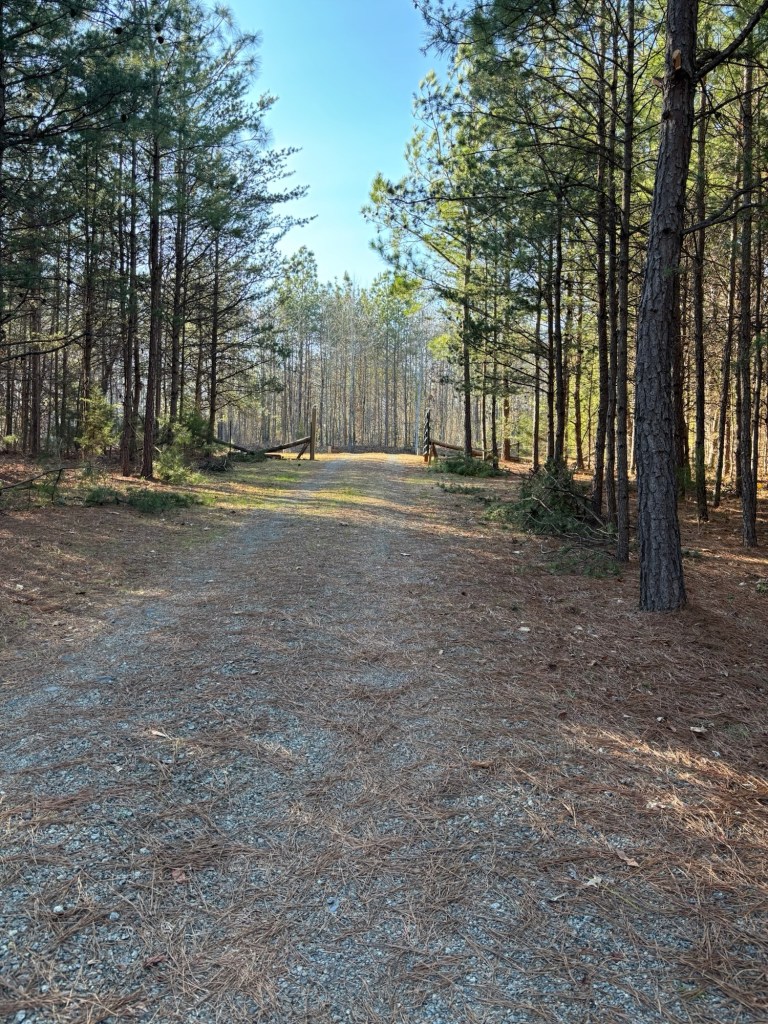
We trimmed the driveway up to 13.5 feet to accommodate the new tiny house being delivered.

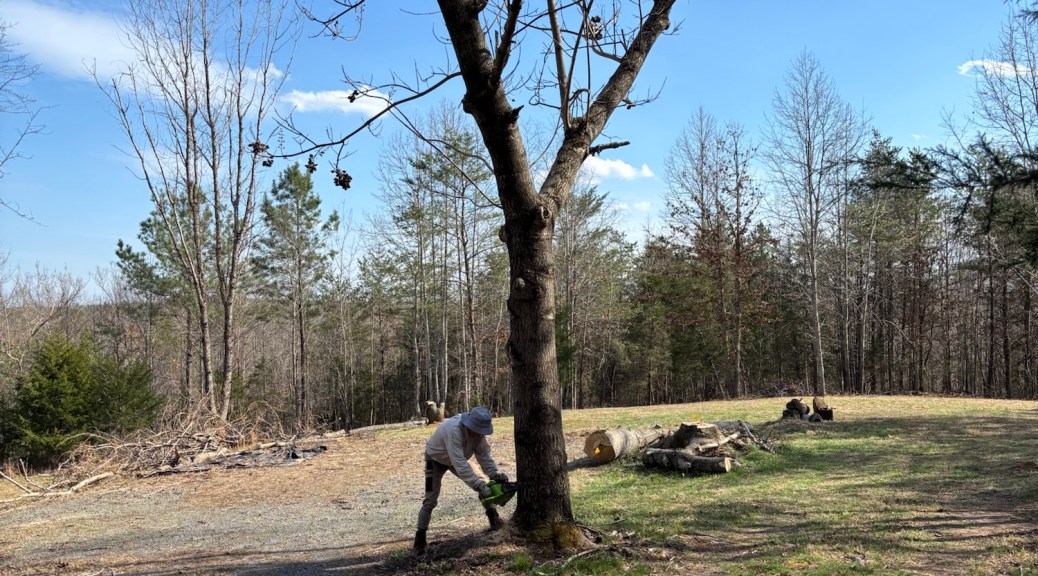
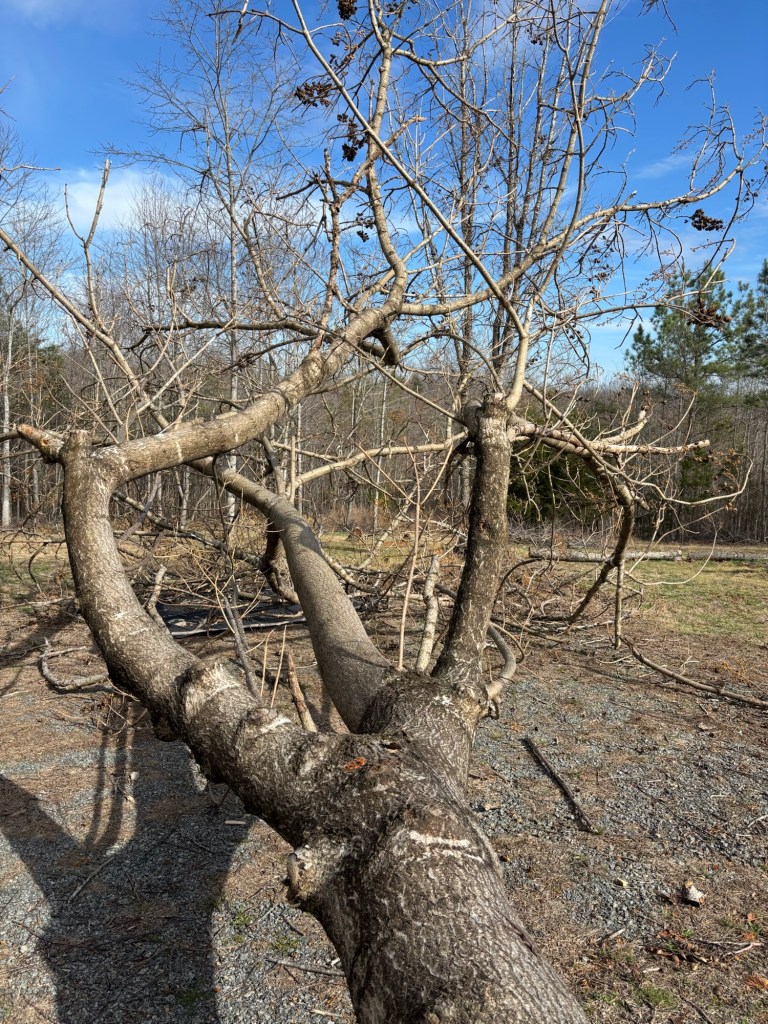
We spent the weekend taking down and processing the large paulownia trees up top in the main clearing. They loomed over the driveway and pad where we decided we’d place the tiny house. It felt like we were dismantling a giant whale carcass. These trees were messy, seedy and dropped limbs off during any storm. They take over native forests and choke out beneficial plants and trees for our Virginia wildlife. They were very fast growing as well which is why we put off cutting them down. They were a big bunch of hard work!
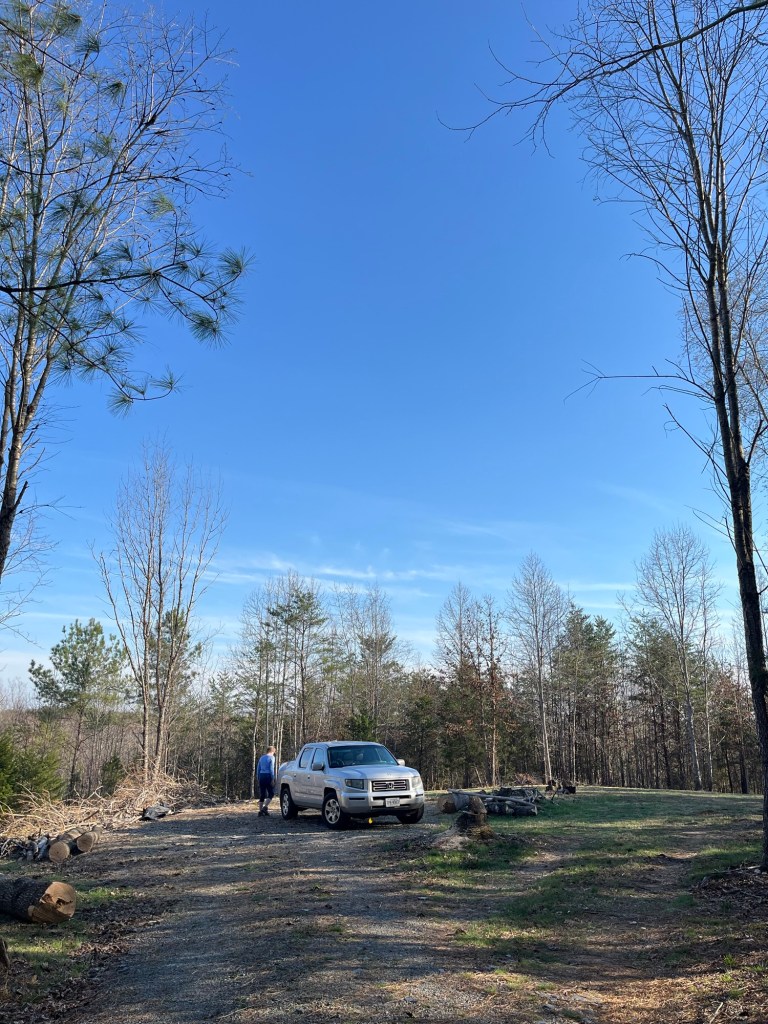
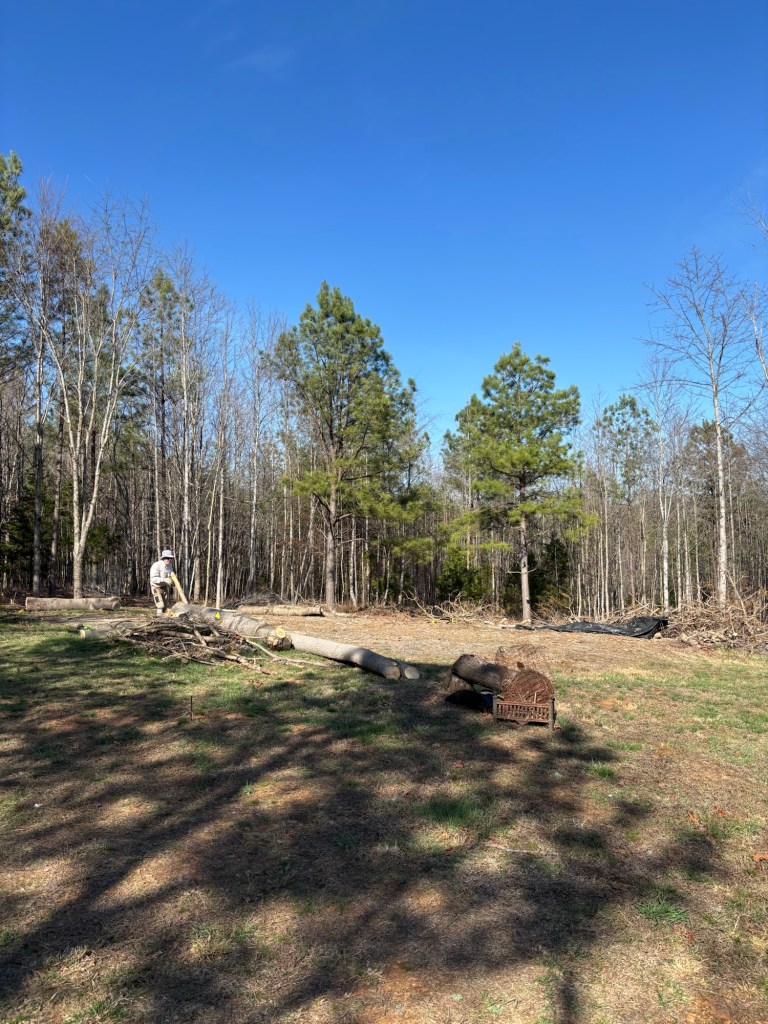
The truck parked in the spot we cleared for the tiny house this Wednesday. It looks so much better without the paulownias. We are pleased with our decision.
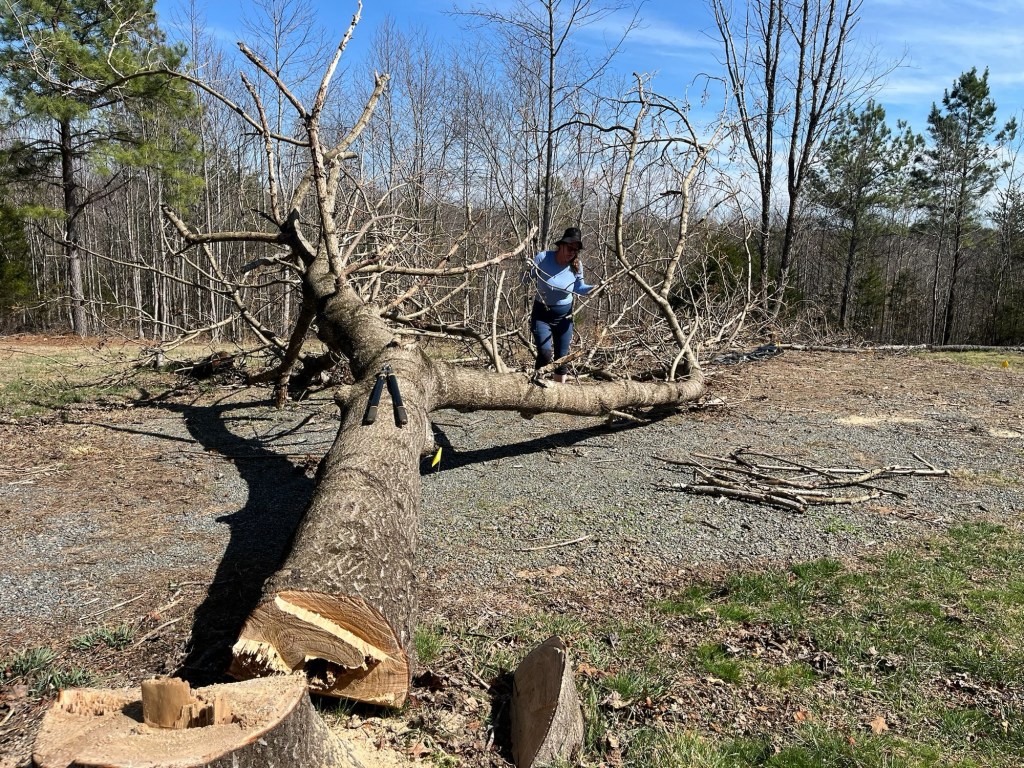
The first paulownia tree we cut down earlier in the week and then came over Saturday to cut it into smaller pieces. This was the largest. It took all of our Saturday farm day.
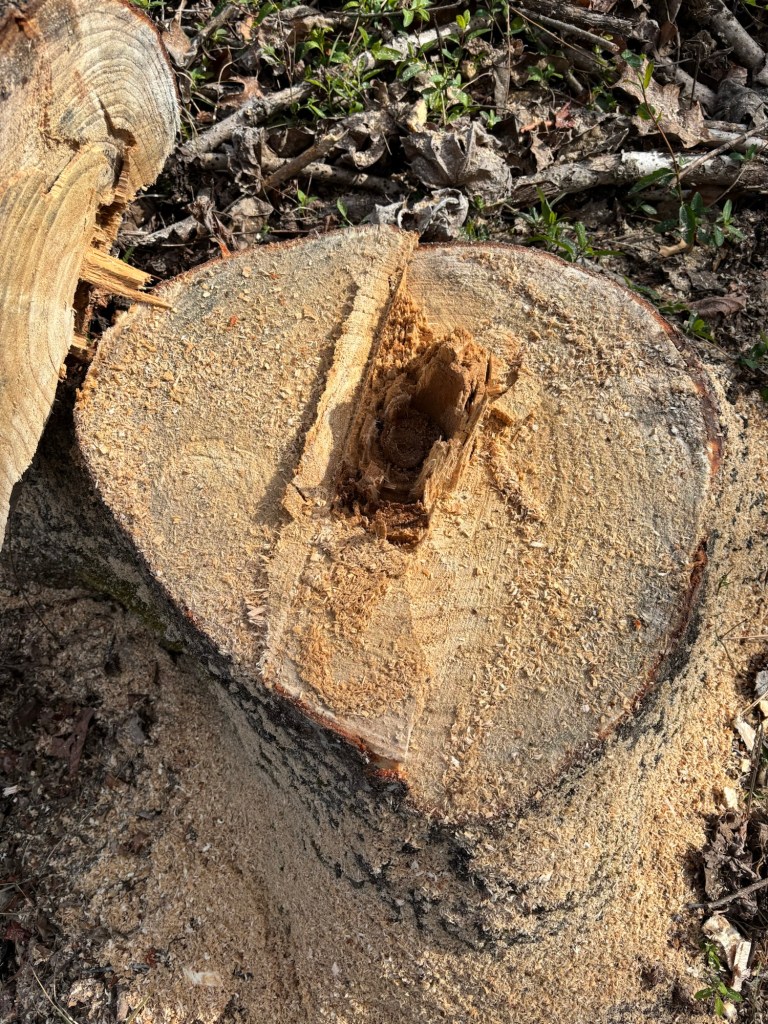
Hole in the middle of the paulownia is not a sign of disease but an inherent characteristic of the Paulowniacea family of trees. It is called pith and creates a water highway for the tree to support its rapid growth. This hollow bamboo structure runs the length of the trunk. This is one way this tree can take over quickly. Similar to ailanthus, Callery Pear, Mimosa and White Mulberry in its destruction of forests in the eastern US. Kudzu in tree form.
The second and smaller of the two paulownia trees we took down and cleared it yesterday (Sunday).
We are going to need a wood chipper!
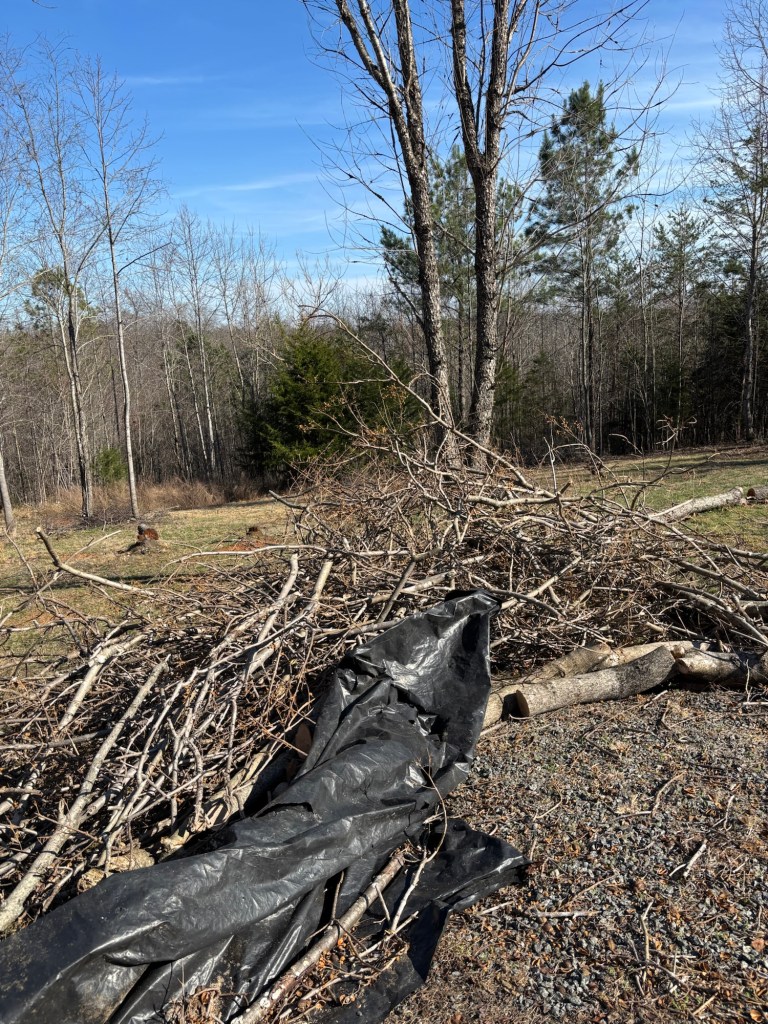
Paulownia tree debris around the pad. We will find a use for these logs. It is lightweight and fire and rot resistant. We picked a lot of great walking sticks and fishing poles out of the rubble and sorted into useful and non useful piles. We brought the long dead pieces home to use as fire starter. They burn for a long time and are as light as paper. It’s really very interesting wood. Too bad the tree isn’t adapted to playing nice in our environment with its native cohorts.

We stayed focused on creating our space for the tiny house for the most part, but ran down to the old colony pawpaw patch last night just before leaving SAFF for the weekend. The buds are still tightly closed. We are happy with the slow moving progress of the buds as we have only found female flowers out in the wild so far. We continue to look for the older male flowers with pollen. We will use this to pollinate our female flowers when they open. We are watching the pawpaws develop along the Rockfish River on our drive to the farm and we see them covered in buds. They are all still female with green flowers instead of more purple male flowers that face downward.
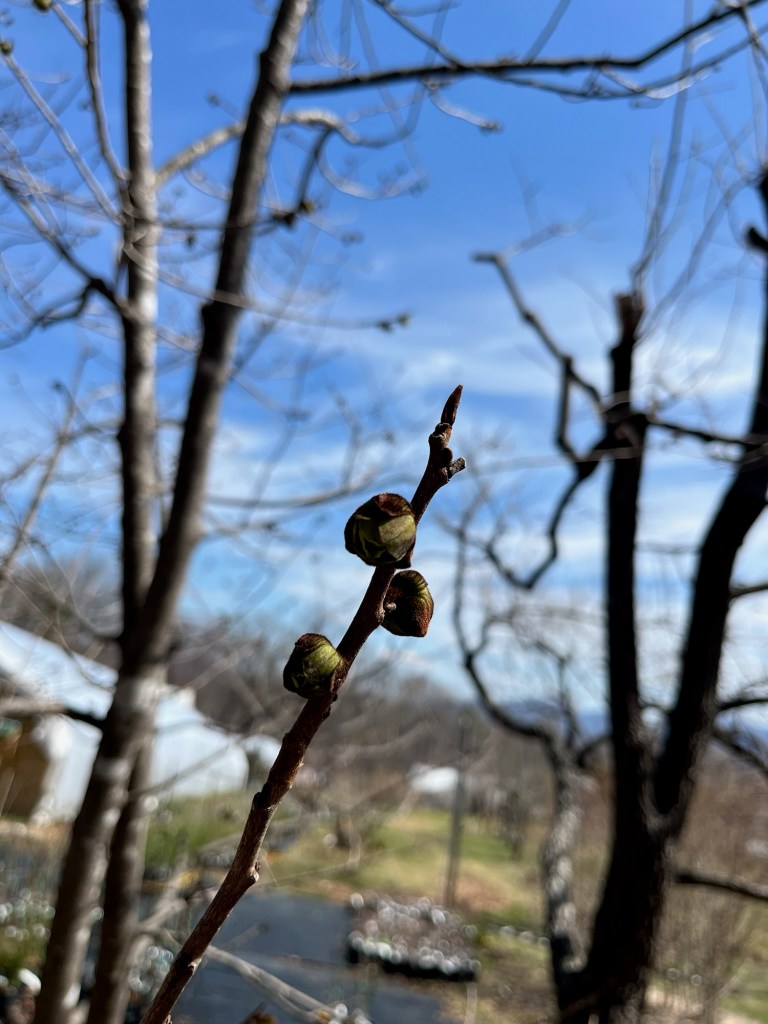
Female flowers at Edible Landscaping on Saturday in Afton Virginia.

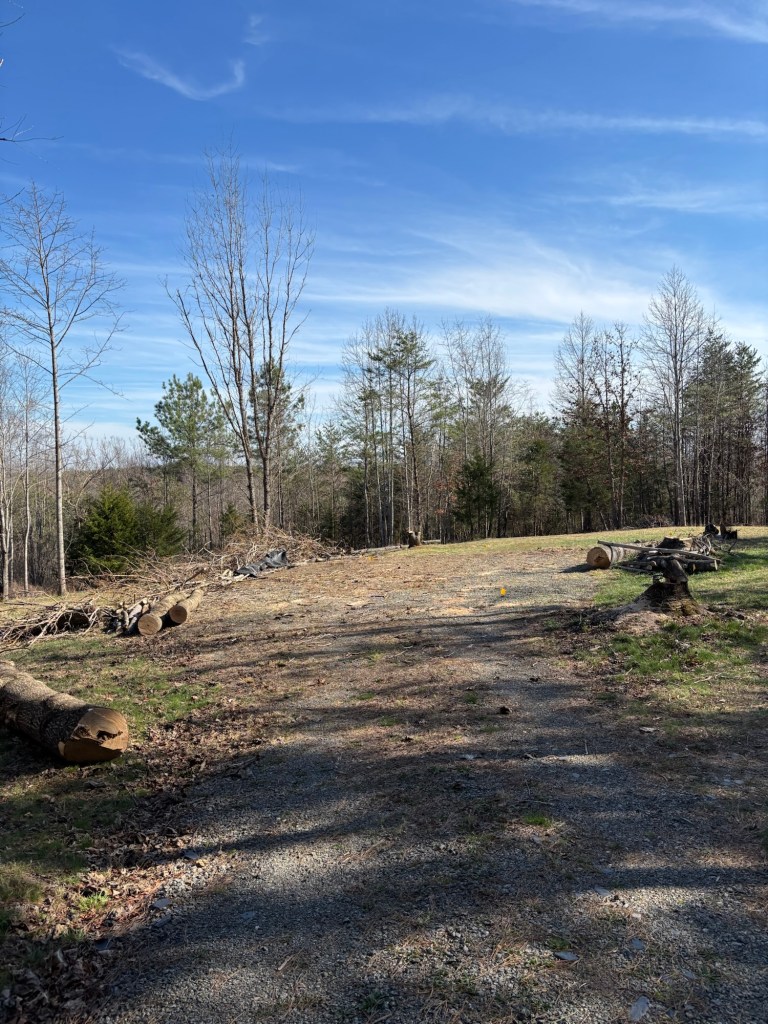
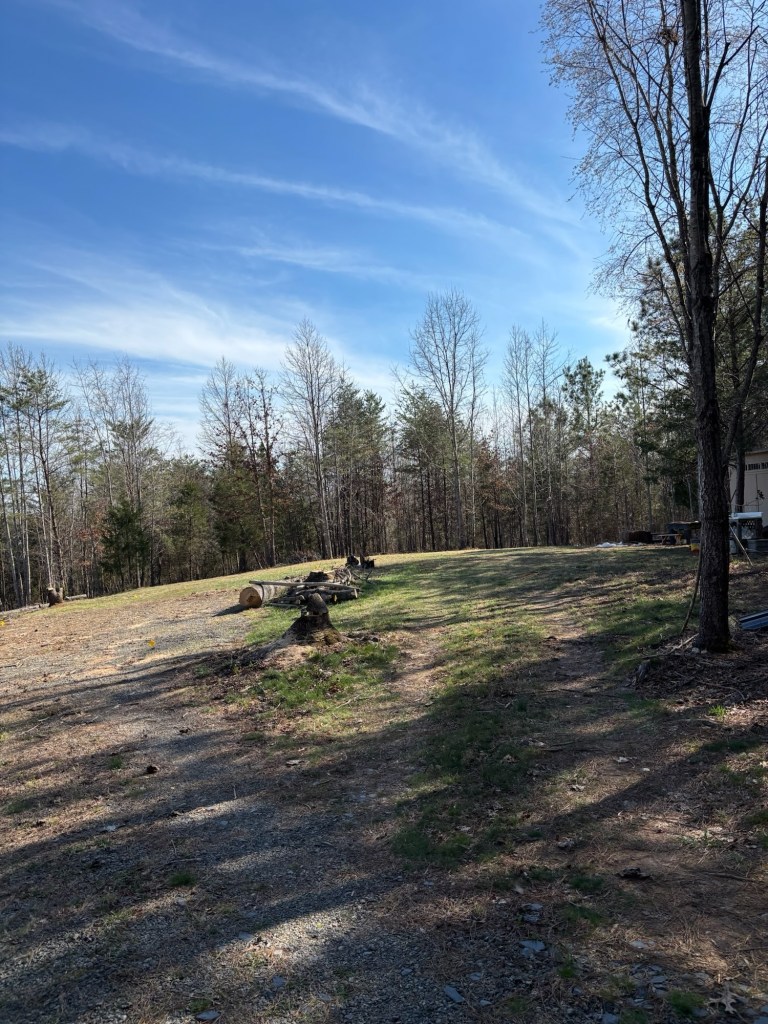
View of the clearing and pad without the paulownias.

Leave a comment