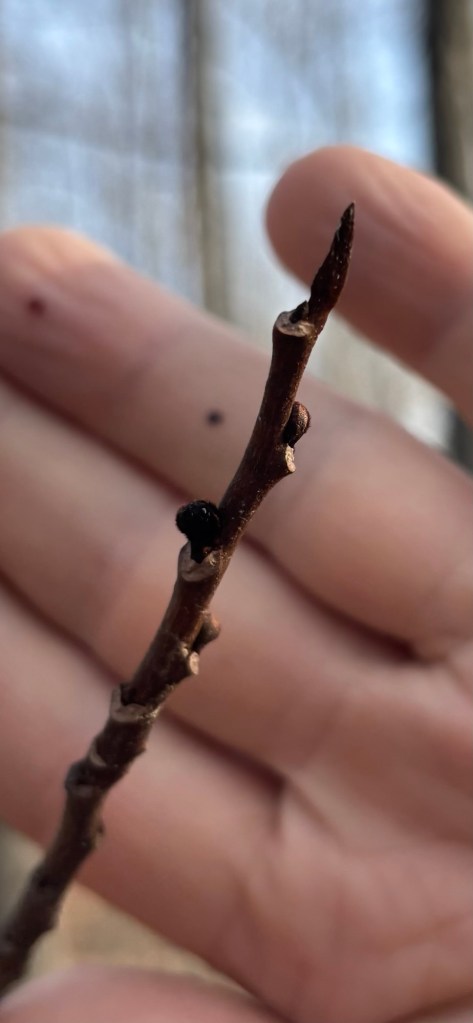
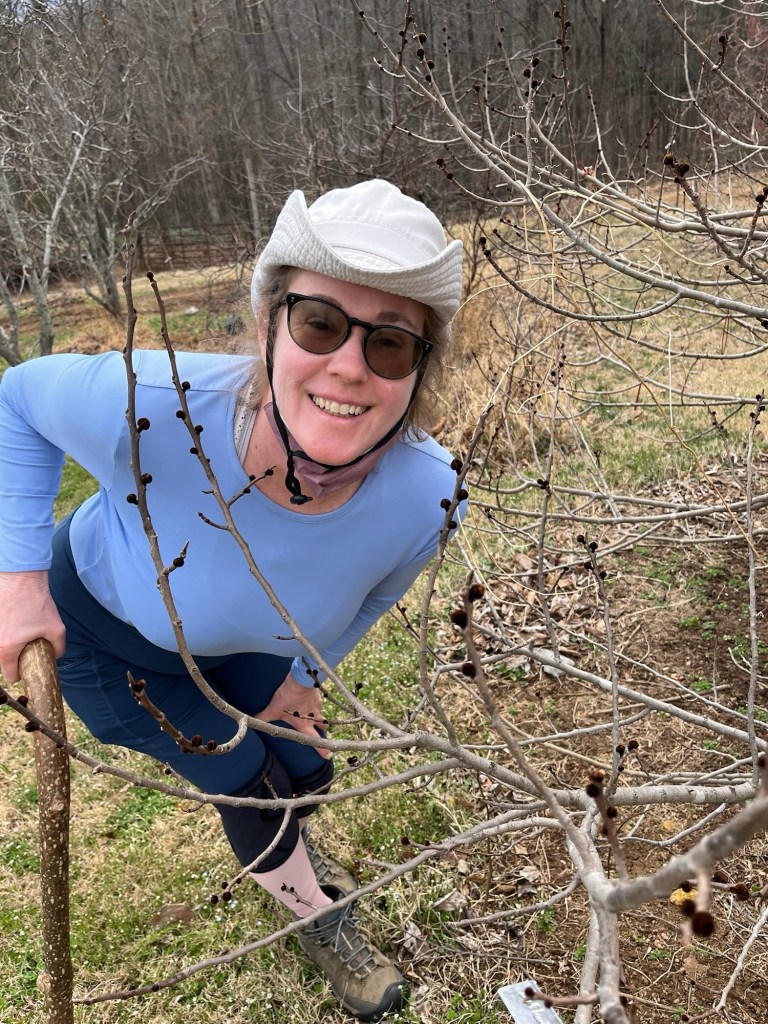
Yesterday, we visited Saint Andrews Forest Farm to work on our road project. We are bringing the road from the main driveway to the old farm road on the north side, in order to use the tractor to access the new Pawpaw orchard we’ve planted the past few years. We will need it for everything —bringing trees, compost, compost tea, water and collecting and taking mulch to the pawpaws. So far, we have carried everything in backpacks and our wheelbarrow. Phew! We have road access already with the tractor to the south end and the Old native SAFF orchard. We just ordered a trailer for the tractor that will hold up to 750 pounds. It will come tomorrow and we will get out there to use it to transport compost to the SAFF old native orchard at the bottom of the main hill. We’ve been wondering if this orchard was planted and farmed by Native Americans in the area. Or if it arose from just one tree and is made up of clones. Or both. The trees look old. They could be hundreds of years old. While individual root suckers only live around 40 years, the clonal root system can live for centuries. One reason the trees aren’t producing fruit may be because they are all clones of one mother tree. This is most likely. They need novel dna. So that’s why we started planting new pawpaw seedlings and cultivars. These older native trees at SAFF have flowered in mid April in 2024 and 2025. The first year we noted 15-20 flower buds. In 2025, we had fewer than that with the drought and none of these produced fruit. After we hand pollinated both years, we got fruit to set but they dropped within a month or so. This year every tree that’s over 6 feet tall has dormant winter flower buds all over them. Hundreds of hopeful fuzzy little round nodes everywhere. We are beyond thrilled. An unexpected surprise!
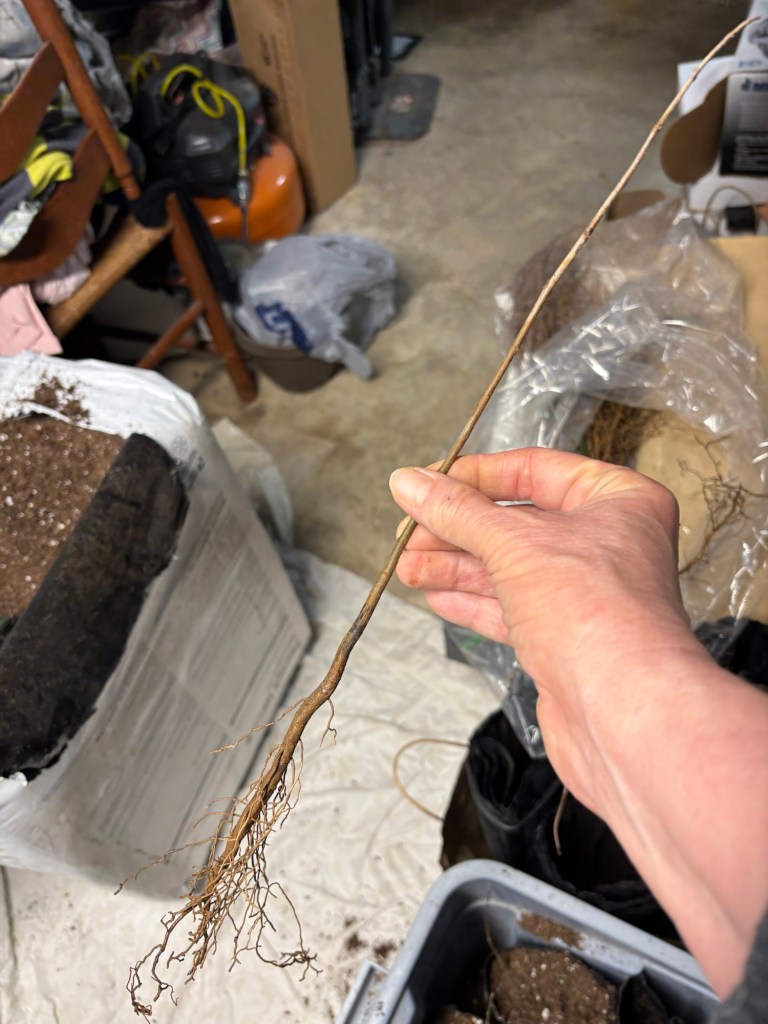
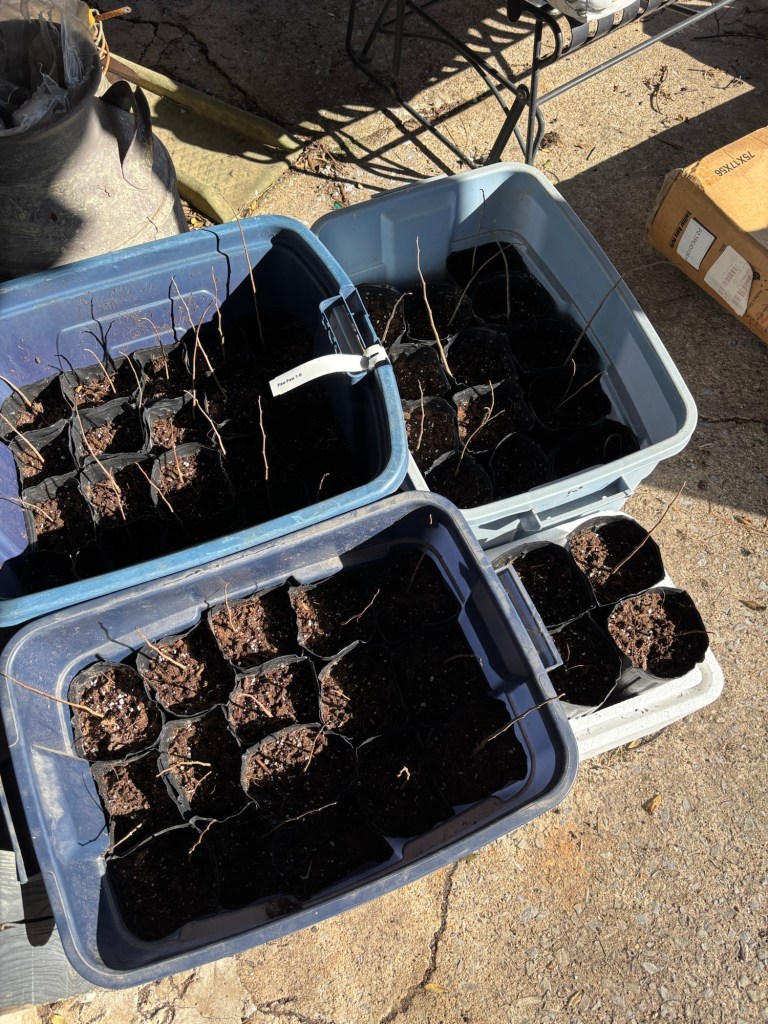
The 180-200 seeds we collected from pawpaws last summer (primarily from the Sunflower cultivar at Edible Landscaping in Afton, Virginia because the late frost that melted off the flowers at all of our other foraging spots) have stratified and we will pot those up in June to plant in the ground at SAFF in the Fall of this year. We are eyeing some of the local master gardening sales and the Hahn Horticultural Garden sales (April 9th) coming up this spring for more opportunities to collect seeds and trees. We plan to also collect pollen specimen from multiple locations around Virginia. We plan to visit Blandy Experimental Farm in Boyce, Virginia to see and collect Virginia pawpaw dna for our SAFF tree project. They have a Mother’s Day Plant Sale on May 9th and 10th. We have been using sammich baggies and qtips 😀 to gently collect dna from the open flowers at SAFF in the old native colony of pawpaws. Last year, and in 2024, we used our SAFF native flowers only to hand-pollinate the trees, but also this year we have our baggies and qtips with us now so we will stop and collect dna from any pawpaws we find with open flowers. We will help the pollinators out while collecting novel dna to bring to our old native SAFF colony. We’ve noticed a lot of bugs gnats and flies in the woods already. Especially down by the main waterway where the old native pawpaws are and the creek has water flowing. We’ve noticed our native colony is usually the last to open its flower buds each year down in its sheltered valley by the waterway. We stopped by Edible Landscaping in Afton Virginia yesterday and they had buds about to open. We will stop over there again this week to check their cultivars and select trees.
We added two Russian cultivars of pomegranates to our fruit tree population. A Salavatski and a Lyubimi. Both cold tolerant. We will see. The curse and blessing of living so near Edible Landscaping in Afton, Virginia. There are many wonderful nuts and fruit trees and shrubs!
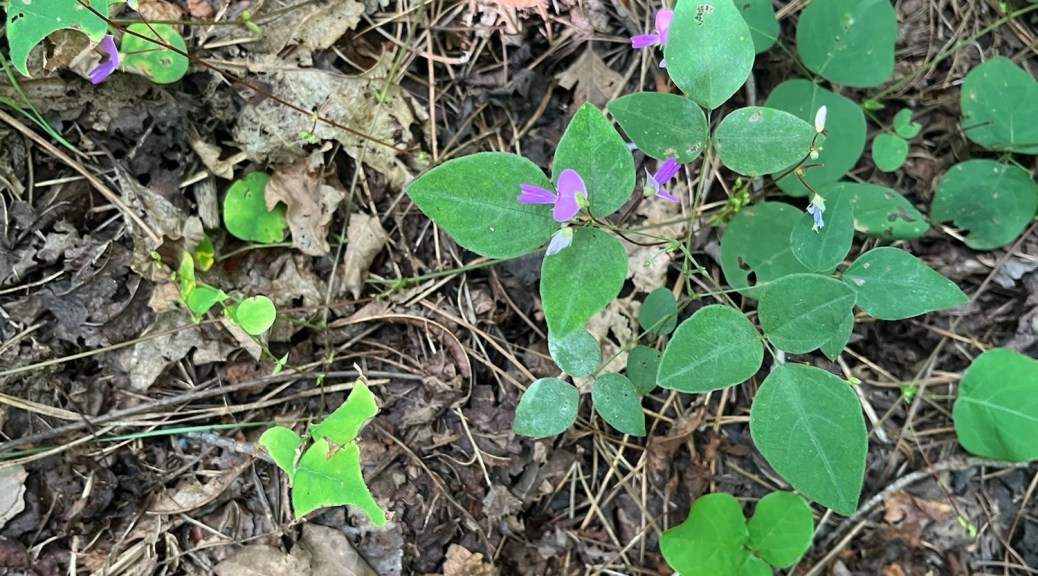
We’d like to also begin adding Spicebush, jujube and gooseberry to the new Pawpaw orchard we planted with cultivars, select seedlings and some native fruit collected from Rockfish River locations along Howardsville Road. We will spread the American Hog Peanut that grows in our native SAFF pawpaw orchard into the new orchard. It is a nitrogen fixer and curls along the old pawpaws helping to keep them fed. We will bring their seeds to the new Pawpaw Orchard at the bottom of North Trail to encourage the companion plants continuing beneficial relationship. We are looking for littlebluestem grass-seed to spread in areas with erosion on the south end and set back line and in the clearings.
 St Andrews Forest Farm