We went to Saint Andrew’s Forest Farm to hang signs all along our boundaries. The drive over was colorful as leaves are slowly becoming yellow and falling. It was overcast and cool. 69 degrees Fahrenheit was the high temperature today.
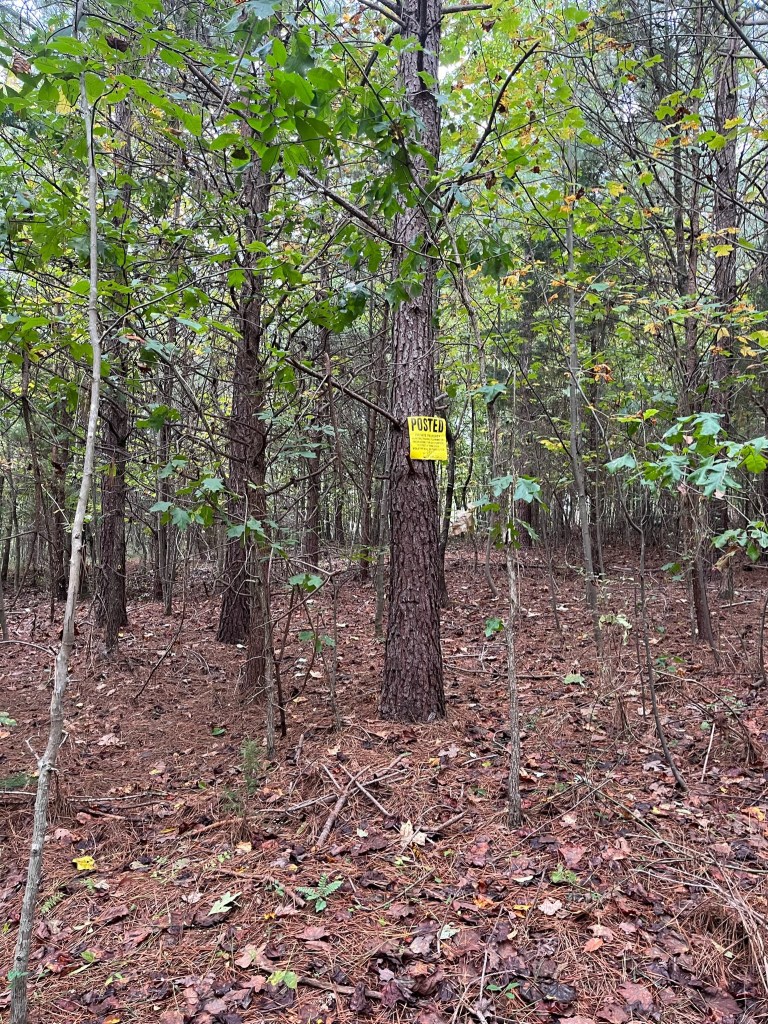
We were excited since it was a lot of new exploration for us. We began in the front, north side and posted signs as we walked our property edge. We culled small, dead and dying trees and limbs along the way. It was lovely in this new to us corner of the farm.
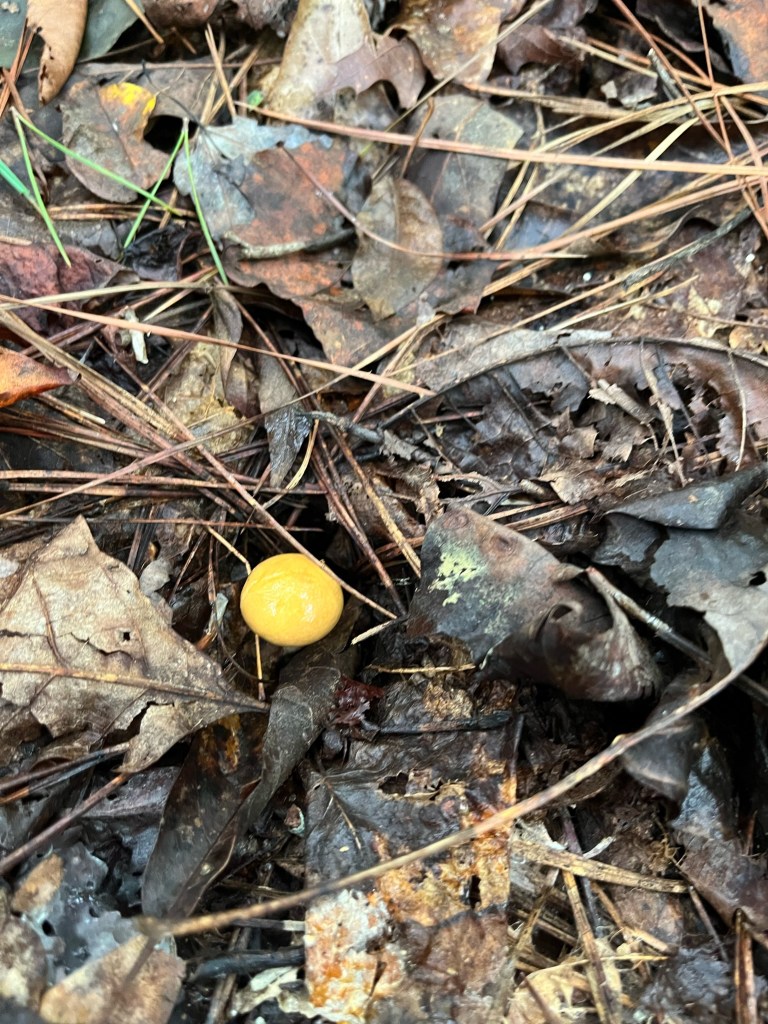
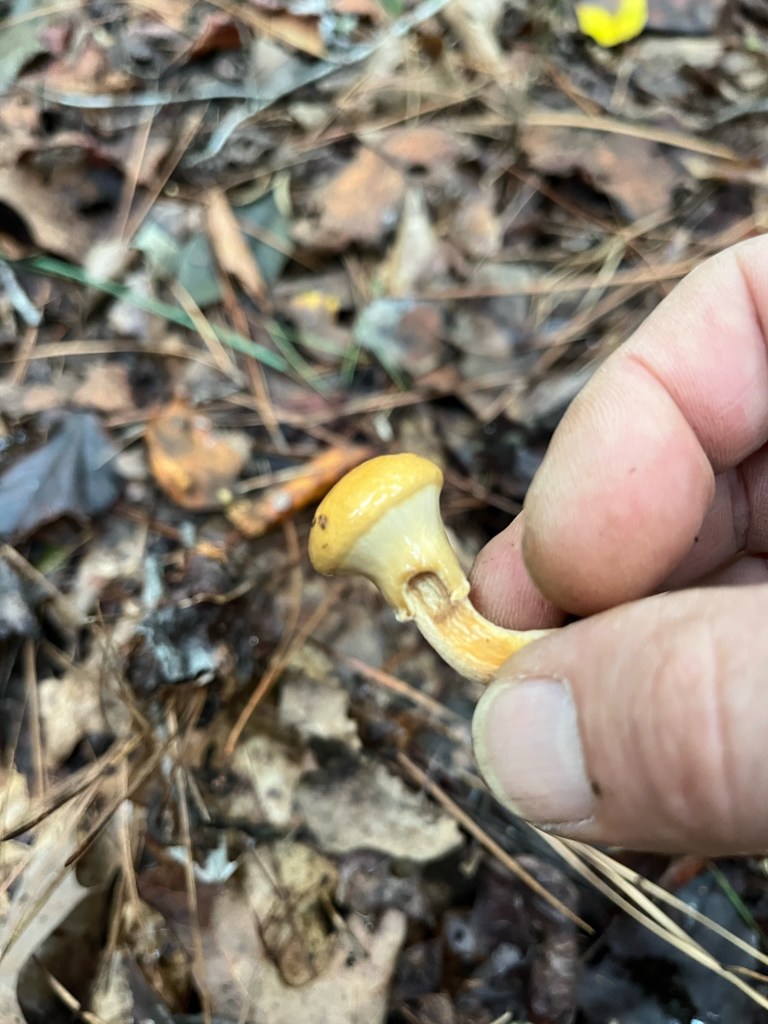
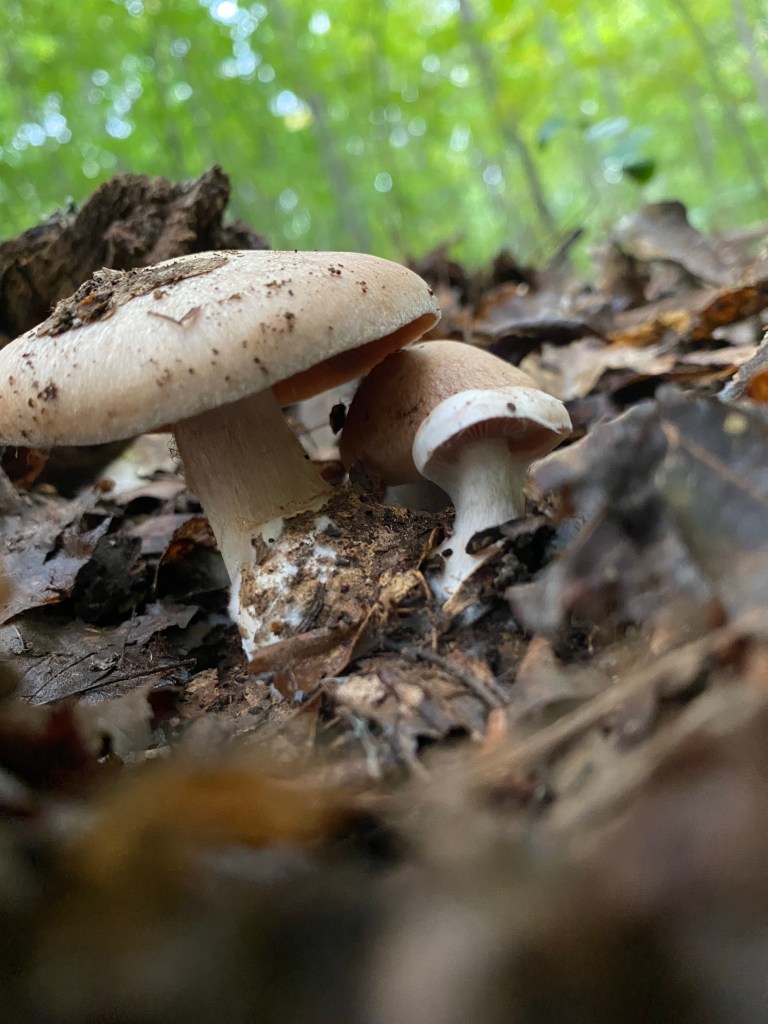
We saw mushrooms everywhere as the weather has been rainy and cooler. We saw Amanitas, Russulas and many smaller ones in between.
We were able to get signs up along multiple stretches of our boundaries and hope to finish this task before the weekend is done.
We did not see the young black bear today.
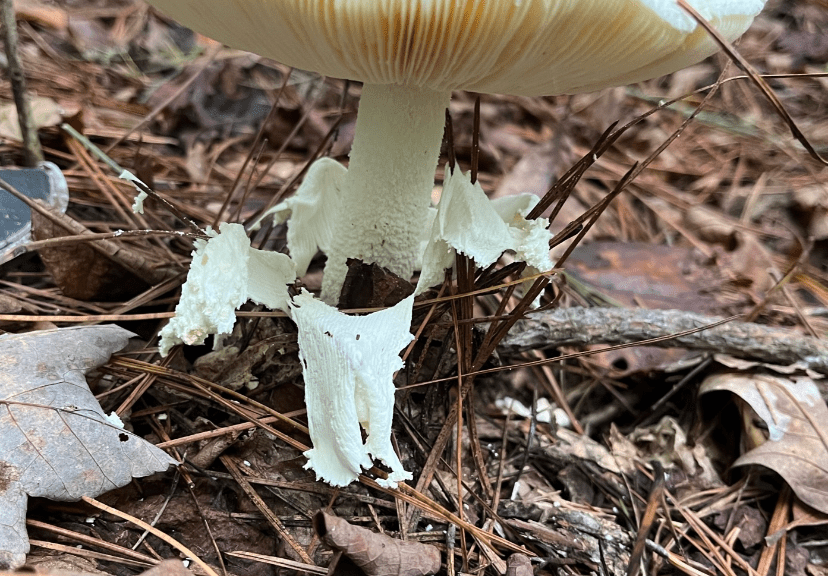
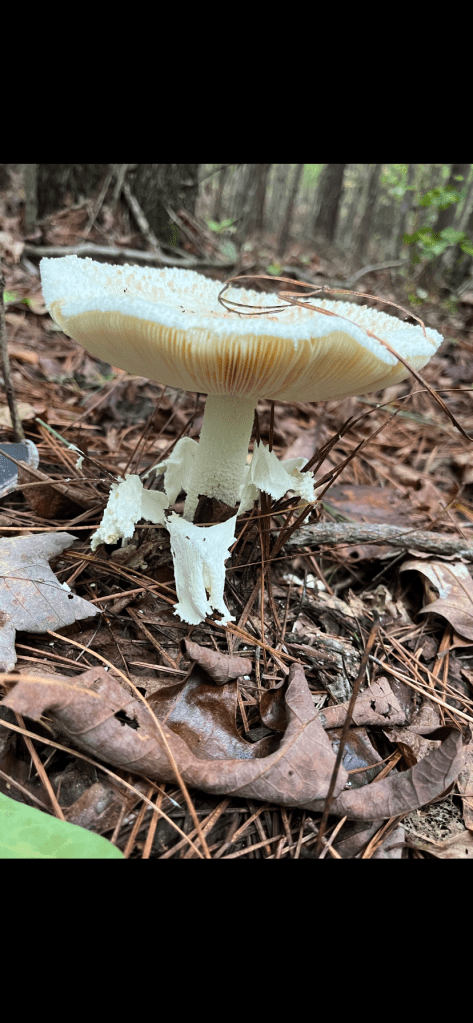
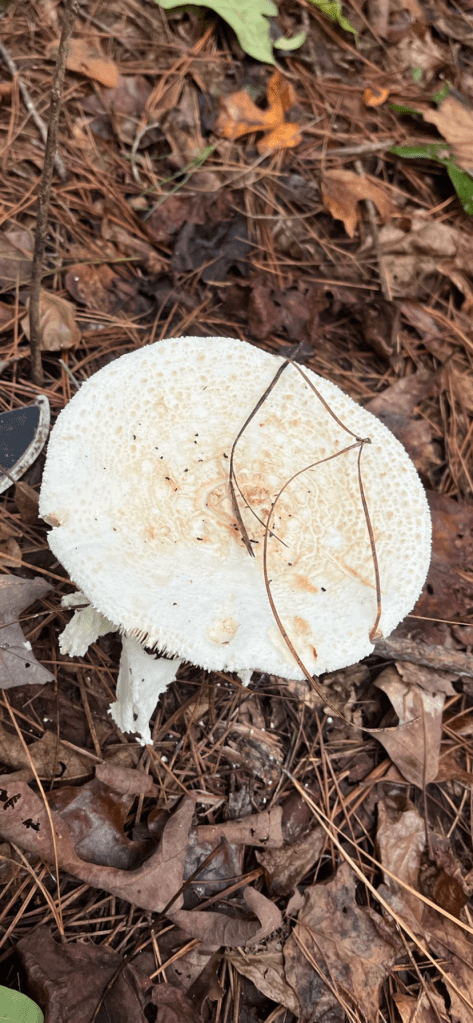
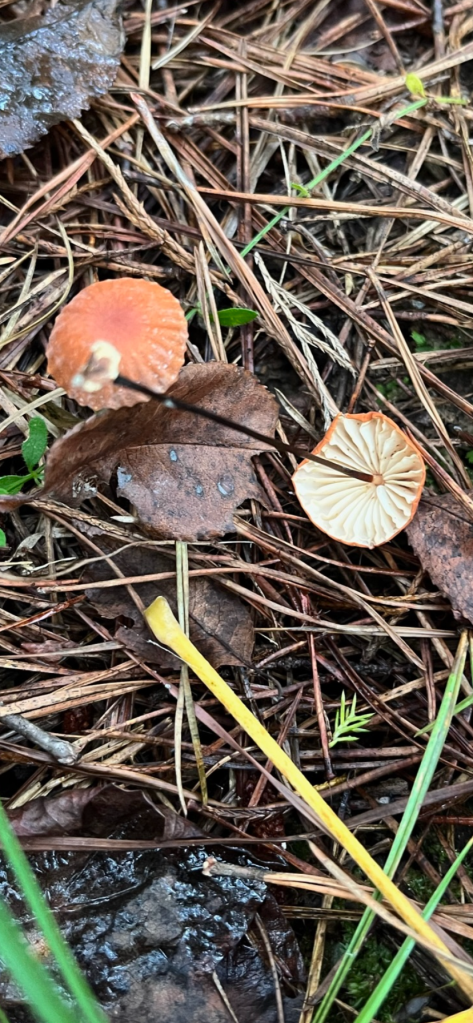
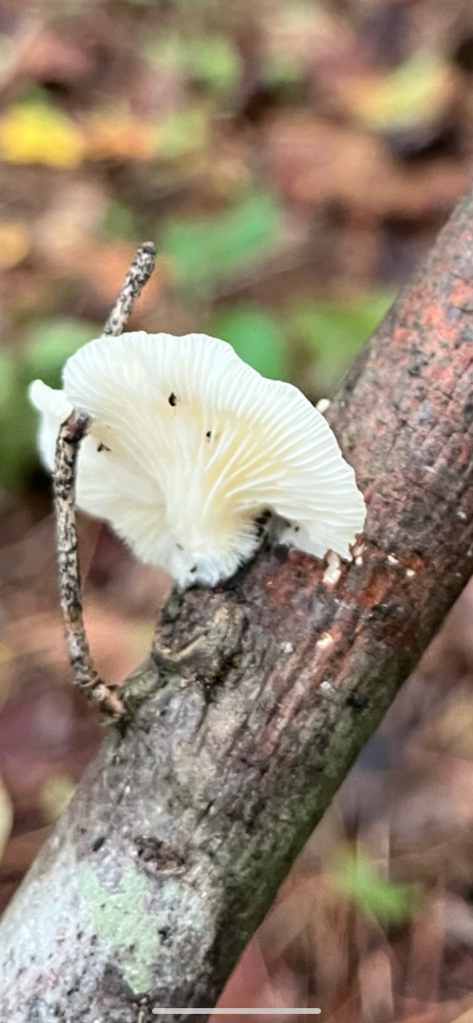
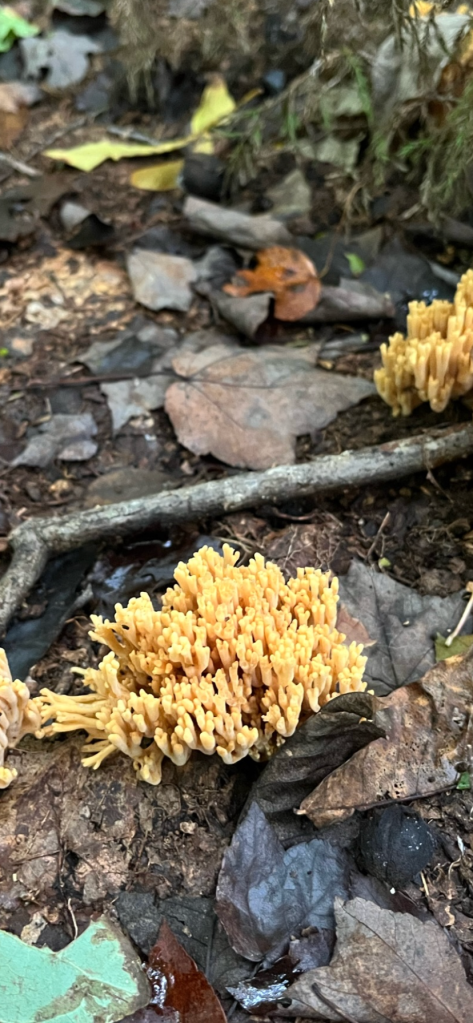
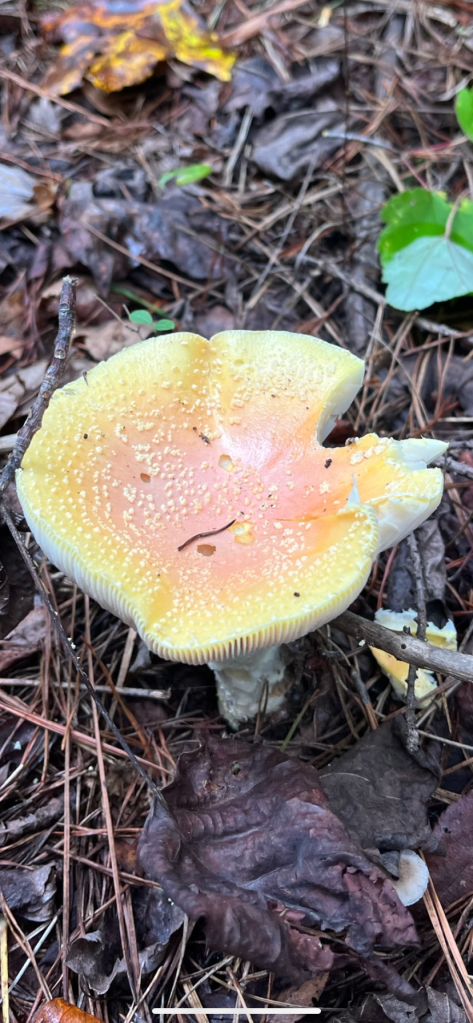
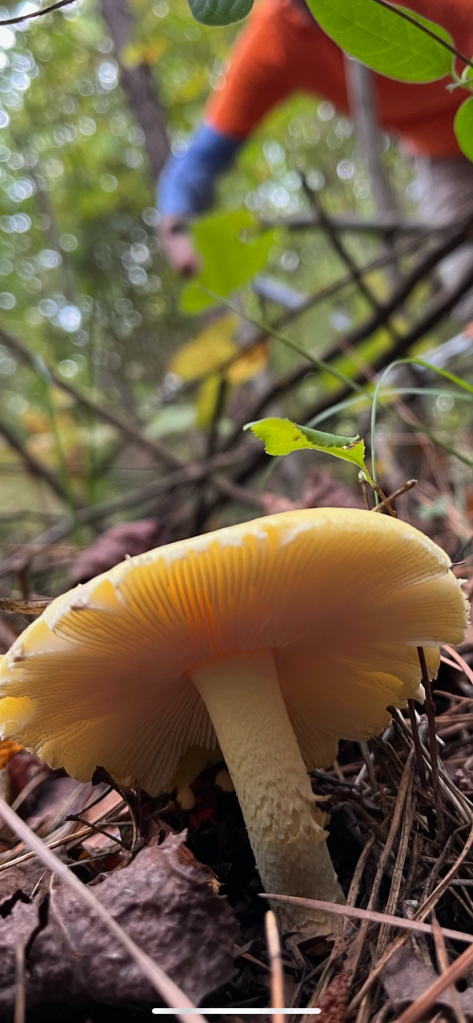
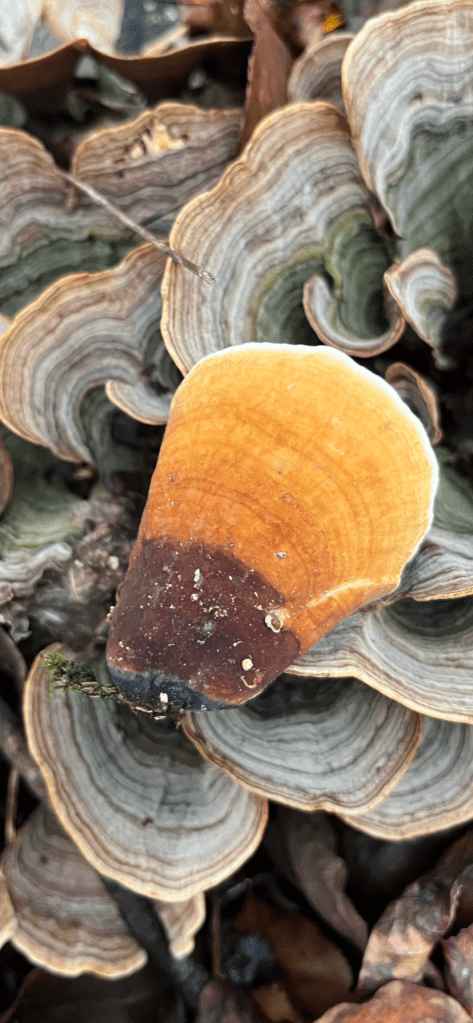
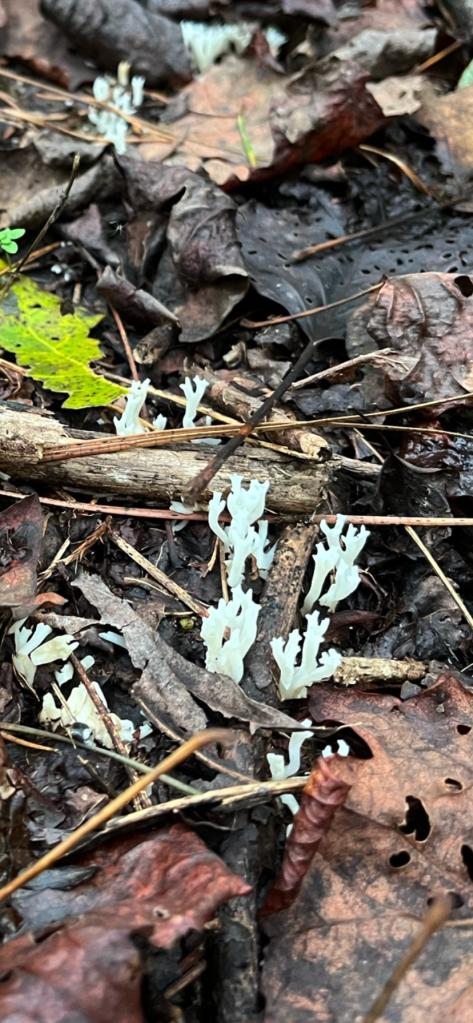
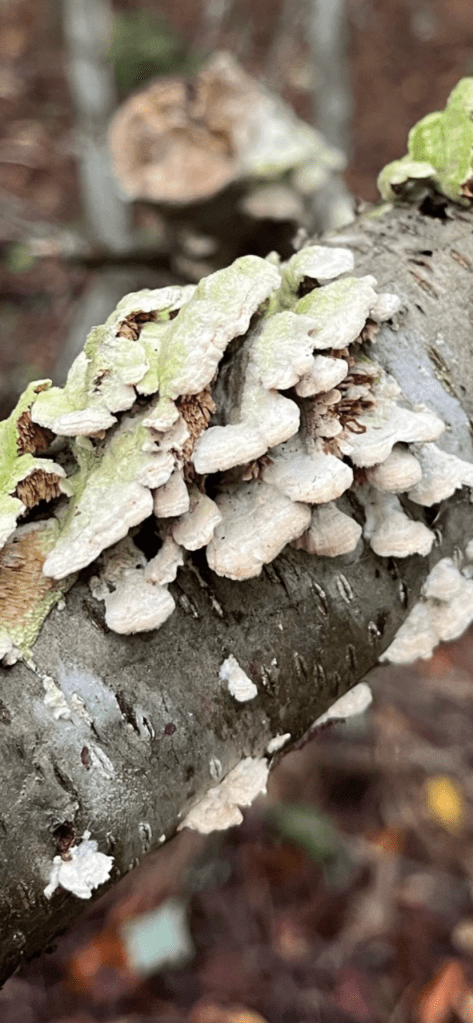
Amanita. Note the veil having just freshly fallen. This could be the death cap, Amanita phalloides. Half of one is enough to kill an adult human. The principal toxic constituent is α-Amanitin, which causes liver and kidney failure. Thus, we leave anything that looks similar alone.Top view of the large Amanita. It was 5 to 6 inches across. This mushroom was beautiful and we left it in the woods. They are mycorrhizal with pine, oak and chestnut trees. Another boundary marker and sign we posted today. Arising from hardwood leaves and sticks, these tiny beach umbrellas are quite beautiful when fresh. The pleated cap, the wiry stem, and the very distant gills make the Marasmius easy to recognize. Other “pinwheel” Marasmius species include these Marasmius fulvoferrugineus, with a rusty brown cap. We saw hundreds of these tiny mushrooms growing on the leaves of our forest floor.Pleurocybella porrigens is a species of fungus in the family Phyllotopsidaceae. The species is widespread in temperate forests of the Northern Hemisphere.[2]P. porrigens, known as the angel wing, is a white-rot wood-decay fungus on conifer wood, particularly hemlock (genus Tsuga).[3]The flesh is thin and fragile compared to the oyster mushrooms (Pleurotus ssp.).Coral fungusThis variety of the well known species Amanita muscaria is distinguished by its yellow to orange, rather than red, cap. Other trademark features are shared with the red version: numerous warts on the cap, a ring on the upper stem, and a distinctive stem base that features several shaggy “zones” of universal veilmaterial on the upper edge of a basal bulb. Amanita muscaria var. guessowii is found in the northern Midwest and in eastern North America from the boreal forests of the northeast, south to the Appalachians.Gills of Amanita muscari var. guessowii the American yellow fly agaric. Closely resembles Amanita ceasarea but is noted to be poisonous or have unwanted effects and to be edible. We leave them in the forest.Yellowing Curtain Crust, Stereum subtomentosum, is easily confused with Trametes versicolor, the Turkeytail bracket fungus (which differs from Stereum species, however, by having tiny shallow pores on its fertile undersurface), this rather uncommon bracket grows on dead hardwood, and most commonly on Beech. Like many other crust fungi, Stereum subtomentosum can be found throughout the year; however, its period of sporulation is limited to the summer and autumn. Coral fungus
Violet toothed polypore, Trichaptum biforme, a tough, hairy bracket fungus with violet margins and zones of white, brown, and black; pores whitish violet, breaking into teeth. Grows on stumps and logs of deciduous wood. Year-round. Cap semicircular, flat; zones of white-gray, ochre or dark brown, and brown-black; violet along the margin; texture tough, hairy. Pores angular, becoming toothlike; whitish brown with violet tinge, fading to buff, with violet along the margin. Stalk not present. Spore print white. Spores magnified are cylindrical, smooth.
 St Andrews Forest Farm