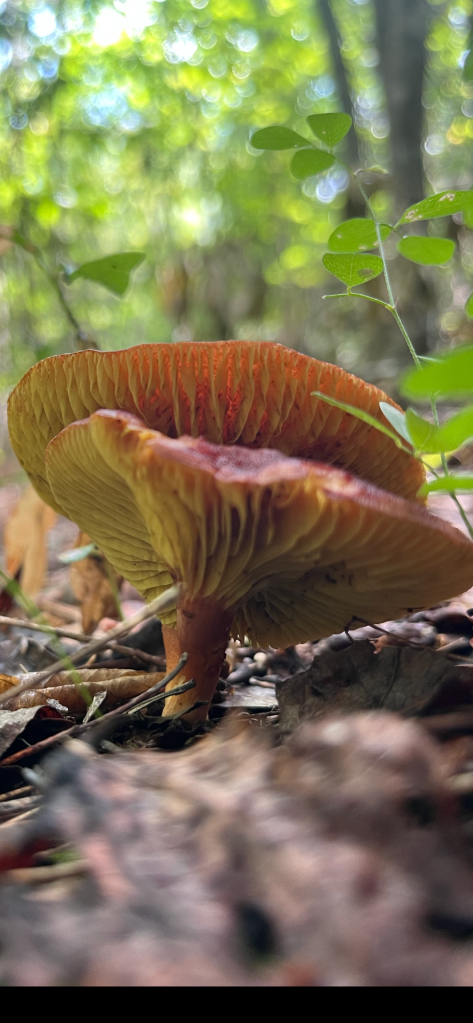
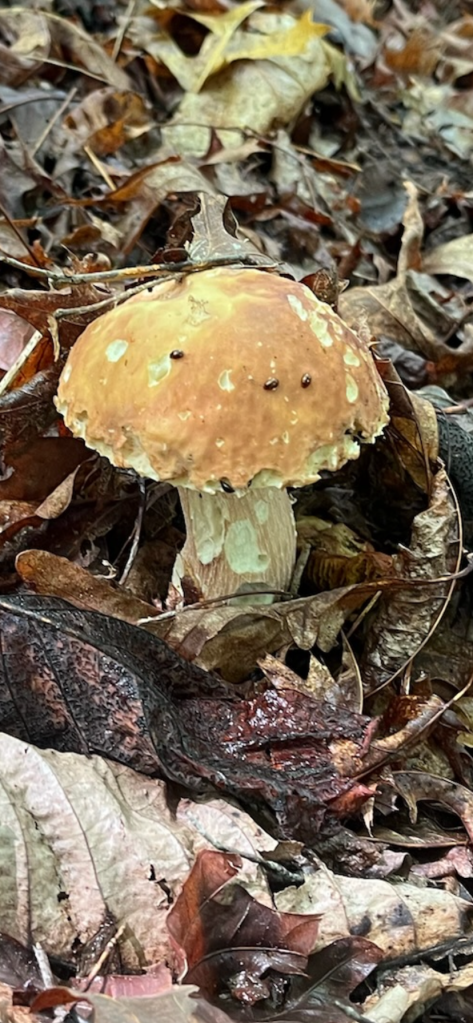
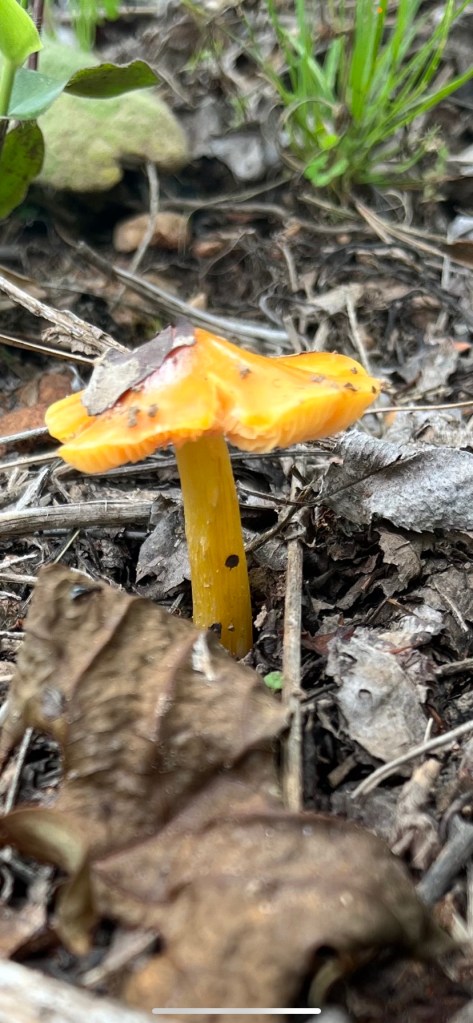
Golden gilled bolete, Phylloporus rhodoxanthus, found along Hawk Trail. Mycorrhizal with hardwoods usually oaks or Beech (both are near where we found these beauties).
Yesterday we went over to do some planting in the rain. It has been raining every day or so for the past week and the ground is wonderfully moist and much greener. All along the trails, we could see white mycelium spider webbing on the forest floor. We created a new garden bed at the bottom of North Trail by laying our tree trunks perpendicular to the slope.
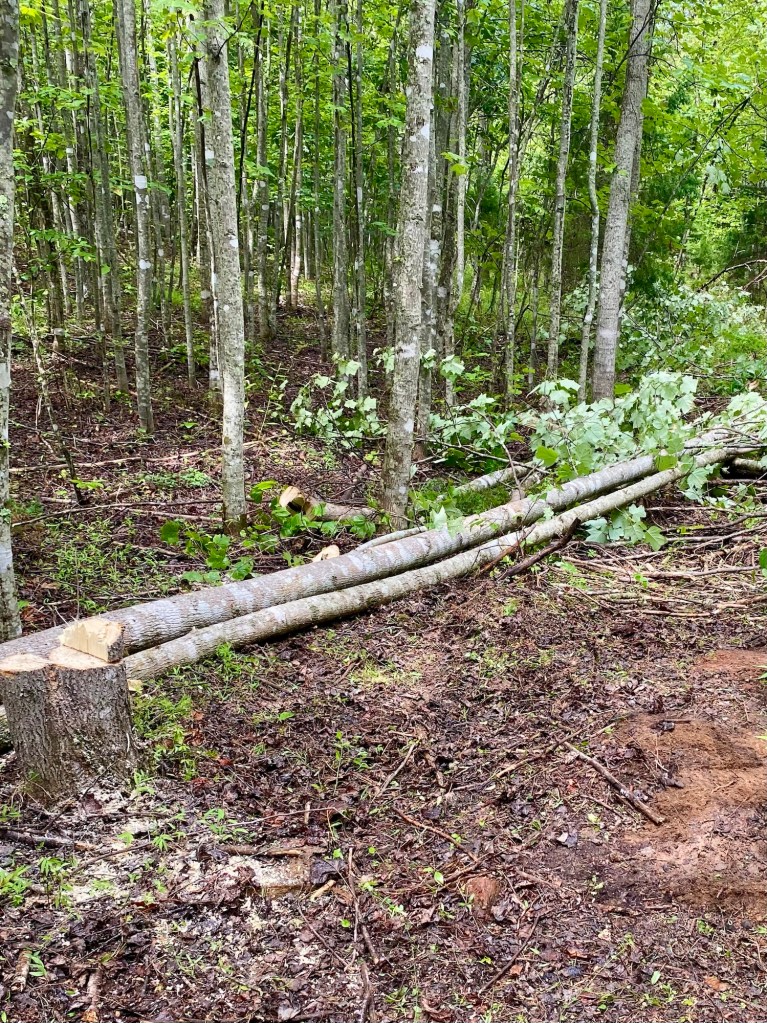
Tulip Poplar trees we took down and placed to help slow water run off and build our first fish scale terrace for planting and water and soil conservation.
It may not seem like much but this is a huge paradigm shift for us as we have imagined fish scale terracing our slopes for the past year and it came together just as we’d hoped. We are eventually making a space for pawpaws. For now, we will have smaller plants. The ground was soft and pliable in the rain. We practice minimal disturbance gardening to improve our soil quality, increase yields and drought resilience as well as increase fertility. So this means we dig as little as possible to keep our soil and mycelium undisturbed.
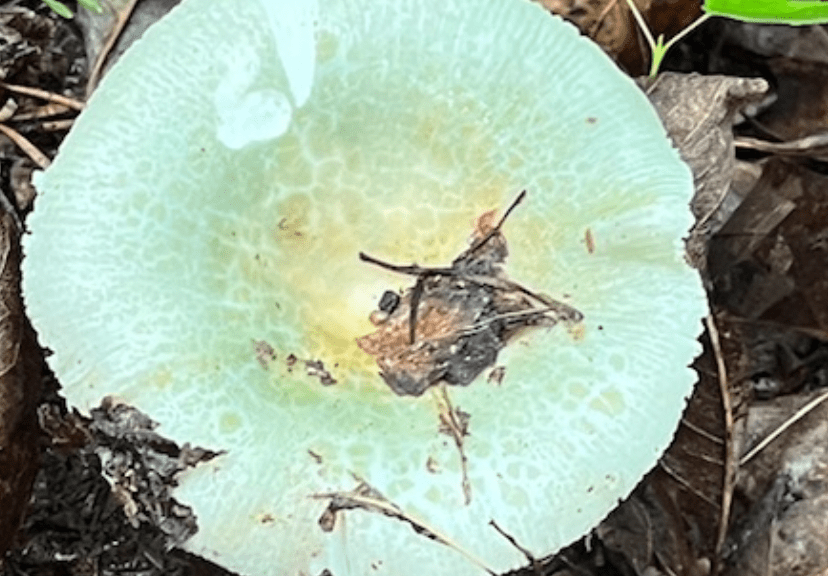
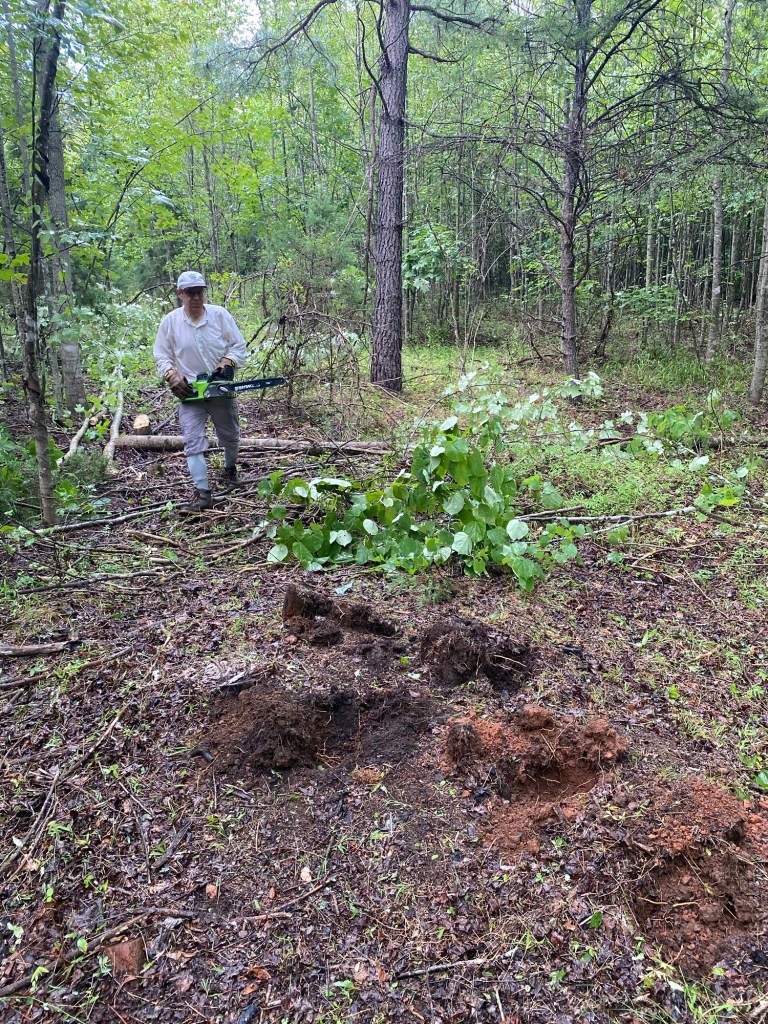
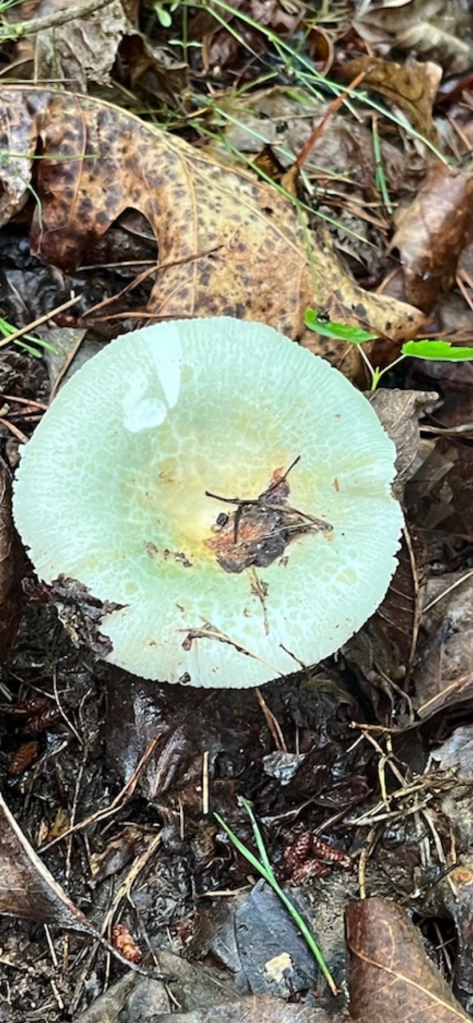
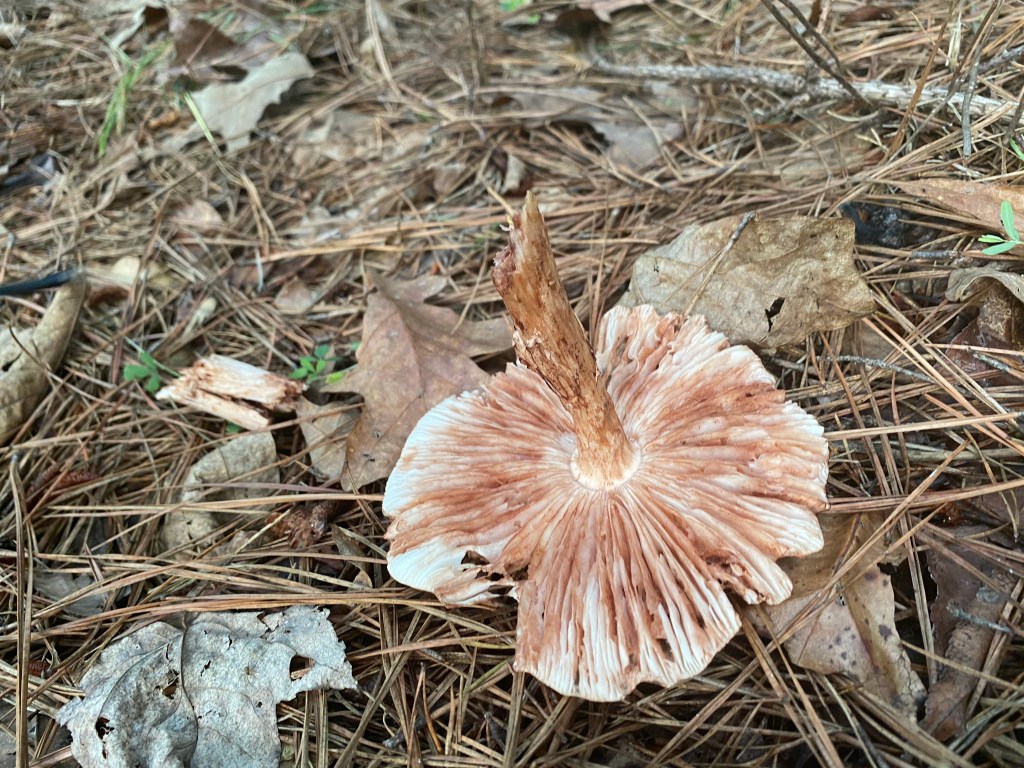
Chris busy felling tulip poplar trees which have grown up too close and tall in the forest that was disturbed 20 years ago. Many are diseased from not having enough space and light. We plan to use their trunks to construct our fish scale terraces.King bolete found on South Trail about 2/3 of the way down. The bugs love it! Blue-Green cracking Brittlegill, Russula parvovirescens, found along South Trail. Mycorrhizal with oak, hardwoods and conifers. Over the past year, we’ve observed these when the weather is rainy and the temperature is in the 80s.Our new sign gifted to us from Chris’ parents who visited the farm last weekend. We love it!
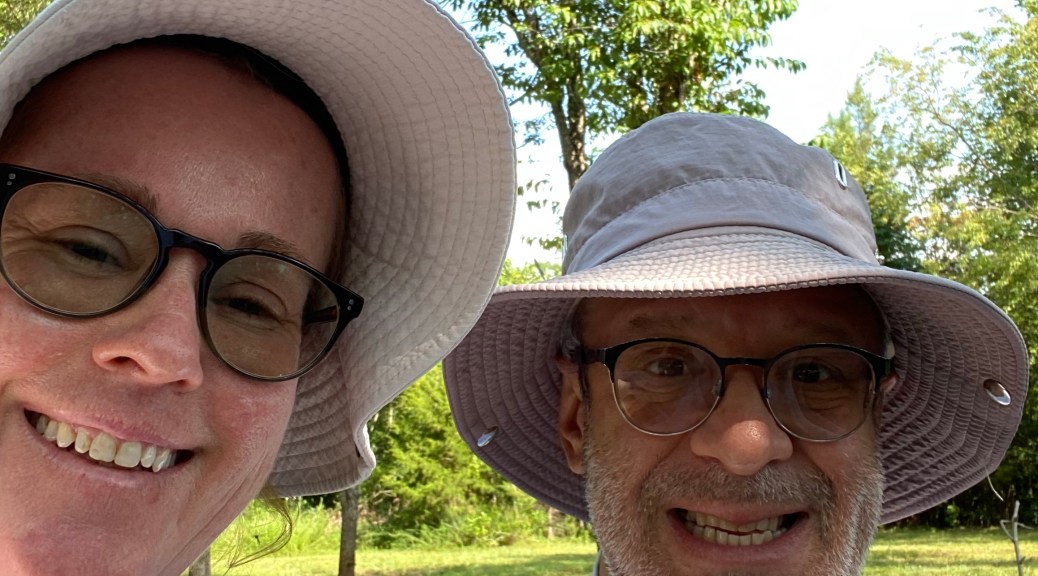
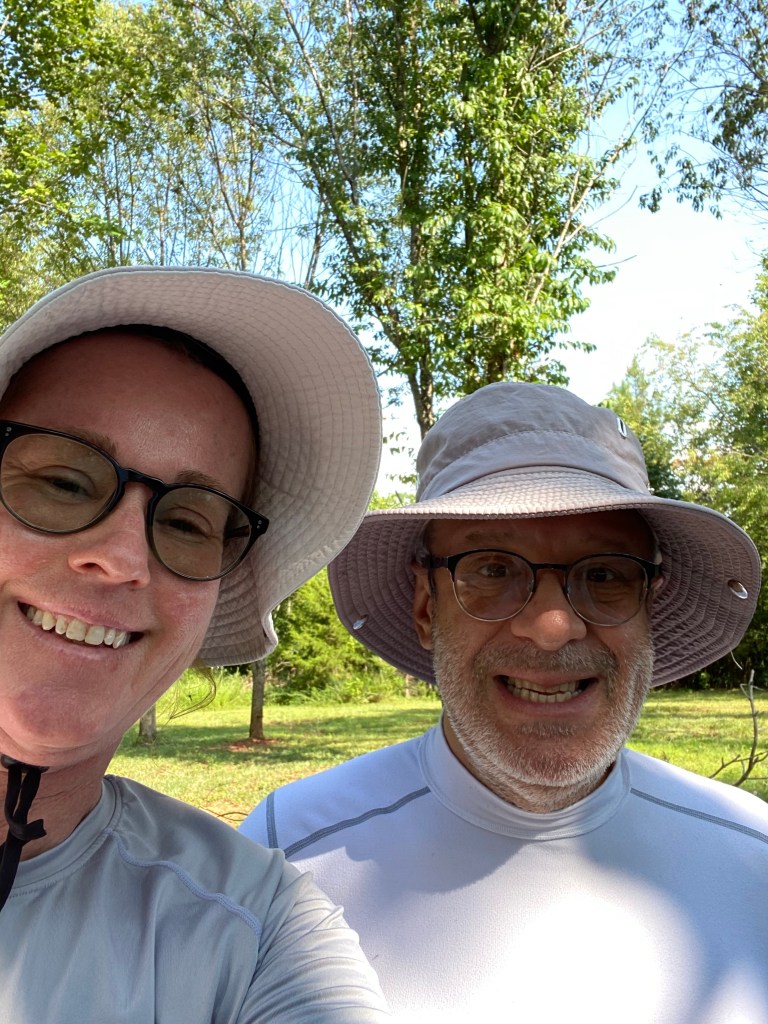
Chris and I excited to be at our newly christened Saint Andrews Forest Farm late spring 2023
On April 13th 2023, Chris wanted to go to Buckingham County to look at a property with forest covering most of the 13 + acres. We drove to Afton, over Route 29 and into Buckingham County going deeper and further into beautiful and old woods. Magical seeming forests with giant trees arching over the roadways creating a canopy of green. Little moss covered hamlets of yesteryear with giant boulders covered in greenness and ferns sitting in a creek bed. Gorgeous vineyards and farms. We also saw forests recently violently cleared by loggers. Jagged and torn and pillaged. The roadways beaten and abused by giant trucks full of timber. We saw what looked as though the forests had regrown a year or two after being cut, and also stands that appeared to be five to 10 years on. We began to see ages and stages of development. It was an incredible journey for us because of its unique beauty as well as other circumstances. We both really needed to be in the woods again. We had been away too long. When we arrived and saw the pines and poplars, we both immediately fell in love with our forest.
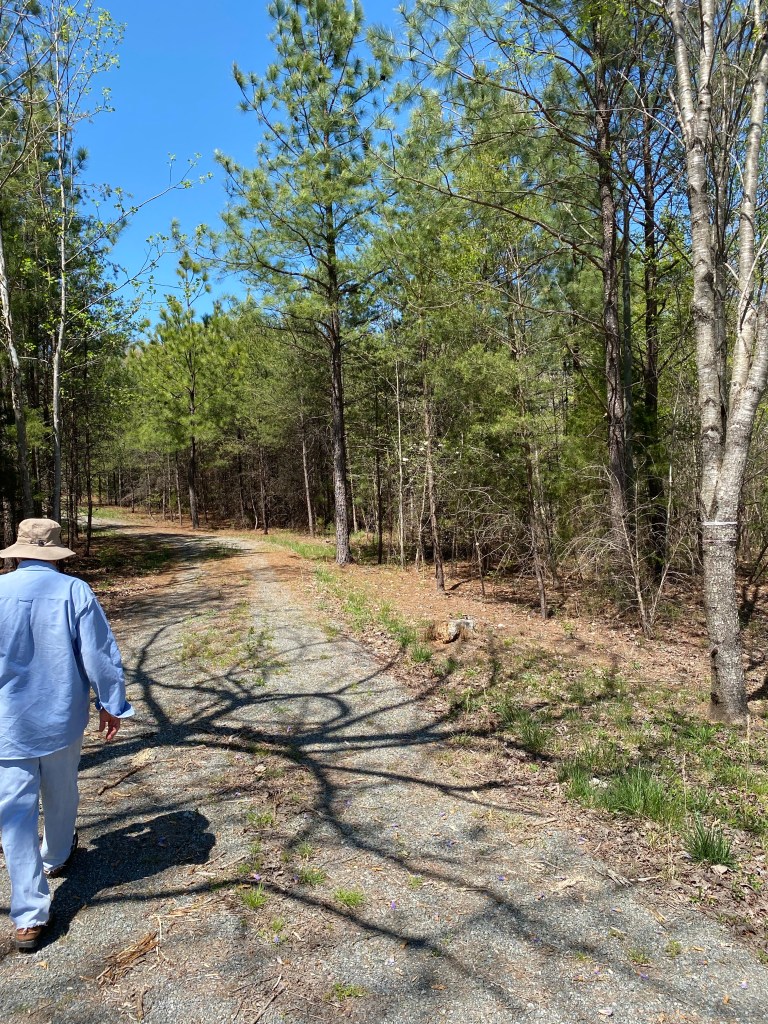
Chris walking down the driveway in the shade of the black cherry tree.
Our guess was that it had been cleared about 20 years ago. Water had made paths through the woods. Right away, we began to find interesting mushrooms with our exploration mostly limited to the top of the hillside and the edges of the clearing.
Orange waxy cap: The first mushroom we found at St Andrews Forest Farm on May 19. We narrowed this down to a hygrocybe species maybe conica group. (Thank you Reddit mycologists. ) We found it in the clearing near a tulip poplar and black cherry tree. We became hooked on determining the types of fungus we had growing on the farm. We could not wait to get into the woods and down by the waterways to explore the interesting features down there.
As summer came, we began to realize we had a sizable tick population to deal with and thought we would be kept from our explorations of the woods until winter. Glad that was not the case. As it stands, there are still several areas that are infested with nymph ticks as evidenced by when we walk into that area we immediately see between two and twelve on our shoes and socks.
Right now, we are aware that the ticks appear to like moisture. The drier it is, the safer we are. We always wear our permethrin coated shoes and socks. We wear light colors so we can see them more easily. We watch out for each other’s backs. We want to stay safe. Chris has had several bites this summer. He has removed the ticks immediately and cleaned the area well. So far, no symptoms or side effects. When we camp, we will coat our tent and appropriate supplies with permethrin.
The other note I have about ticks is that it is tall grasses and weeds that they are able to attach to our socks and shoes and then climb up to find skin. Stay out of tall weeds and grasses. If you must walk in, look at the tippy tops and you will see the ticks with their legs out. I’d only do this with a mower or weed whacker in front of me. Anyway, they do not fall from trees. They do not fly. They are opportunistic. (However, they can fling themselves out onto you using static electricity. Look it up. Here https://www.science.org/content/article/watch-ticks-fly-through-air-power-static-electricity or on YouTube). This was all helpful for me to learn in order to determine best practices to avoid them.
Keeping our clearings mowed and weed whacking our paths has been extraordinarily effective. It has become easier now that we have the truck and tractor. Lastly, I’ll add that ticks dislike hot and dry. The clothes dryer kills them after 10-15 minutes. This was also helpful for us to know.
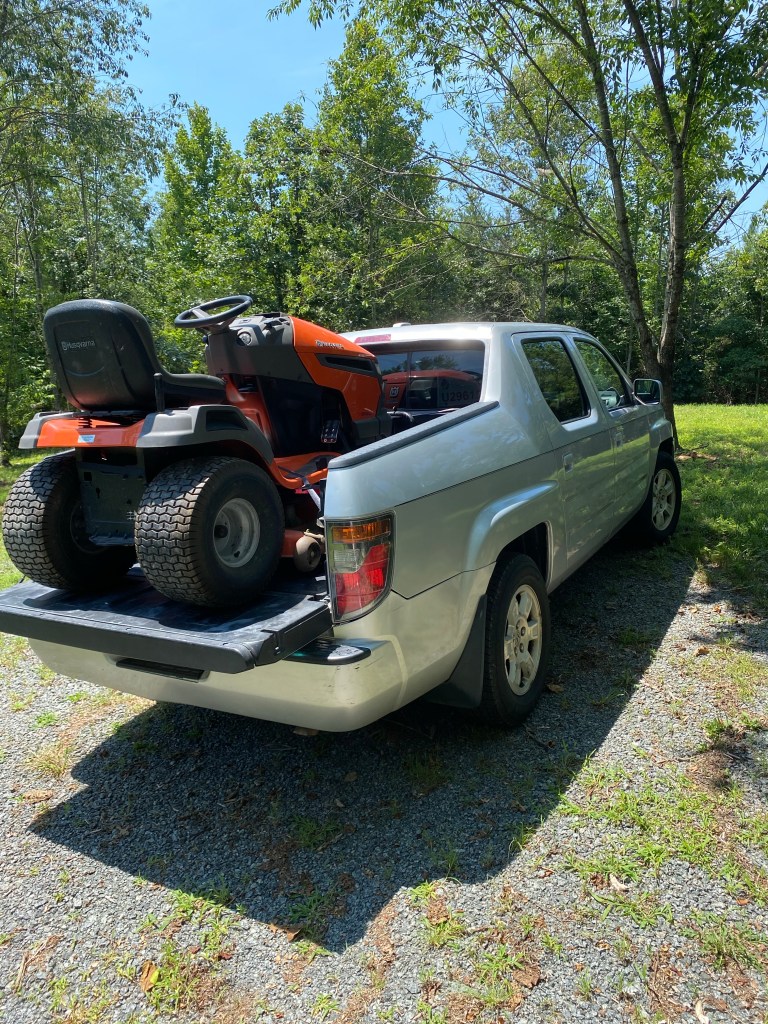
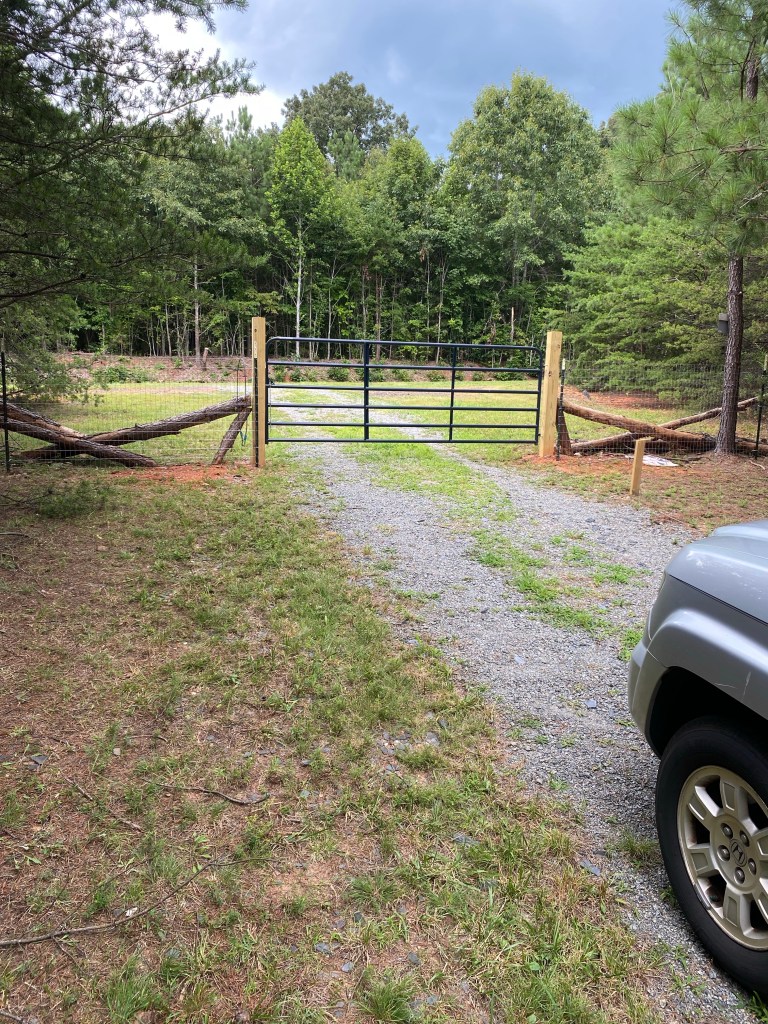
Honda Ridgeline and ancient Husqvarna with a v-twin engine – they don’t make these like this anymore. Lots of steel! Our gate to keep out the neighborhood dogs (and any other riff raff or unwanted mushroom bandits. )Unknown Russula species
One of the best things so far has been looking forward to rain out in Buckingham County. We get very excited and wait as long as we can afterwards to go and see what new mushrooms we can find. We have been surprised and delighted every time with new finds. Mushrooms love moisture. So far SAFF has been moist! We’ve been astonished by the diversity of life and can’t wait to see more.
Saint Andrews Forest Farm Blog
Is this your new site? Log in to activate admin features and dismiss this message

 St Andrews Forest Farm