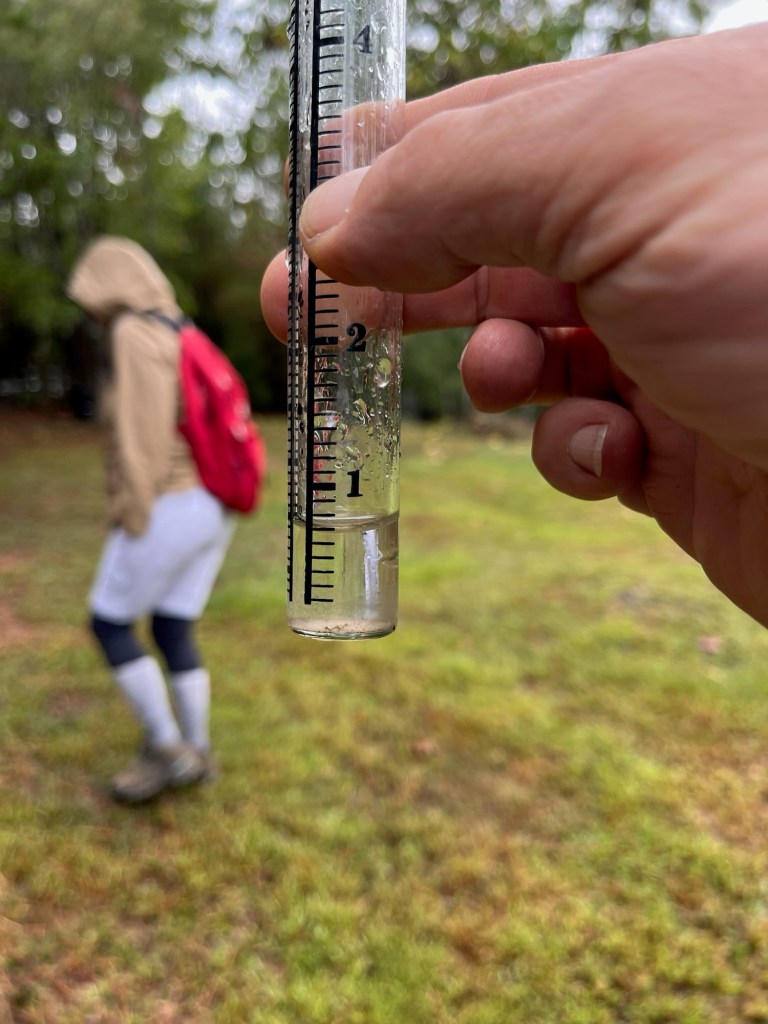
We will head out to the farm this afternoon and cannot wait to see if we finally had enough rain to encourage mushrooms to grow. It’s been so dry and crispy here throughout the summer and fall. We will check the rain gauge to see the level of precipitation but from Accuweather, it looks like it might be around an inch from the big storm that passed through Virginia this past week. We have been diligently carrying water to all of the recently planted pawpaws (Asimina triloba). We also got the roof on the lean-to finished before the weather arrived. It looks great and will protect the tractor this winter.
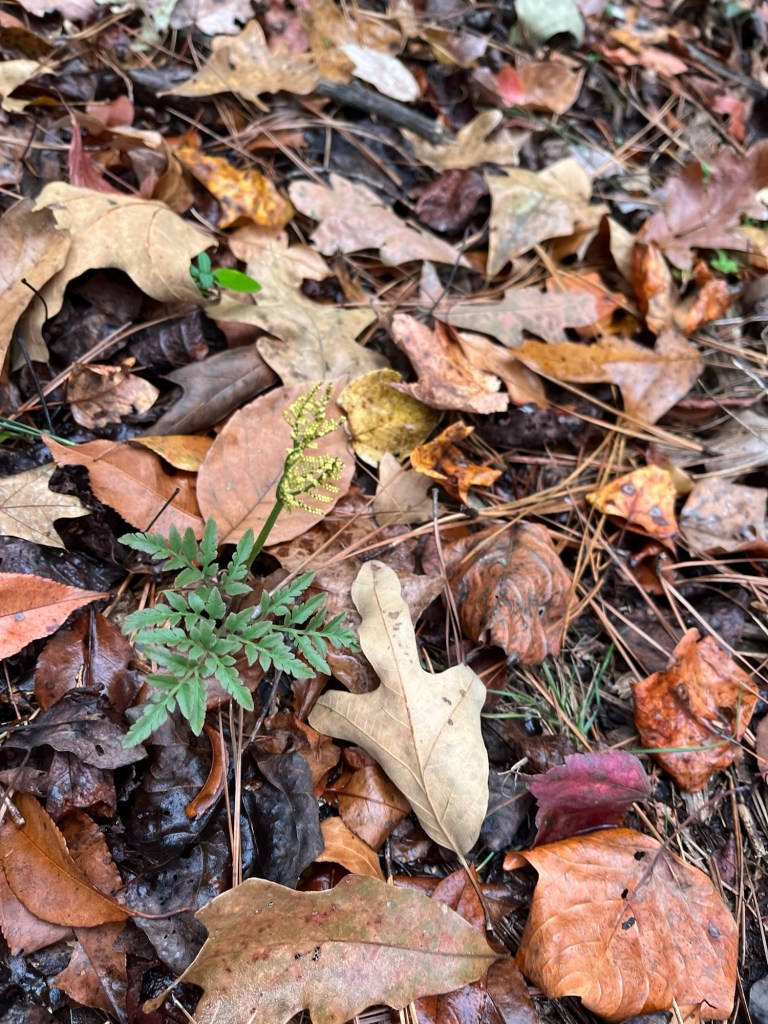
Sceptridium dissector, Cutleaf grape fern, found at SAFF. Hydnoporia olivacea, brown-toothed crust fungus, feeding on a dead tree at SAFF.
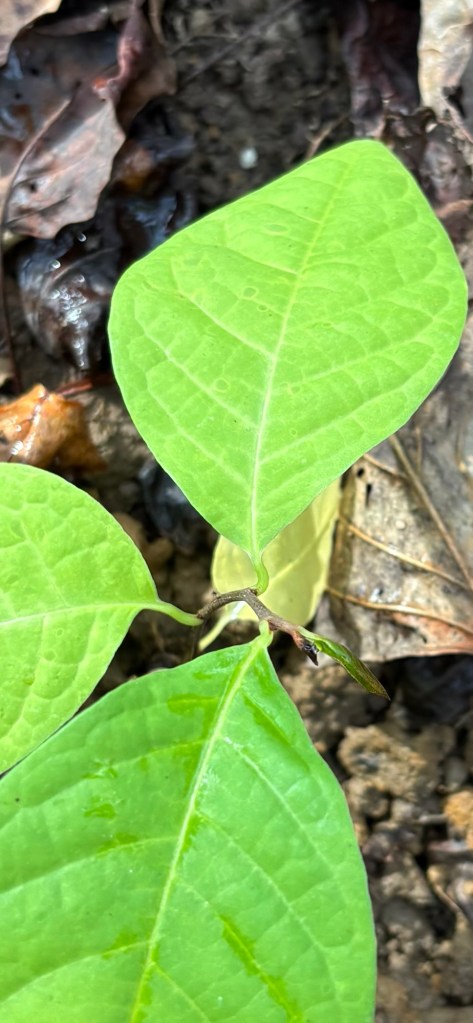
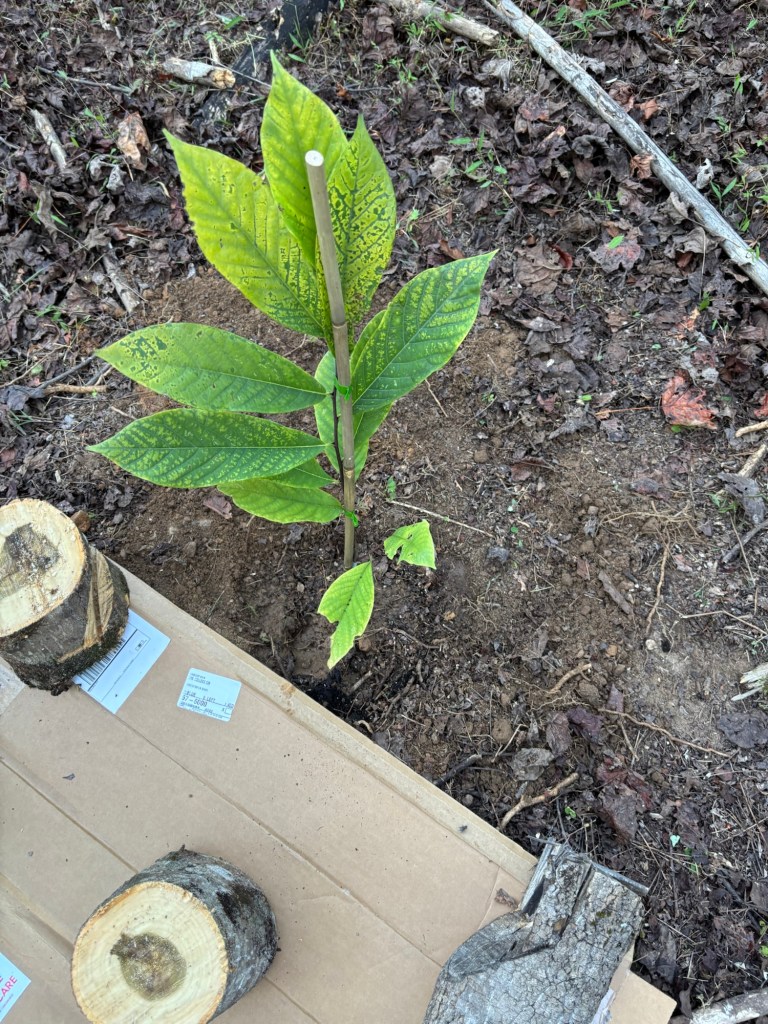
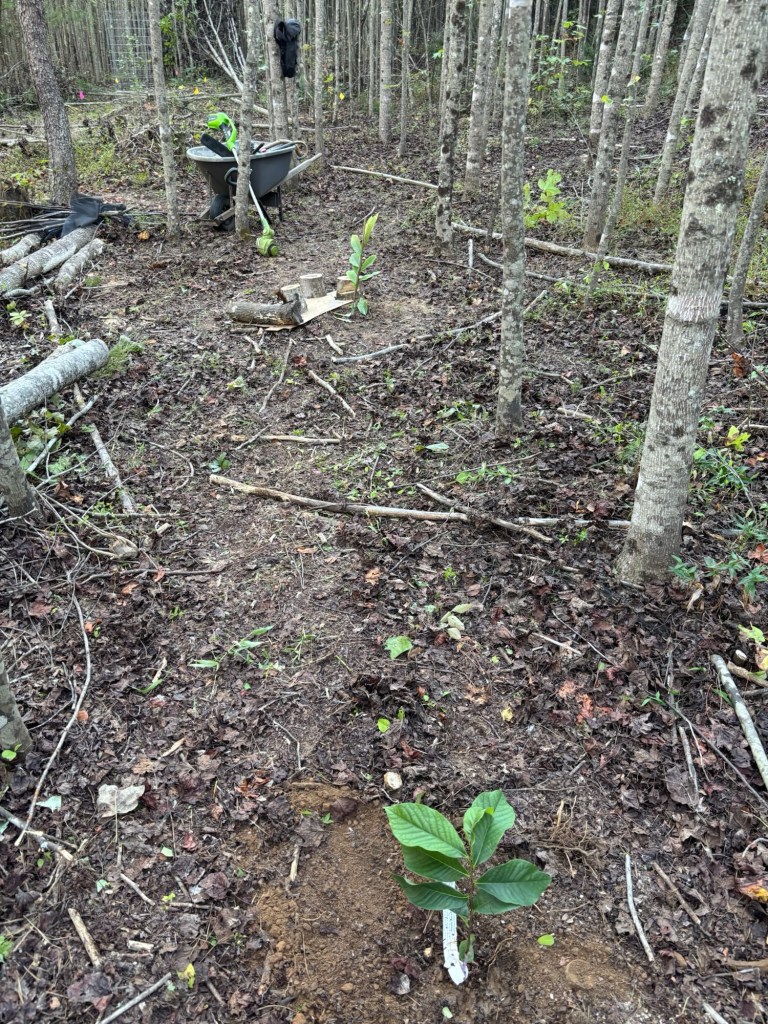
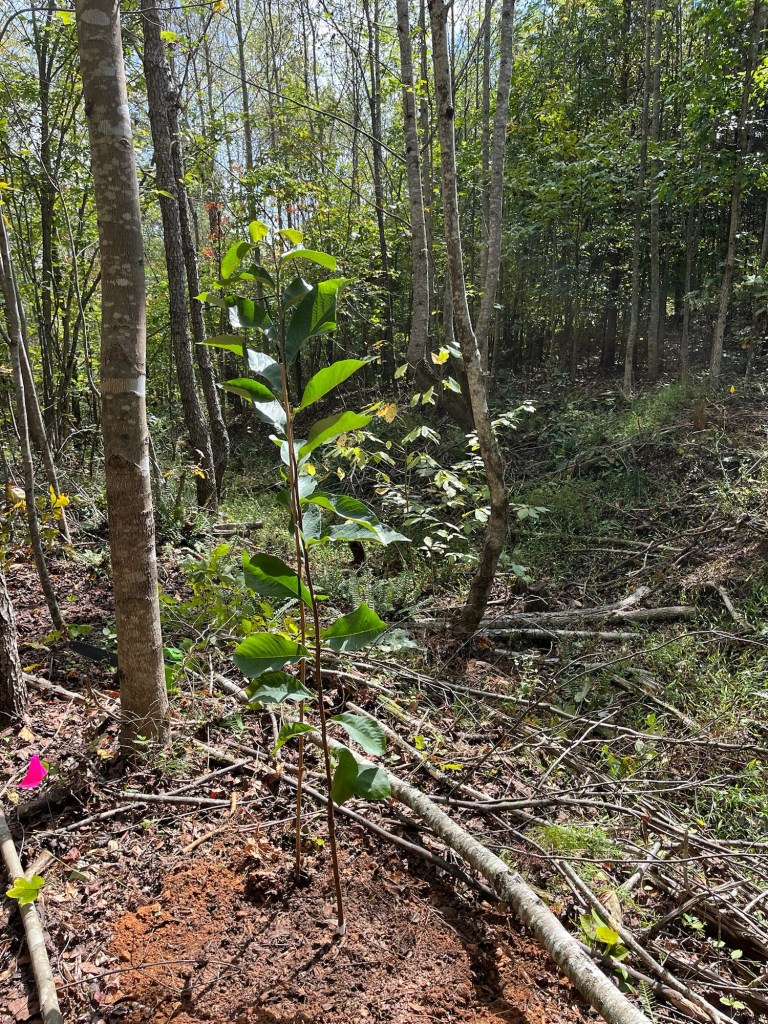
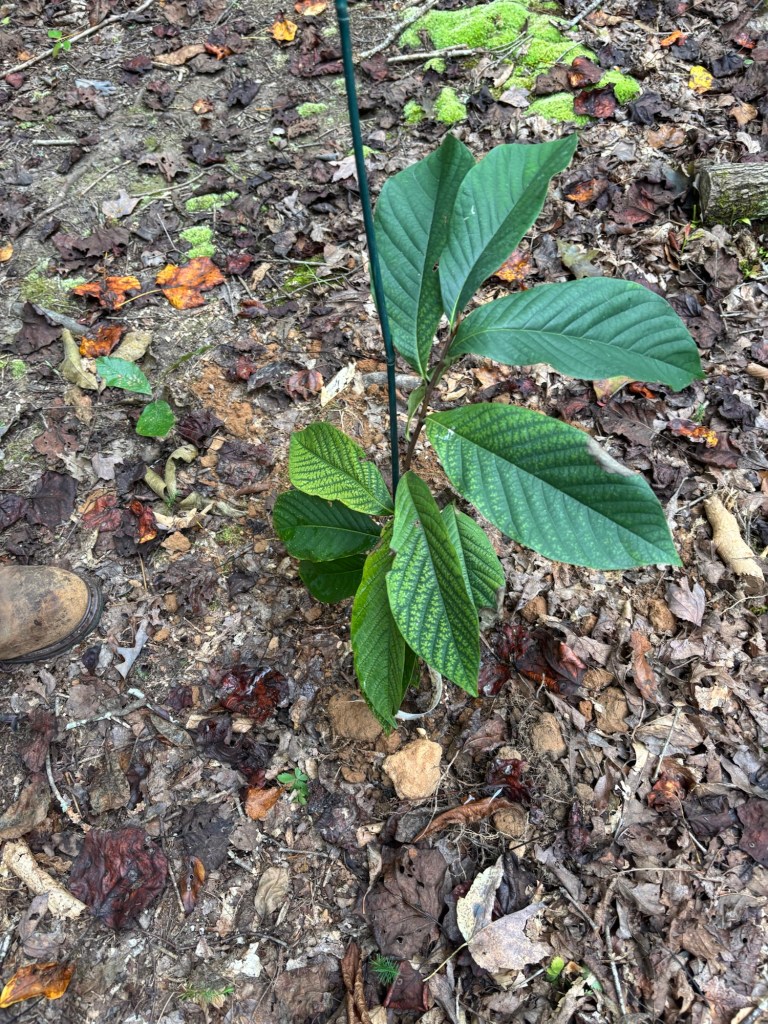
Asimina triloba: New leaf growth observed on a recently planted Rockfish River native pawpaw in the orchard at bottom of North Trail. This was beautiful to see. Hopefully it will be able to harden off before the first frost which typically occurs between October 21st to 31st in Buckingham.
We went over to St Andrews Forest Farm to water the pawpaws and take a walk.
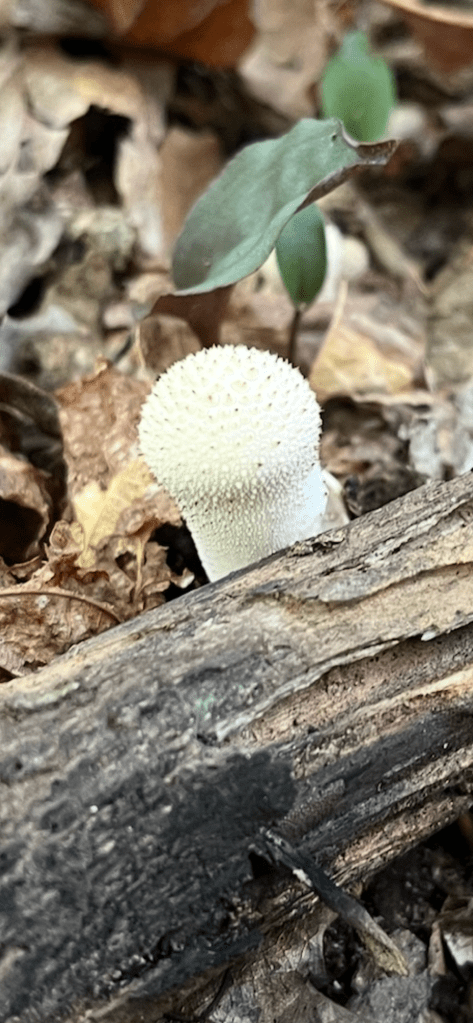
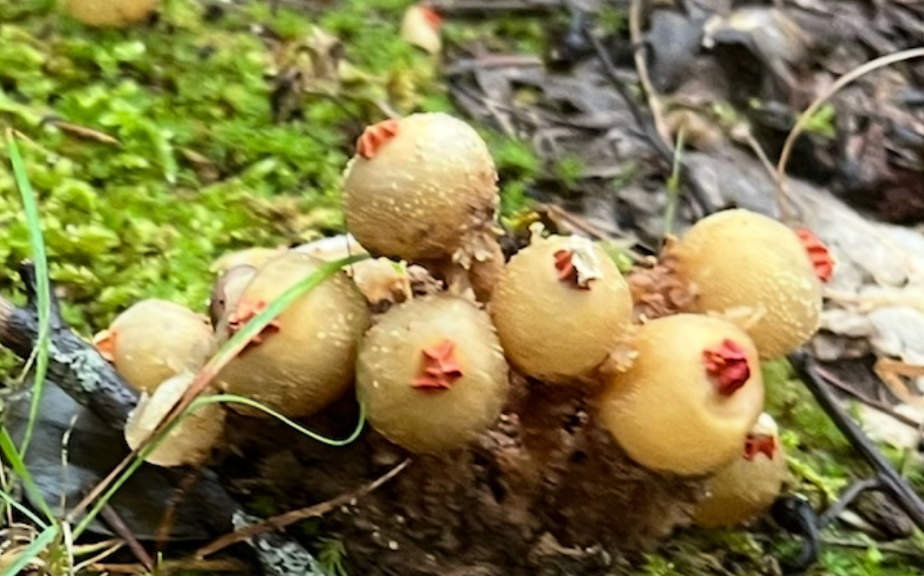
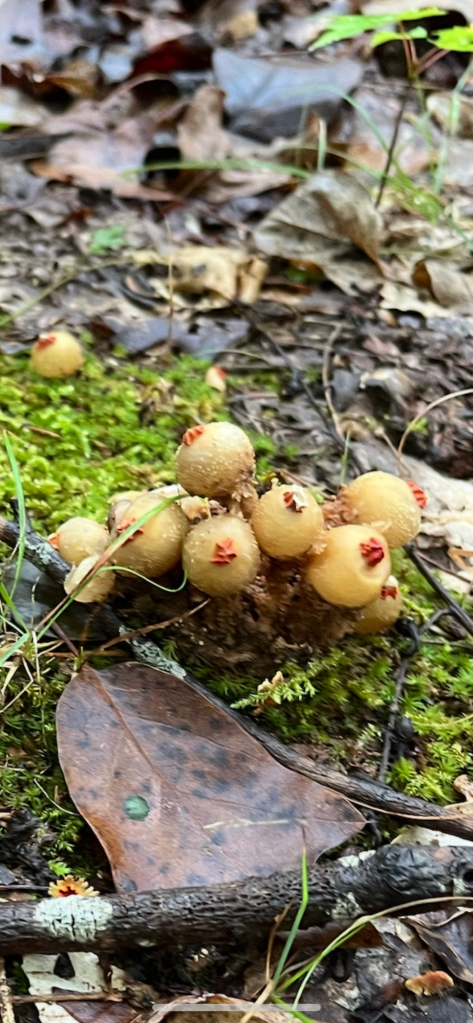
Common puffball. Lycoperdon perlatum.
We watered each recently planted pawpaw and made sure they were looking good. We came around the waterway and approached the orchard from south.
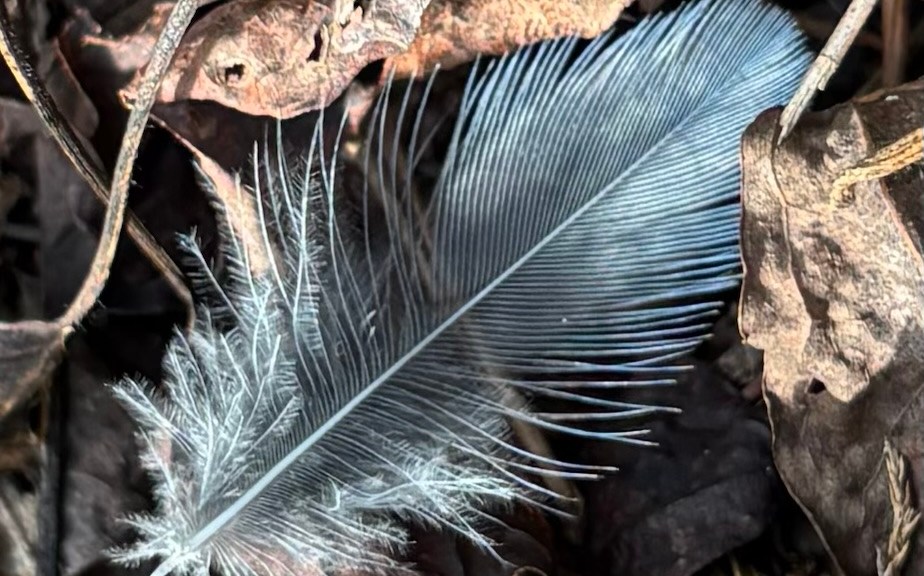
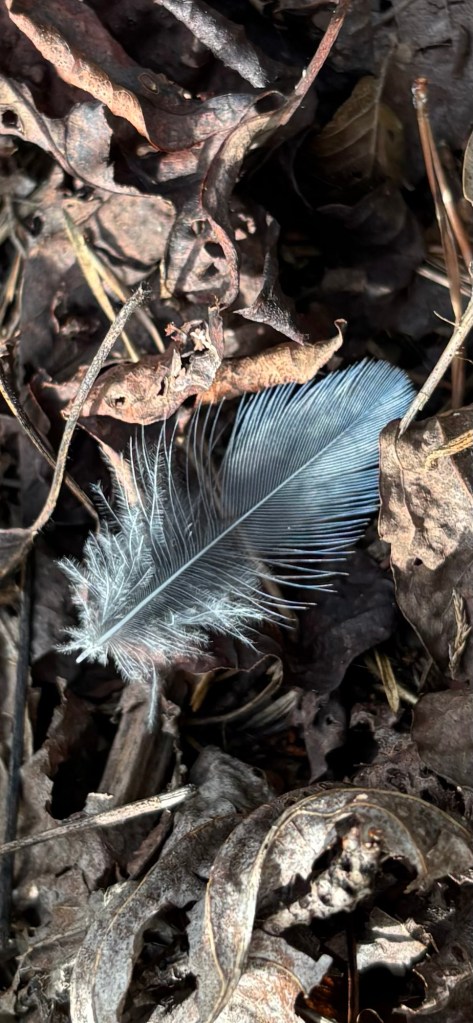
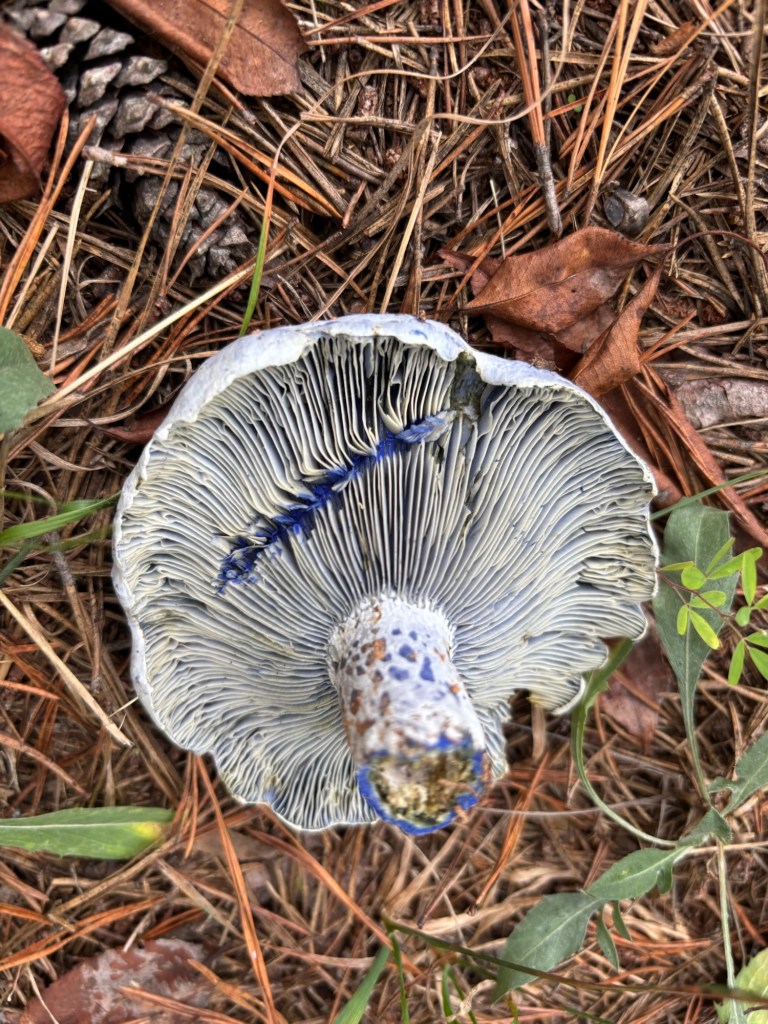
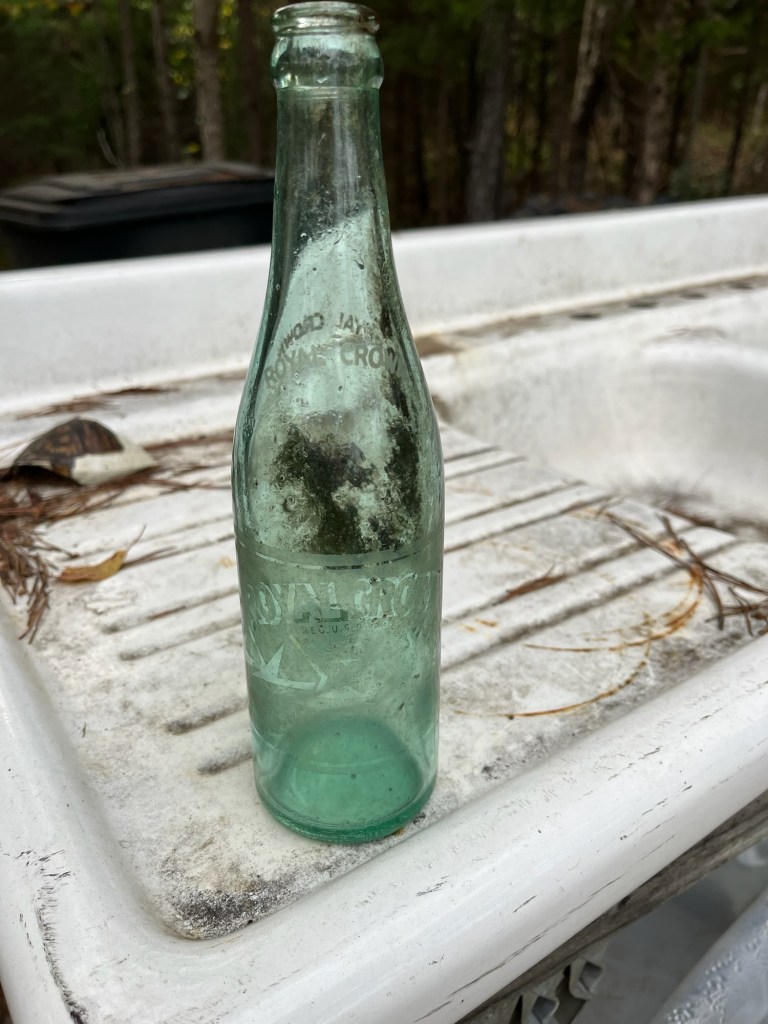
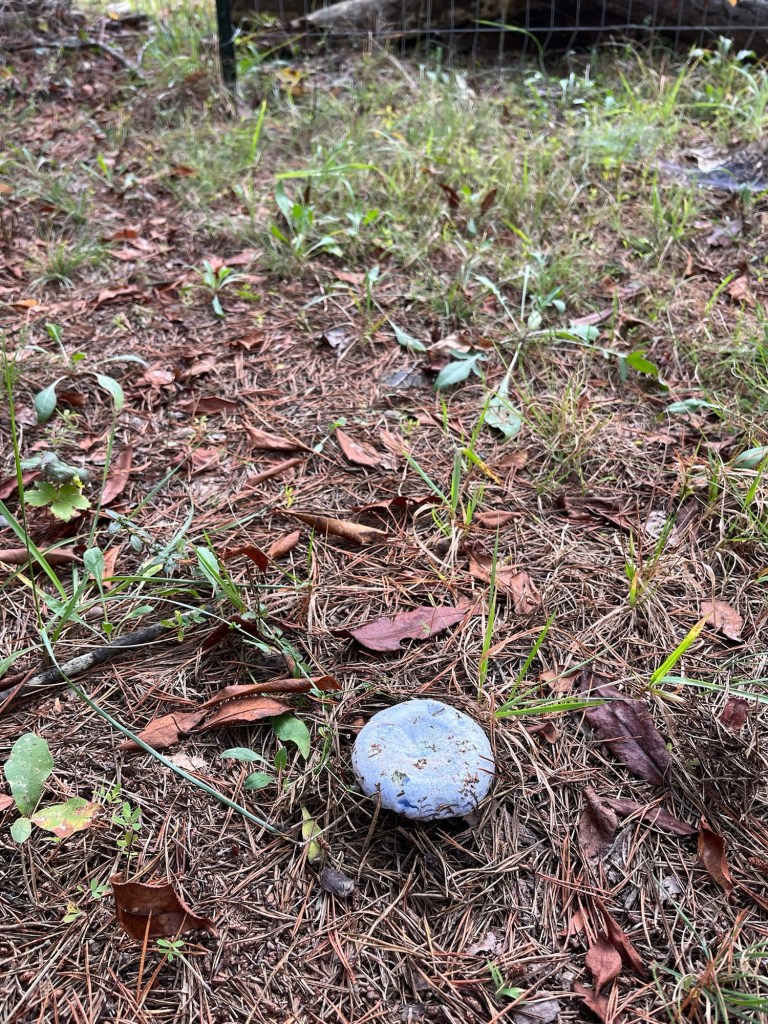
We heard a blue jay calling and following us around the forest. We found this feather. We thought it looked more like an Eastern Blue bird feather than a Blue Jay. Lactarius indigo is a milk cap with blue milky latex that oozes from the tissue when it is cut or broken. It’s edible and tasty. We find it near pines usually. This one is old and bug eaten. Royal Crown bottle found along Three Pine Gully on the north side. Looks to be from the 1930s.
We got out to the farm Friday, Saturday and Sunday. We received the Al Horn White pawpaw cultivar from Perry Pawpaws in Michigan on Friday afternoon and took it out to plant that evening in the orchard at the bottom of North Trail.
Asimina triloba: Al Horn cultivar with white fleshed fruit described as having coconut/ pineapple notes.
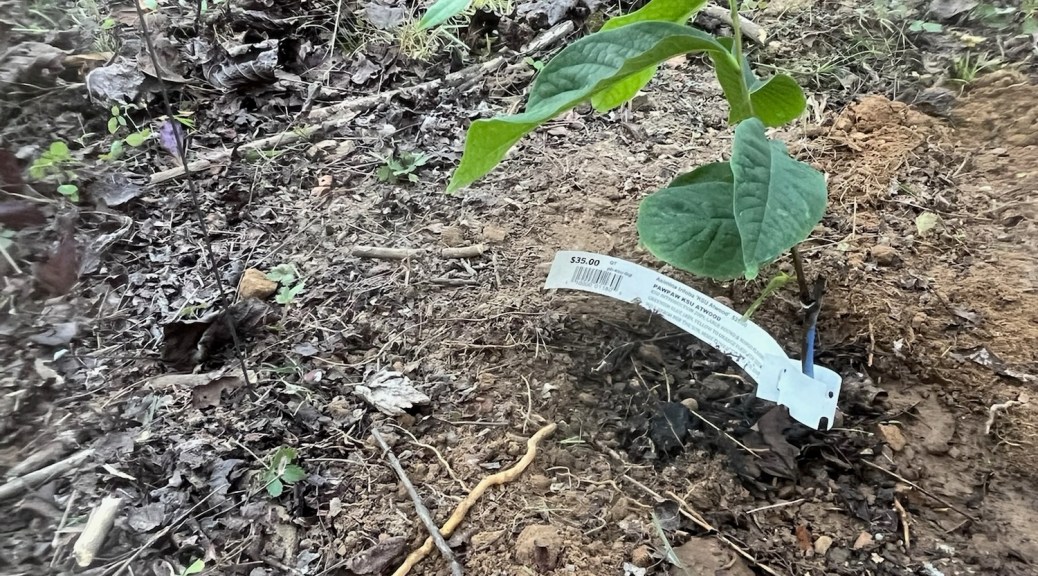
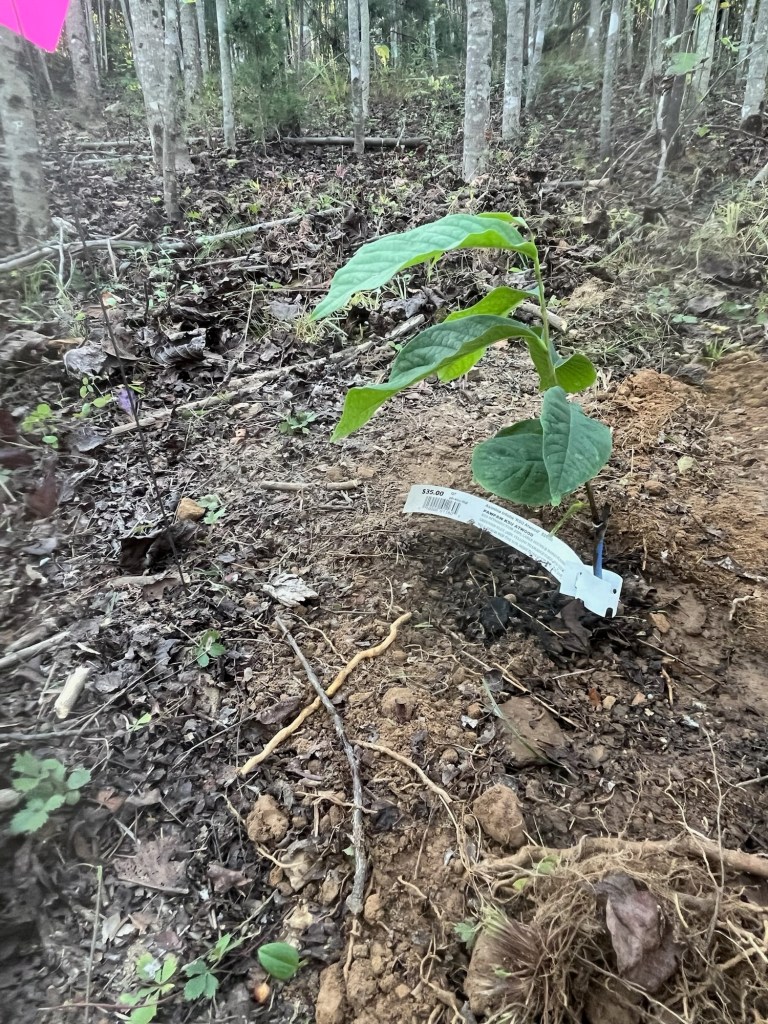
Then, we stopped by Edible Landscaping in Nelson County on the way to the farm Saturday and saw they had $35 cultivars in stock finally. They are small two year grafted trees. We were able to add Kentucky State University (KSU) Benson as well as KSU Atwood to our existing KSU Chappell. They are planted in a triangle and we hope they make beautiful fruit together. KSU has the only full time pawpaw research program in the world. They have done much to better understand pawpaw growth, genetics and orchard management practices. Each of these cultivars are known for resistance to disease, delicious tastes of creamy mango banana flavor as well as being fast growing with high yields. They are each welcome additions to the orchard.
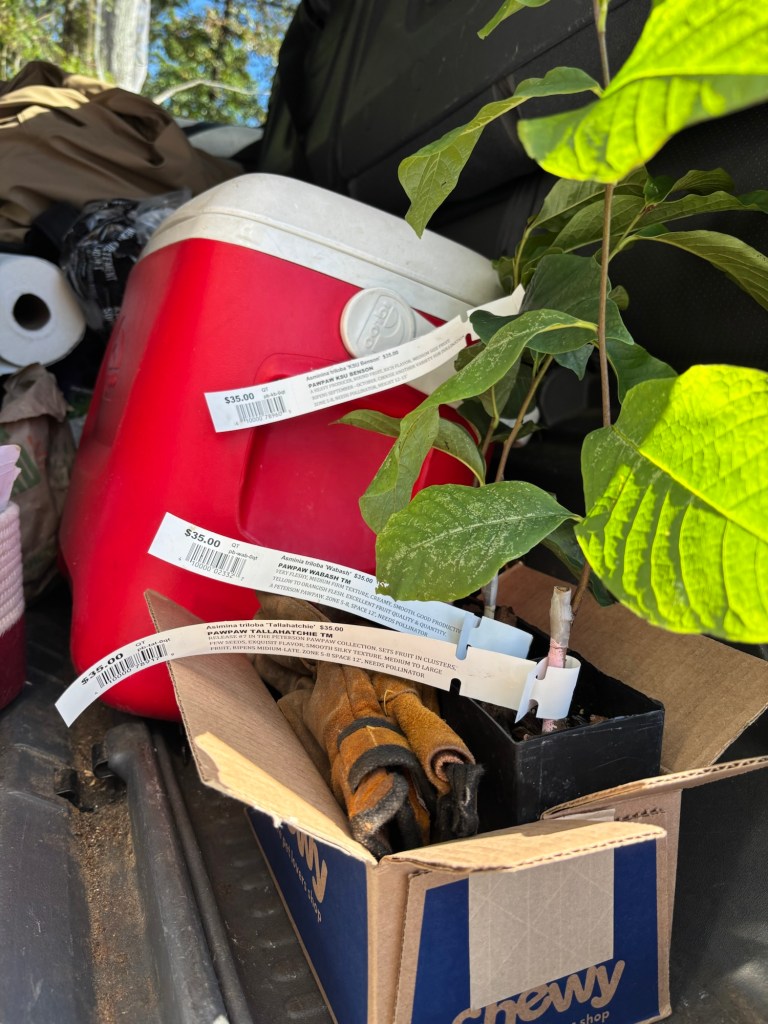
We also added the Potomac, Tallahatchie and Wabash to our Neal Peterson Pawpaw collection. The only one we still need to find is Susquehanna. He has released seven superior cultivars well known and valued for taste and growth. He is known as Mahatma Pawpaw and is worth looking into if you’re interested.
Wabash cultivar just planted in the orchard. Dr Pomper at KSU urged Neal Peterson to release this as Wabash since the shape is similar to a cannonball.
We also added NC 1 and Sunflower to our orchard this weekend. We are delighted. So far this year we planted 100 Asimina triloba trees at the farm and 8 at the house. We also ordered 50 more bare root seedlings from the Virginia Department of Forestry which we will get in February. We will place them in deep 12 inch tree pots to grow until spring when we will plant them at SAFF in the orchard. We are on our way to a Pawpaw paradise for sure.
One Indigo Milkcap (Lactarius indigo) up top along the driveway yesterday.
Fields of giant cosmos witnessed along Plank Rd at Pippin Hill Farm and Vineyard at sunset last night as we drove home from SAFF.
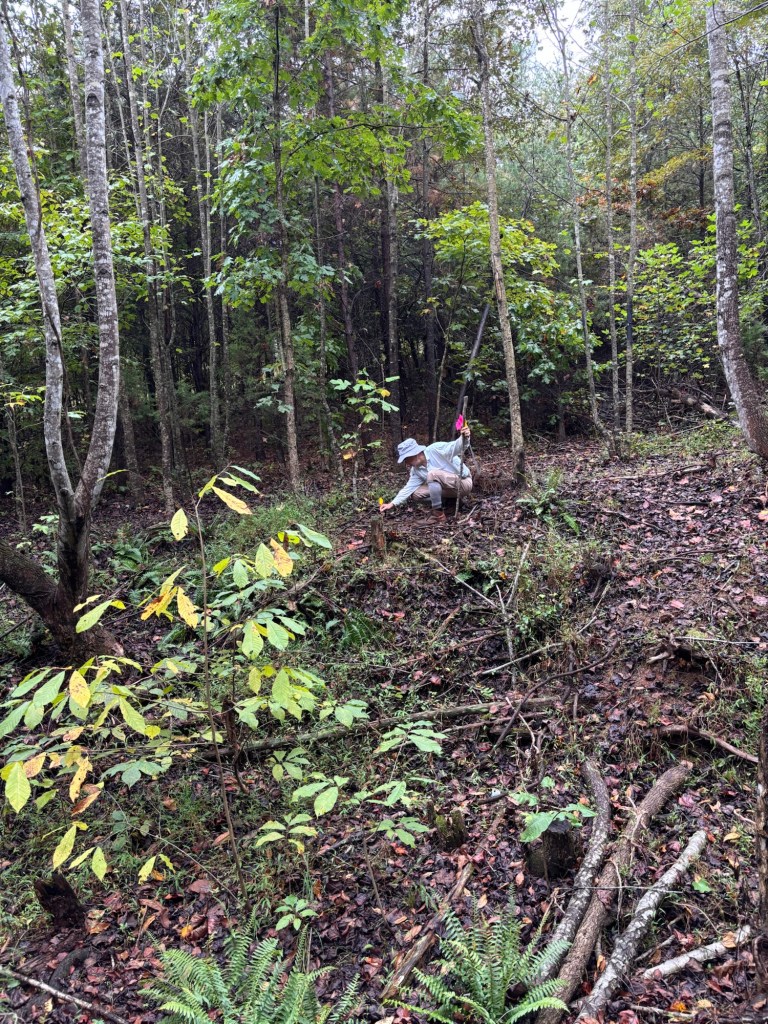
Asimina triloba: Chris placing a yellow flag on our native Rockfish River pawpaw seedling just planted on the south gully in Dan’s Folly alongside one small patch of St Andrews Forest Farm pawpaw natives which are below Chris in the gully with the yellowing leaves. They are some of the first trees to go dormant for winter. We think these may be clones. It’s a group of 6 with some good sun but no flowers or fruiting yet. We hope the new dna within these just planted seedlings will help wake them up.
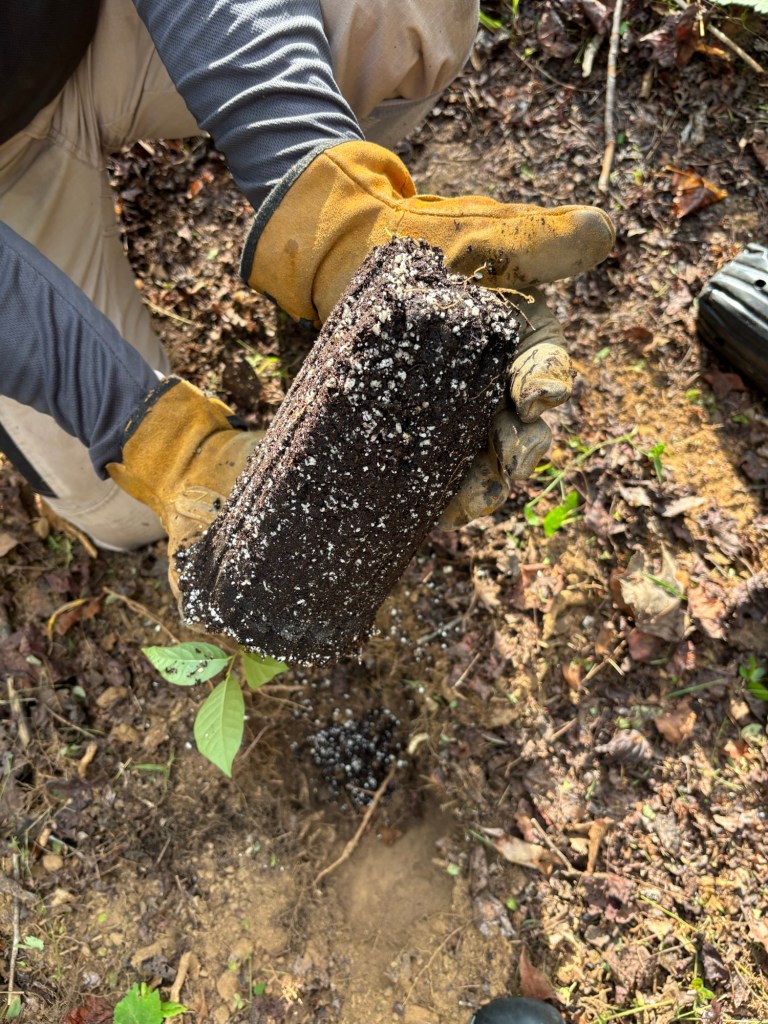
We finished planting the seedling pawpaws with a full 100 in the ground so far this year! It was a big project. Besides our seedlings that we harvested from both our foraged fruit along our drive to the farm at Rockfish River and from Edible Landscaping’s cultivated pawpaws, we also planted a few of our own cultivars. We added Allegheny, Kentucky State University Chappell, Rappahanock and Mango to our existing Shenandoah that we planted last fall. We are waiting for our first white fleshed pawpaw seedling to arrive from Perry Pawpaws in Michigan. They said they’ll ship in October. It’s an Al Horn cultivar (taste has notes of pineapple and coconut) and we will place it in the Pawpaw Orchard at the bottom of North Trail. They also said it should be about 2 feet tall which is pretty big for pawpaws to not be in the ground yet. The tap root on the pawpaws like to go deep quickly. I can’t wait to save it from its pot and get it planted.
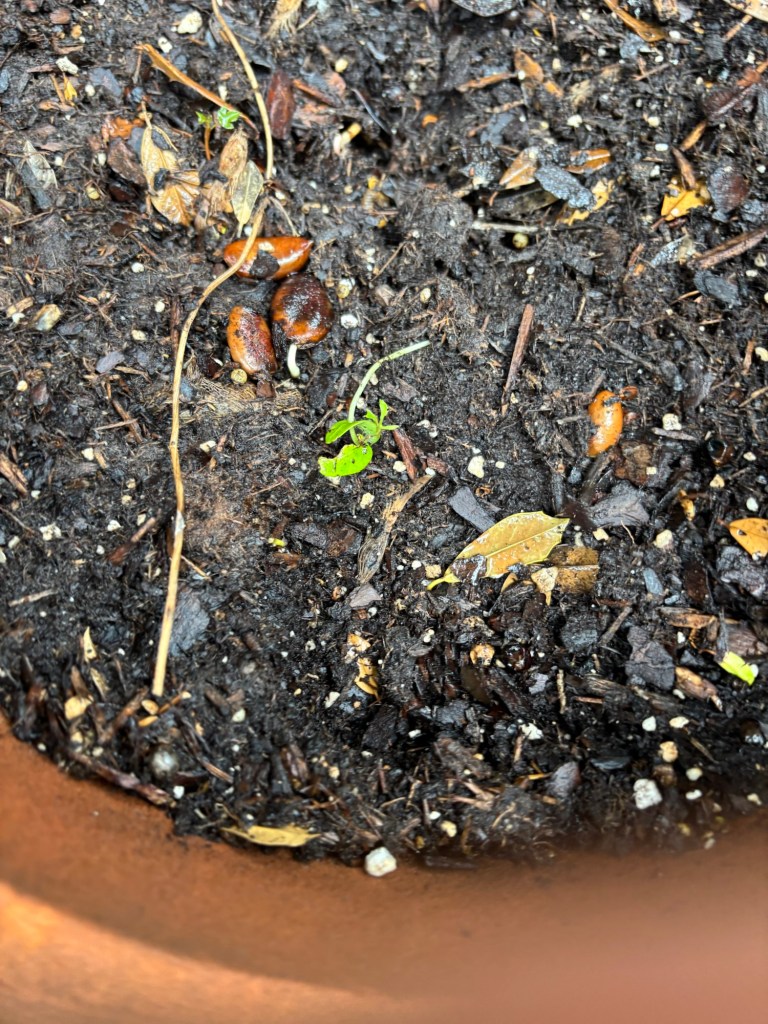
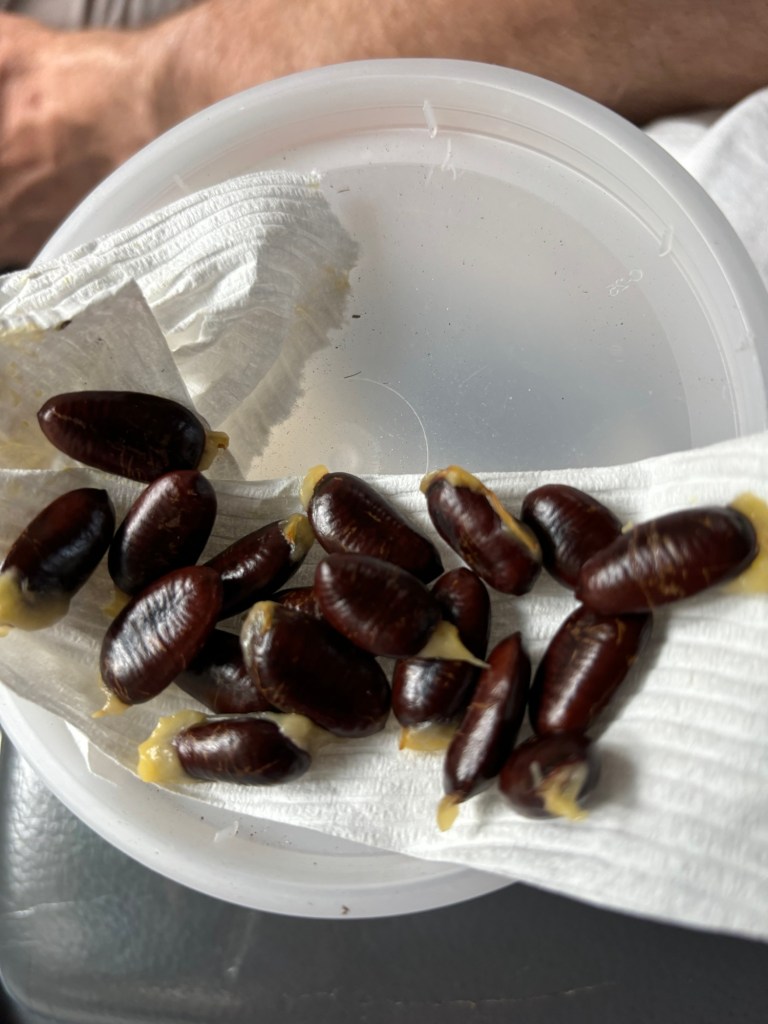
These brown seeds are the pawpaw seeds that you see sprouting the tiny green leaves. The white you see is the root. By the time you see anything on top, that root has shot 8 or so inches down. They like a lot of room. We put our seedlings in 12 inch deep tree pots to accommodate this long taproot. Some of our seedlings had roots growing from the bottom of the pot when we planted them at St Andrews Forest Farm after just a few months since the seed sprouted in June and planted in September—so just 3 months! Asimina triloba: Rappahanock pawpaw cultivar planted yesterday at Fern Trail near the south gully. We have been on the lookout for more of Neal Peterson’s pawpaw cultivars named after Native American Rivers. This Rappahanock is described as sweet, refreshing with a clear simple flavor and creamy banana custard consistency with notes of mango or melon. It joins the Shenandoah and Allegheny in the SAFF pawpaw orchard. We hope to add Tallahatchie and Susquehanna to them within the next few years. As well as Potomac and Wabash cultivars when we find them. Besides adding new dna, these cultivars will be useful once we have the seedlings producing pawpaws and see which ones aren’t delicious. We will make cuttings from the cultivars and graft them to the native seedlings and have productive harvests with a proven known variety. We will wait 7 years for the seedlings to produce. The cultivars usually produce within 4 years.Asimina triloba: Allegheny cultivar happily planted on the Pawpaw Peninsula just across from the large St Andrews Forest Farm native wild patch with hundreds of pawpaws. It could be as many as 400 small trees down there and they may all be clones. We’ve been giving them light and feeding them with minimal flowering and zero fruit. We got some more rain last week which was much needed and appreciated! The pawpaws are thirsty trees, albeit usually drought resistant with their long taproot. We hope the increased rain will bring on the mushrooms. Calestoma ravenelii, stalked puffballs, found all over SAFF. We observed it growing out of moss yesterday. It has a mycorrhizal relationship with oaks and other hardwood trees. It grows in rich moist but well drained deciduous forests. It can grow alone but we see it mainly in groups.
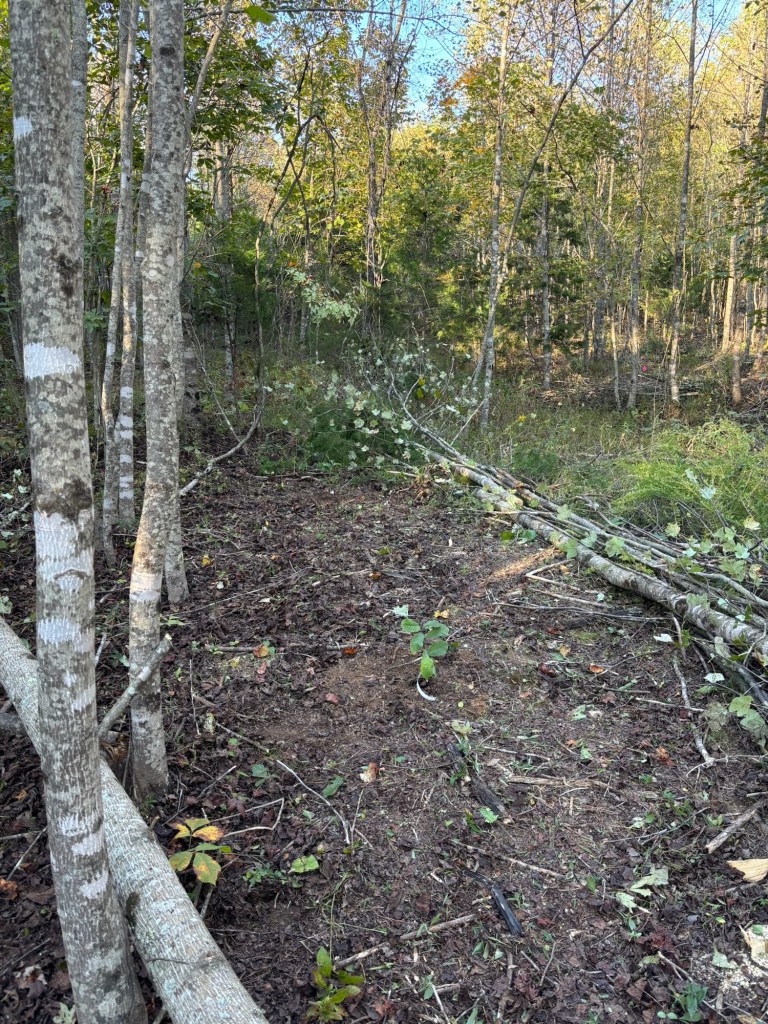
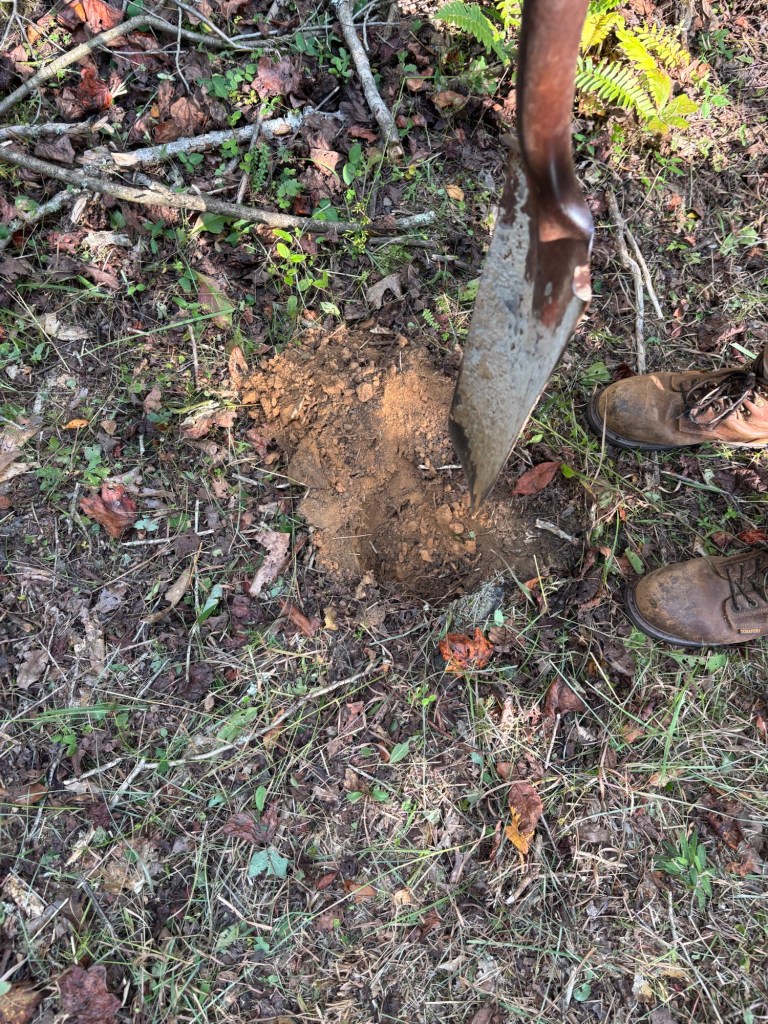
Just 21 more to plant after going out every day and planting 9 or so at a time. The orchard has really turned out nicely at the bottom of North Trail. The earth is red silty loam which is pawpaws (Asimina triloba) preferred soil.
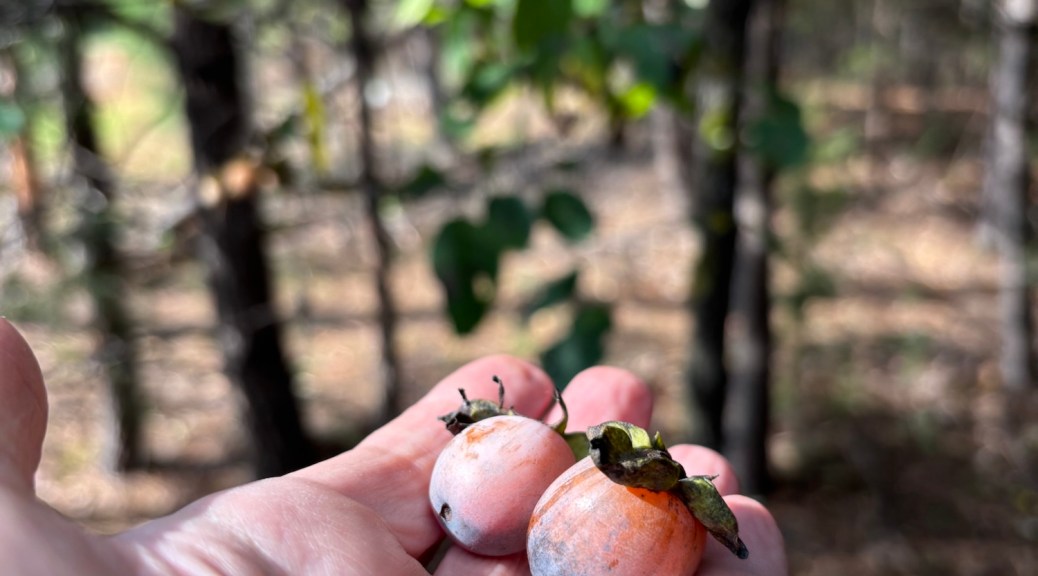
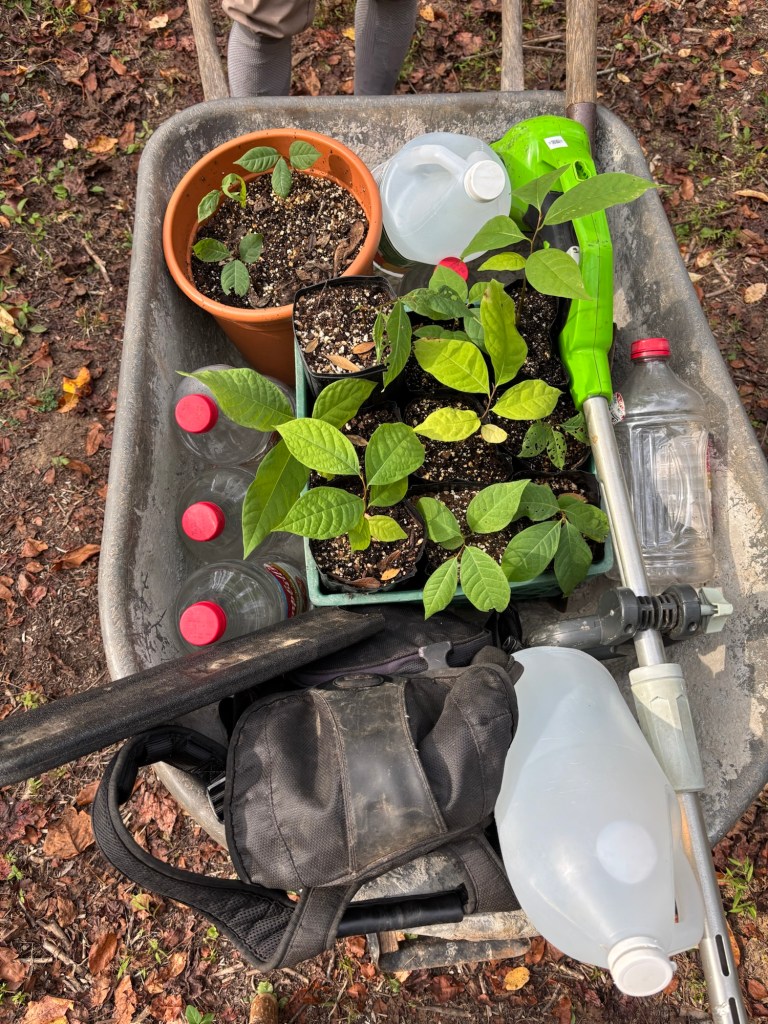
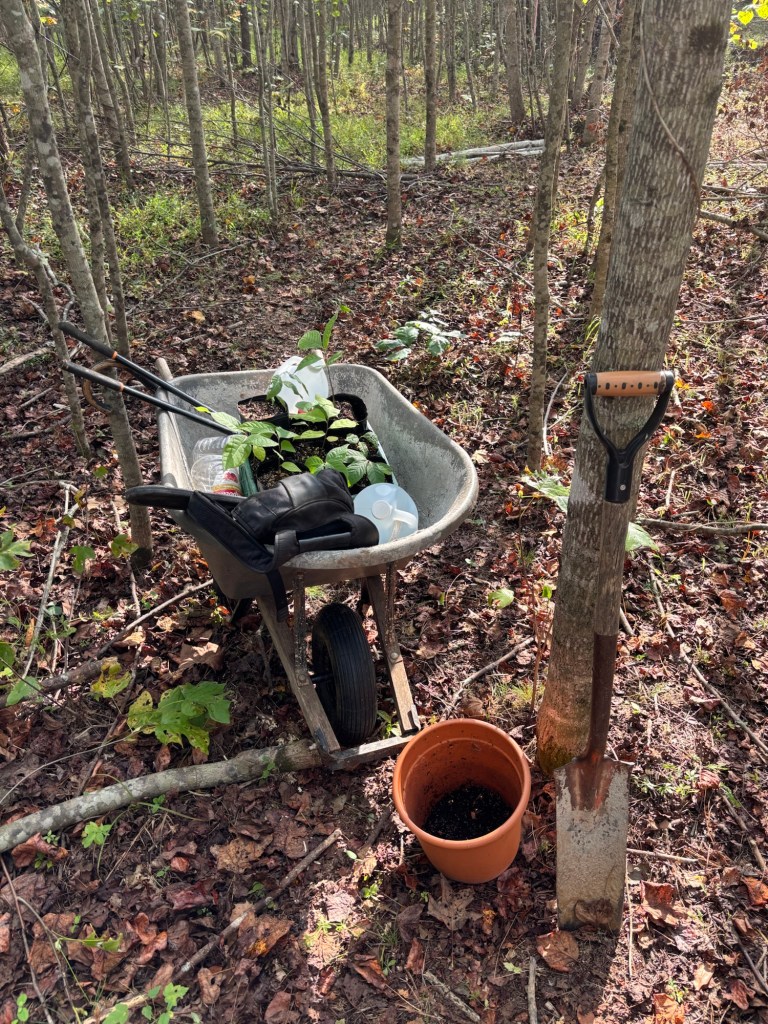
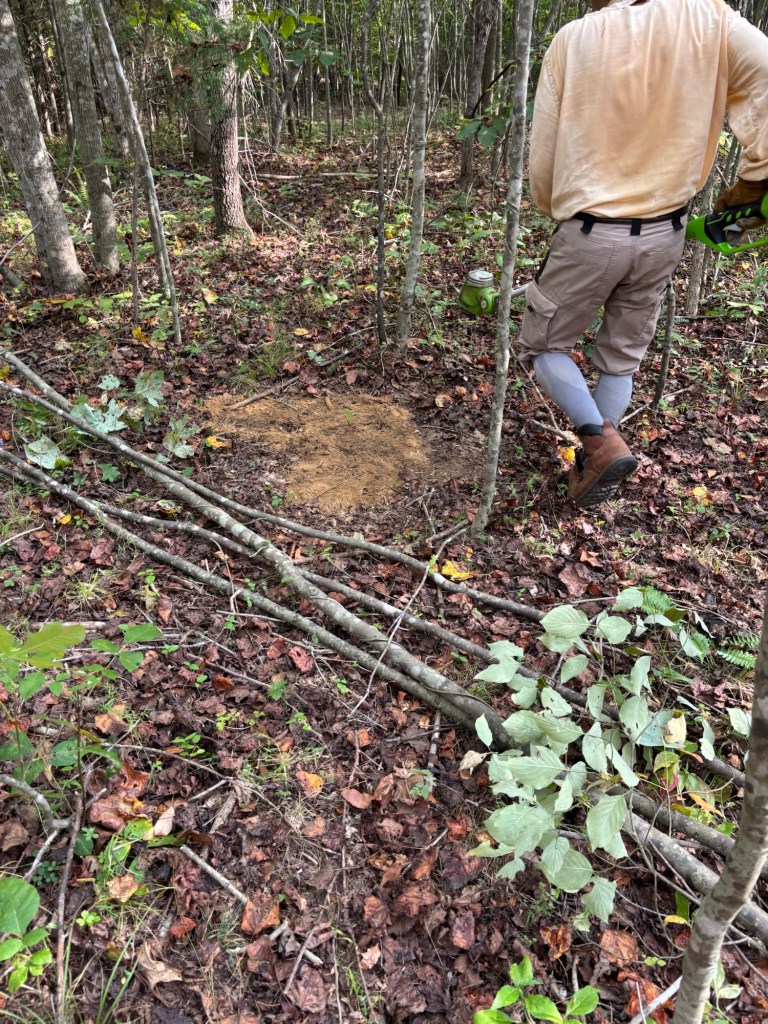
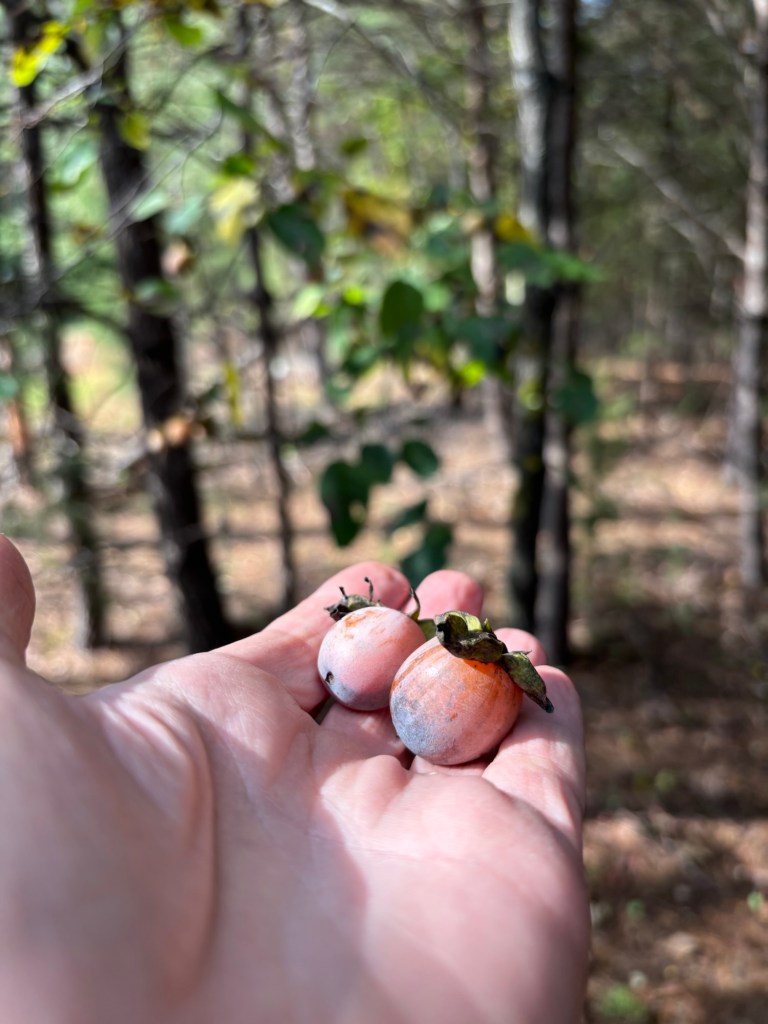
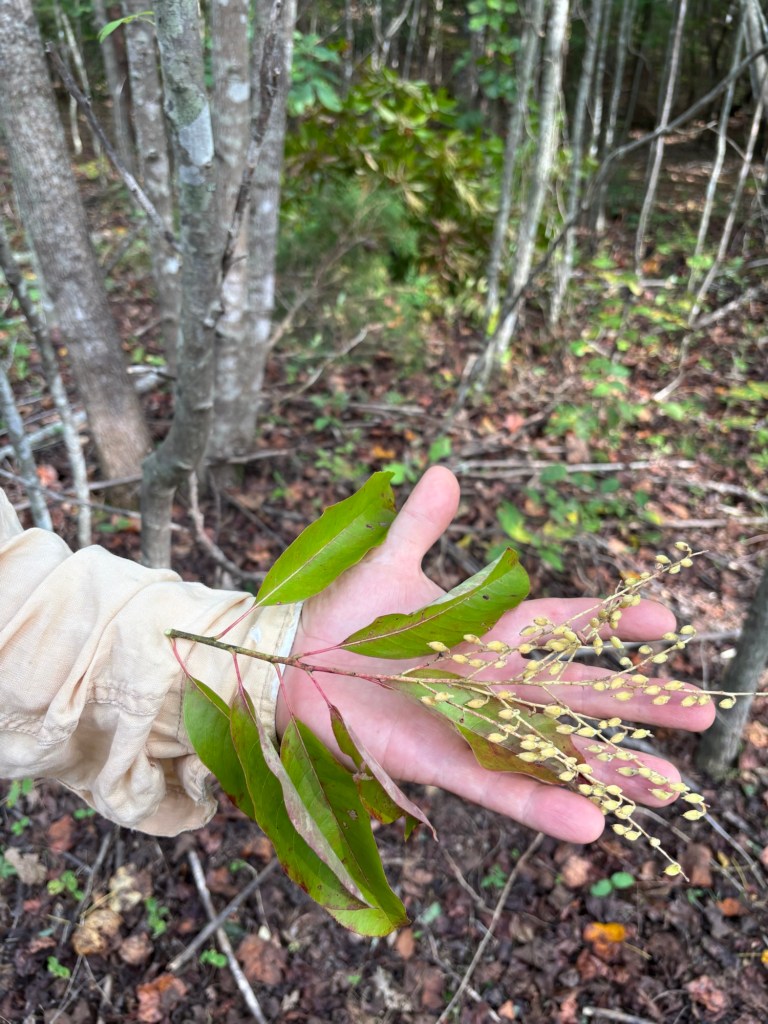
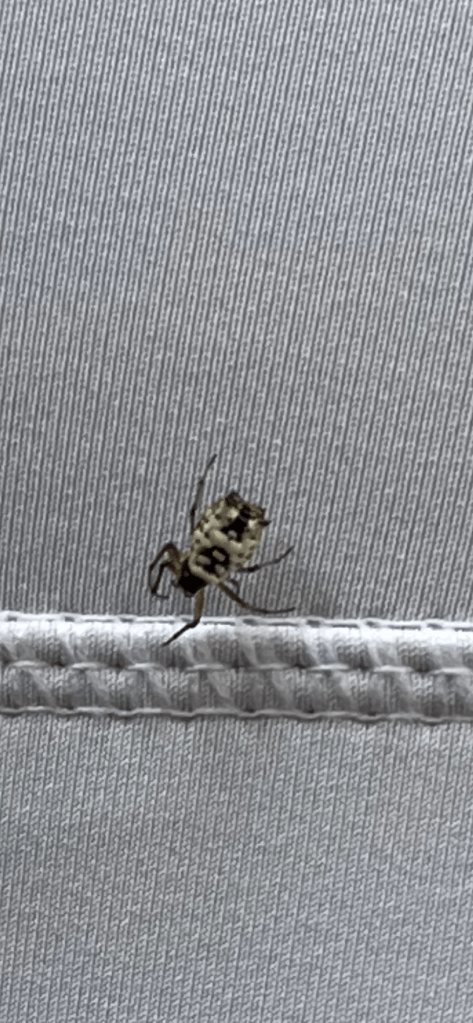
Our wheel barrow full of the supplies we used to clear spaces and plant our pawpaw seedlings.Red silty loam near the wet weather gully at the bottom of North Trail. Tasty persimmon to snack on finally. A branch of Oxydendrum arboreum, Sourwood tree. Micrathena mitrata, White micrathena, is a species of orb weaver. They build their webs across the trails.
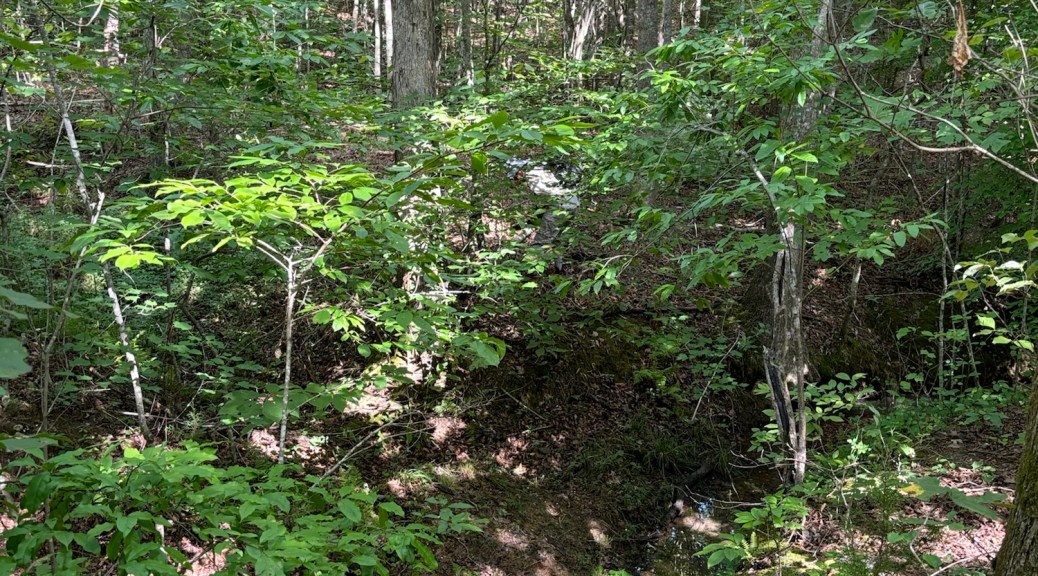
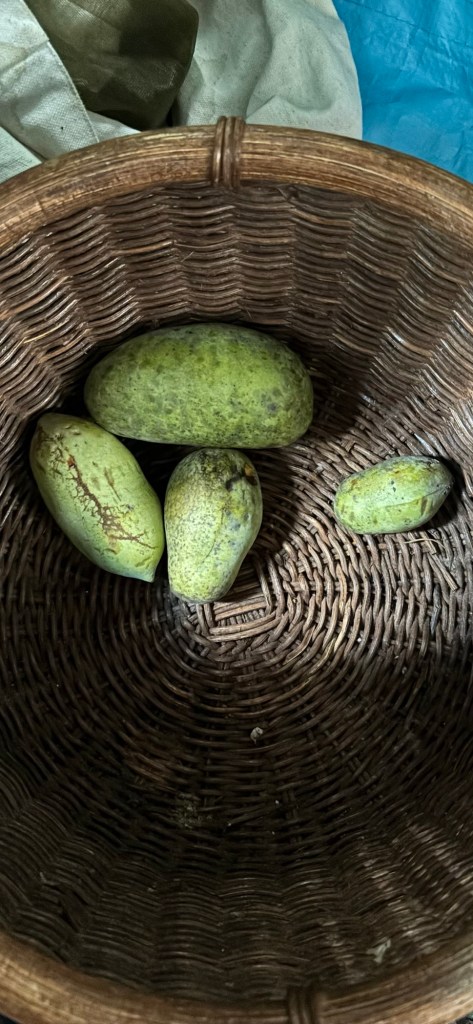
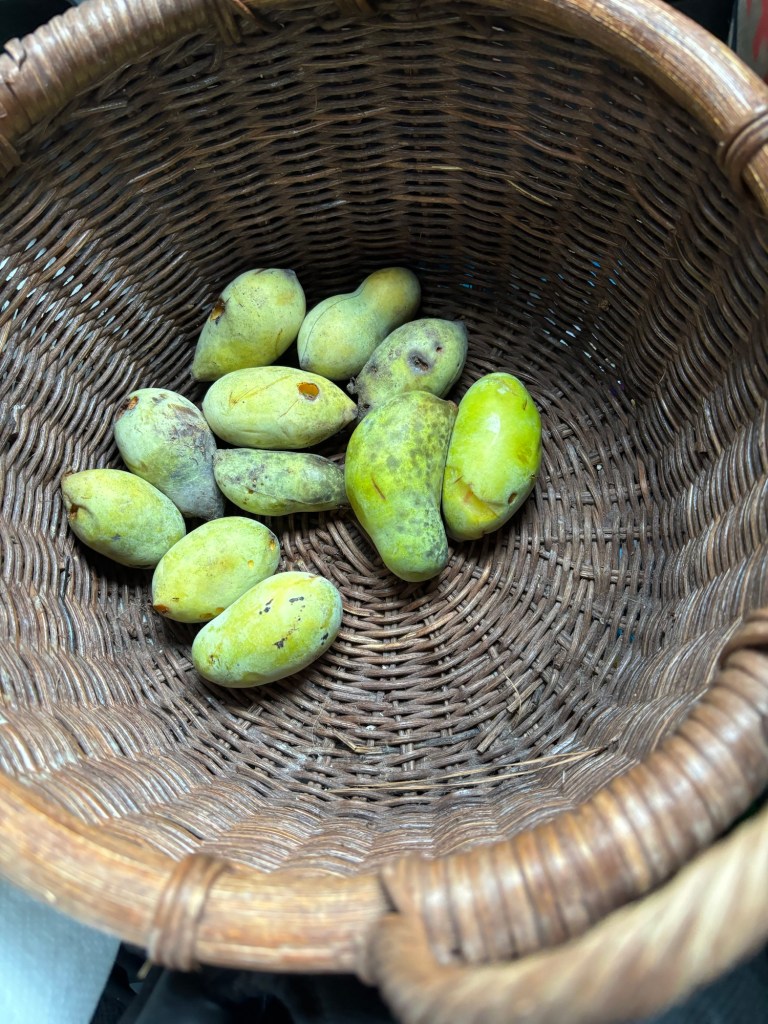
After a busy week, we wrapped up a few local chores and errands at home in Staunton, and started the holiday weekend Friday morning with a specific mission. Inspired by our visit to a local nursery last weekend, we hoped to find ripe pawpaw fruit in the wild. In particular, we wanted to collect some wild fruit to eat, and also collect the seeds to grow new trees with and bring novel dna to our pawpaw patch. We are saving all of the seeds from our fruit and we are going to plant them at the farm. A dedicated search on the iNaturalist app showed us locations along our route from home to the farm in Buckingham County where pawpaw trees, flowers and fruit were observed and identified. Some of the observation sites along or near our route were private land, so we ruled them out. But we began to notice the pawpaw trees by the side of the road as we drove to and from the Farm. Especially where rivers, creeks and streams crossed the road. We saw Black walnut trees and many pawpaw trees. Having tried a couple ripe pawpaws last weekend, we figured it would be worth stopping to take a look if we saw accessible, fruiting pawpaw trees. They fall off the tree when ripe. So far, we have found about 20 in various stages of ripeness. A few were so far gone, we had to just plant them in a pot. We have at least a hundred seeds now and we have them stored in the refrigerator. We’ve also gotten to eat a few of these creamy, tropical-tasting native fruit.
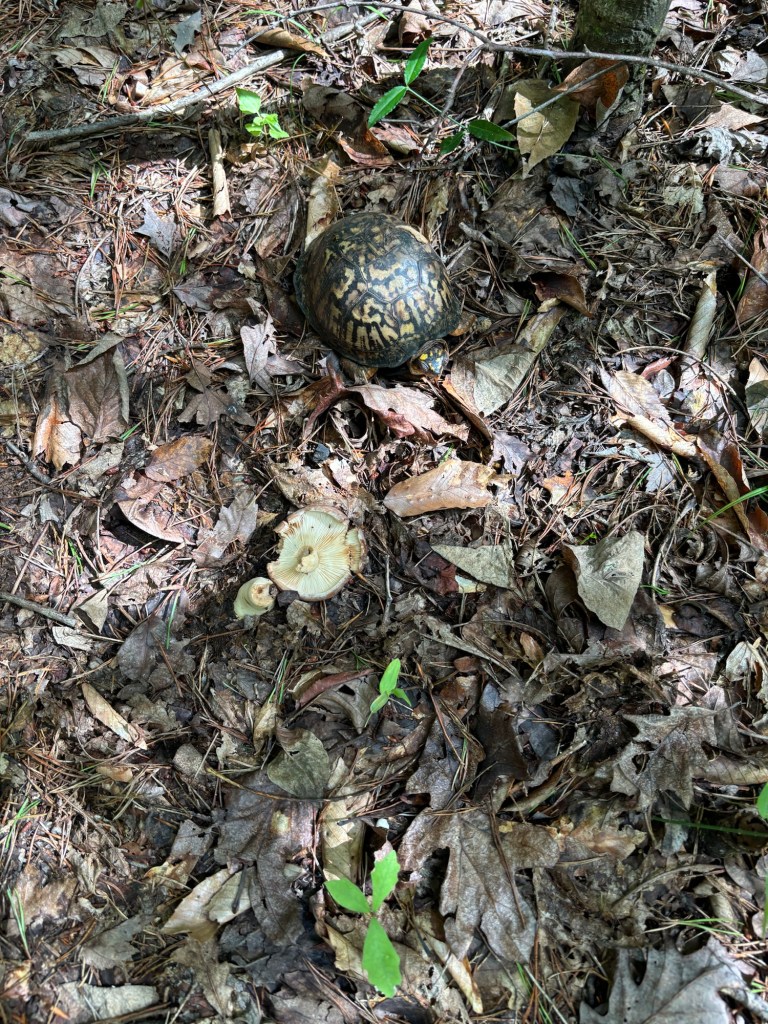
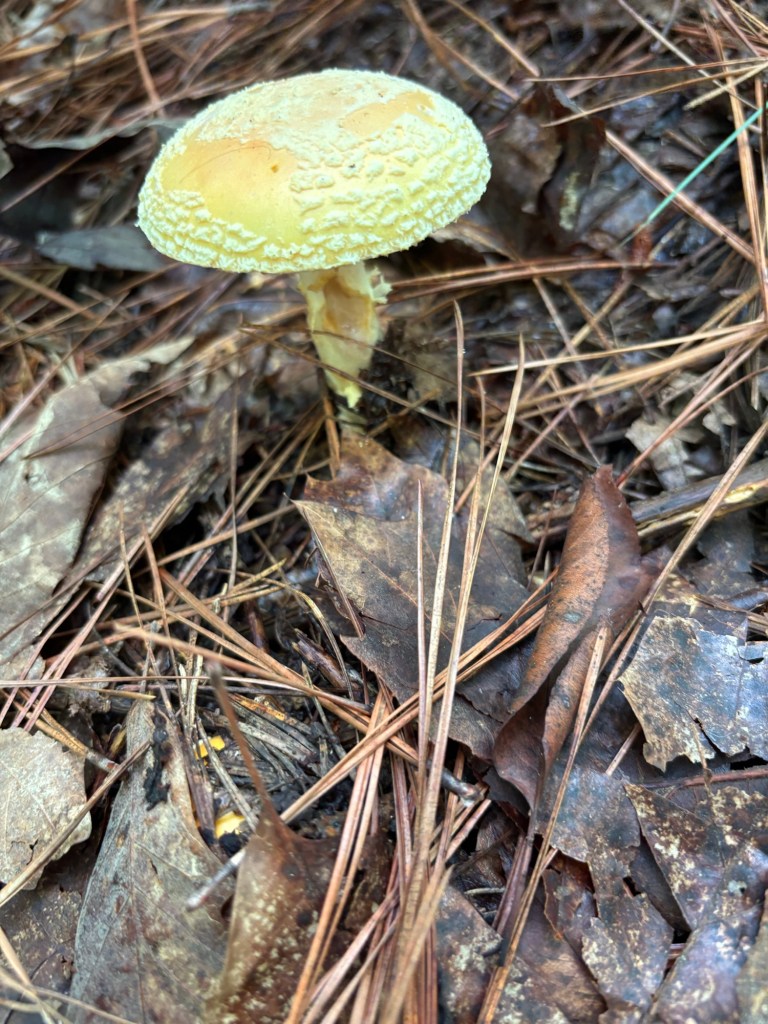
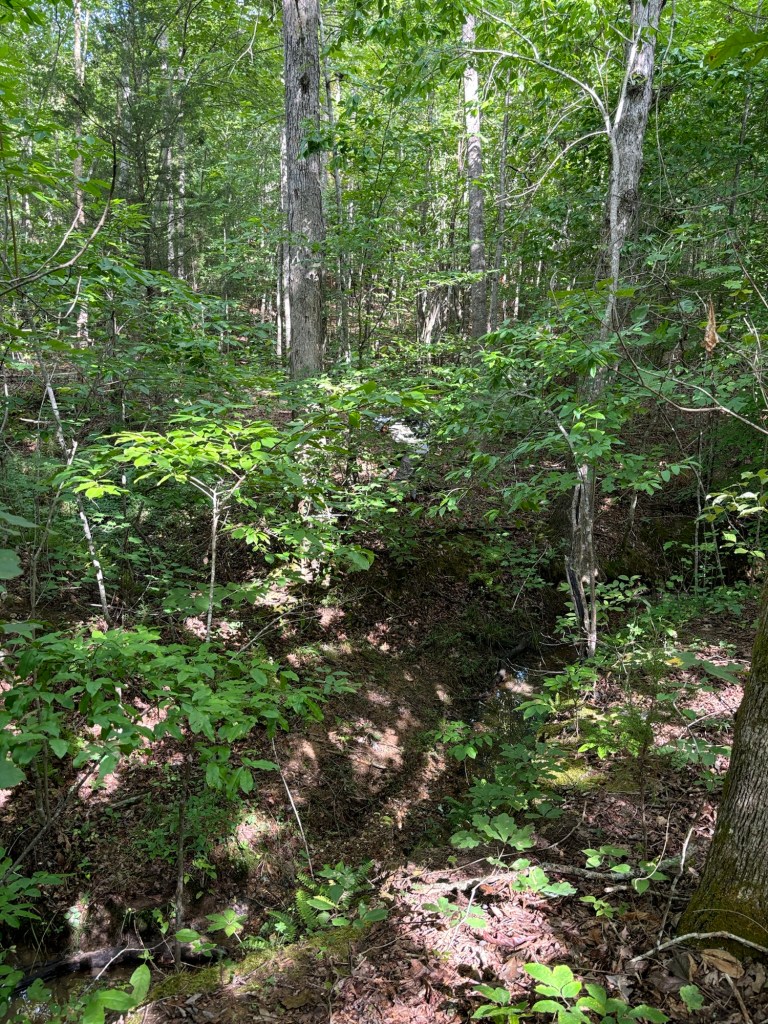
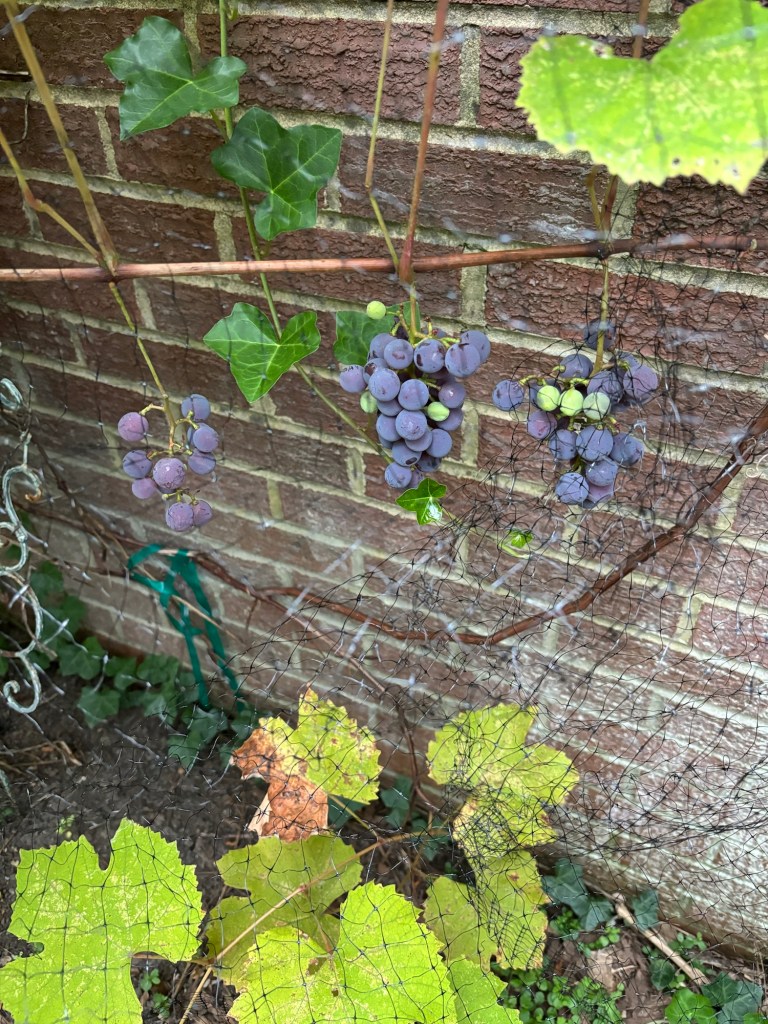
Pawpaws we found yesterday. The seeds we are saving. We will cold stratify these in the refrigerator for 70 to 100 days and then plant these in deep pots to accommodate their need for a long tap root. A turtle we saw working on his mushroom dinner. Amanita flavoconia, Yellow patches. Found along Mary Banning Way. The pawpaw patch. Our Concord grapes we just harvested.
 St Andrews Forest Farm