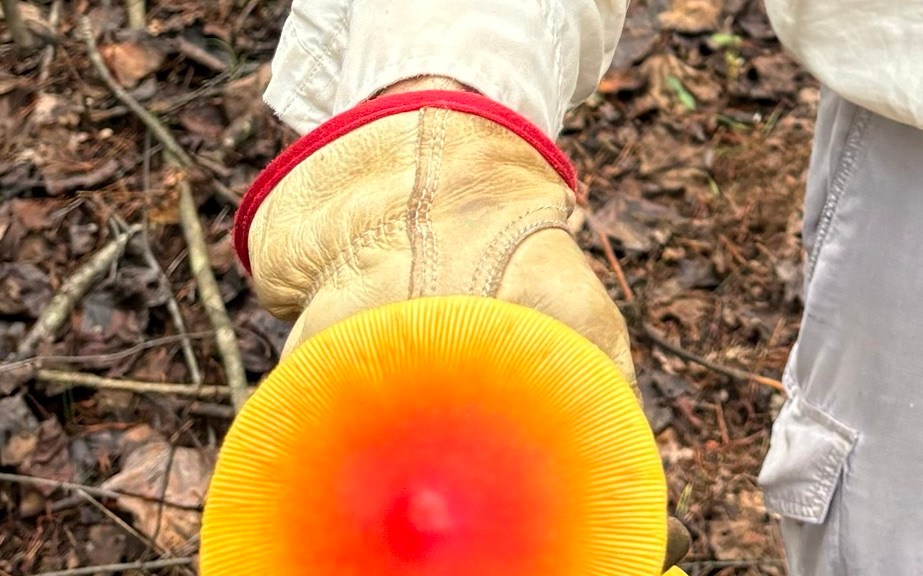
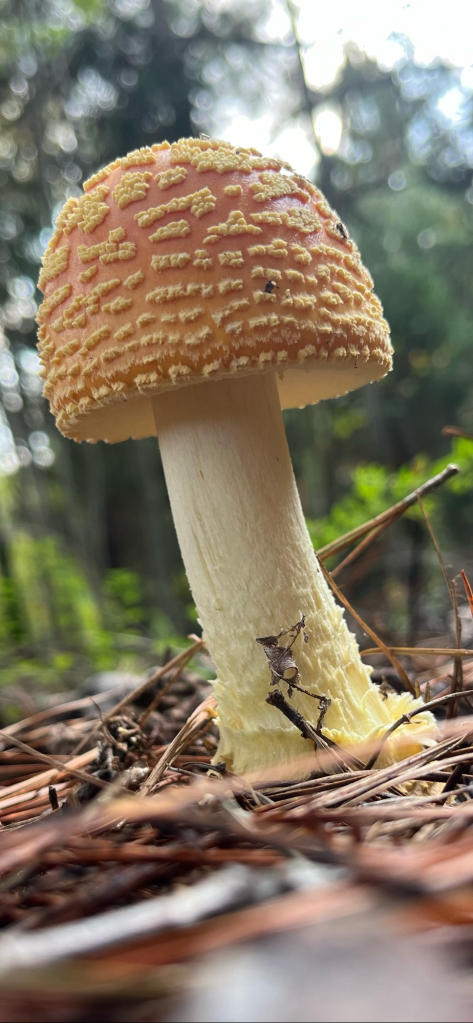
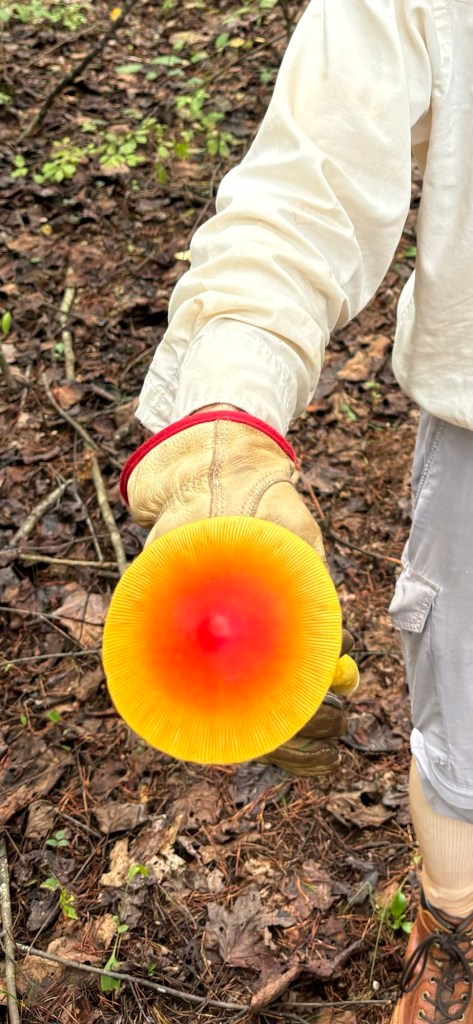
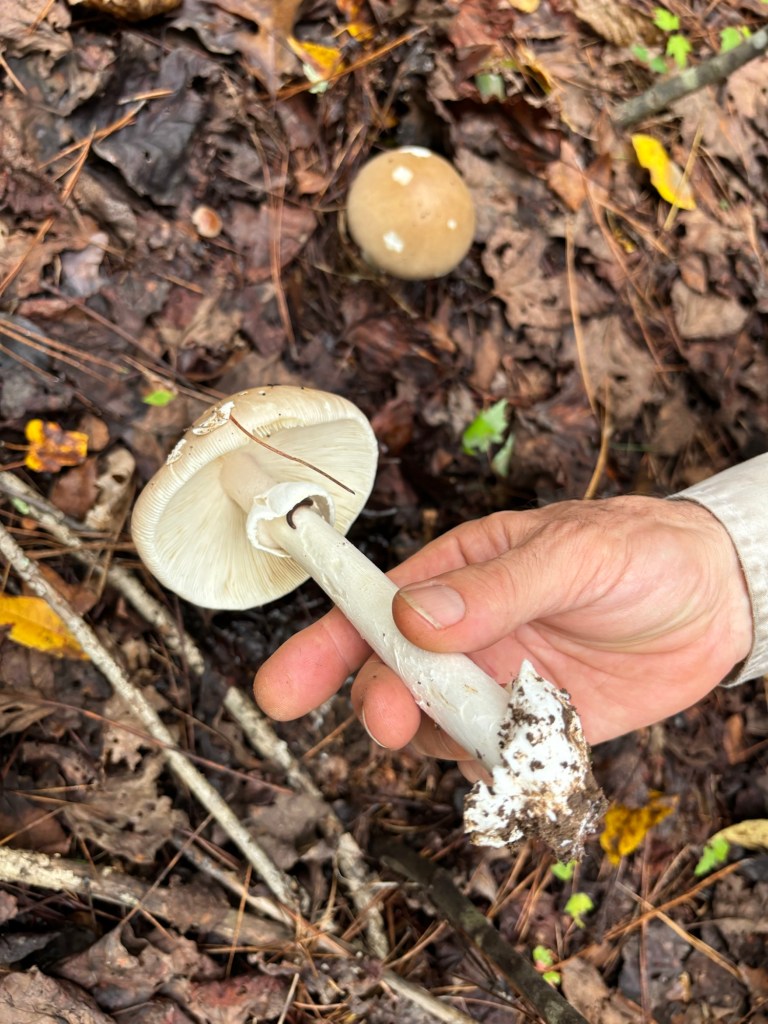
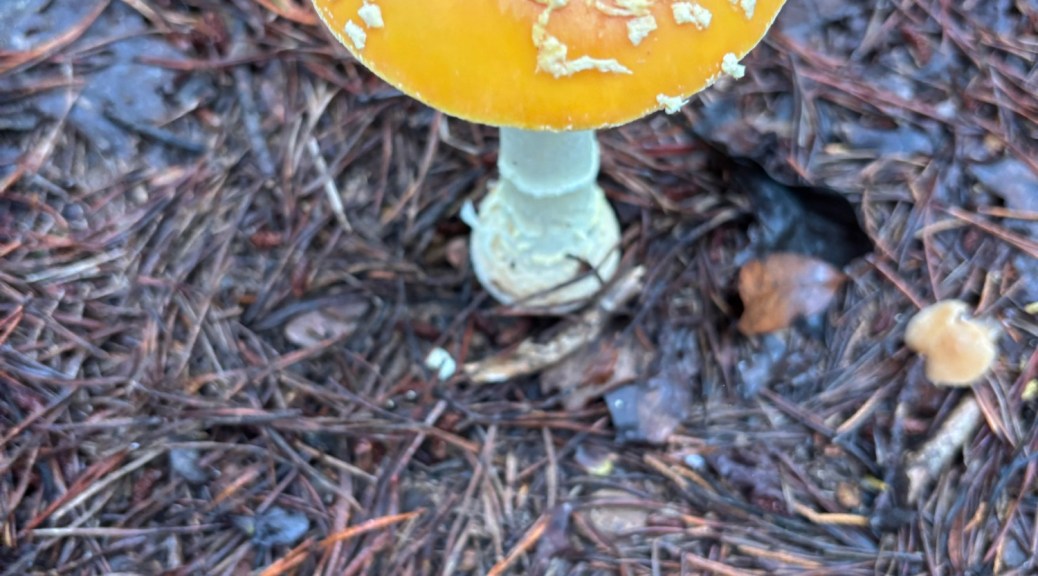
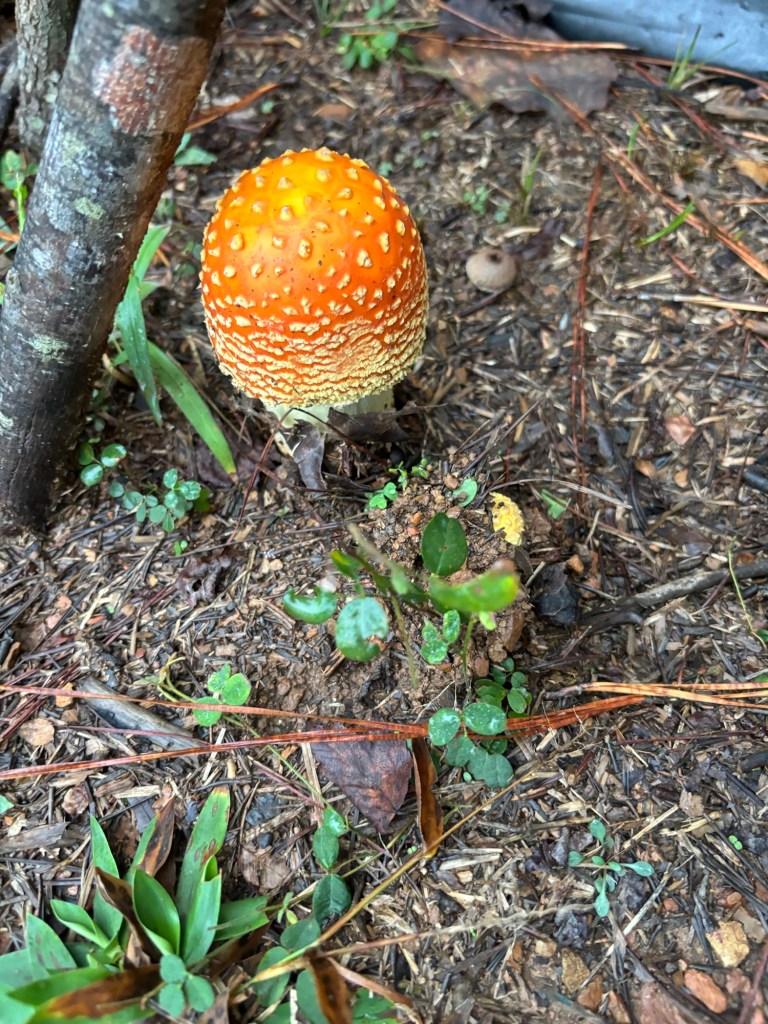
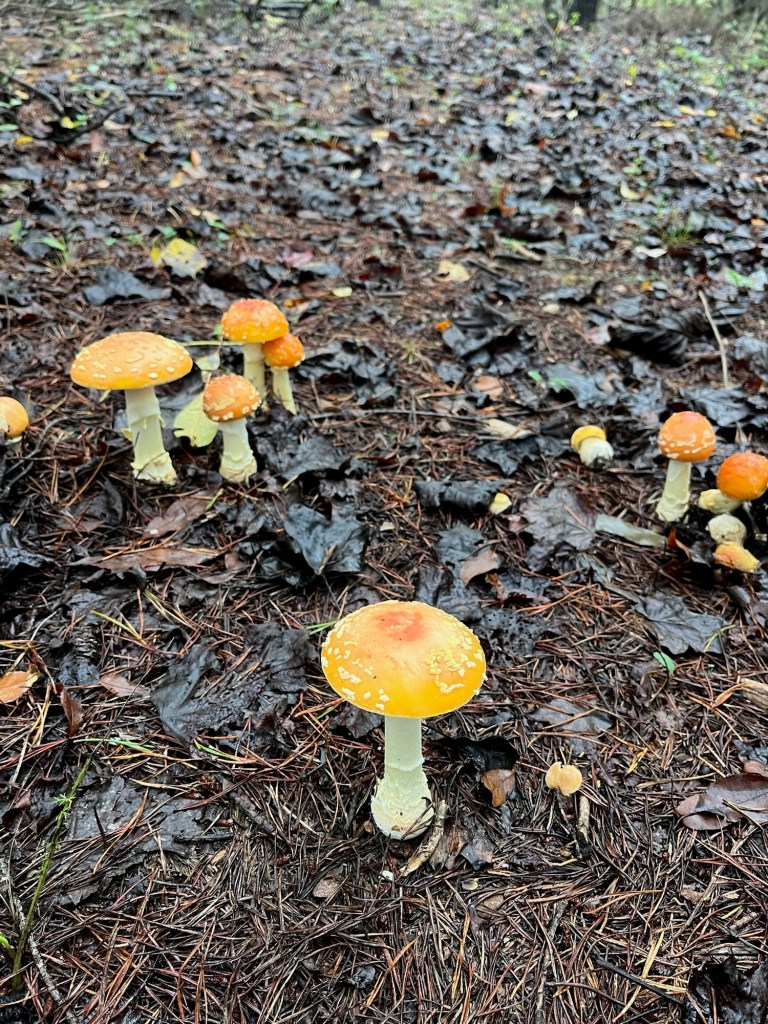
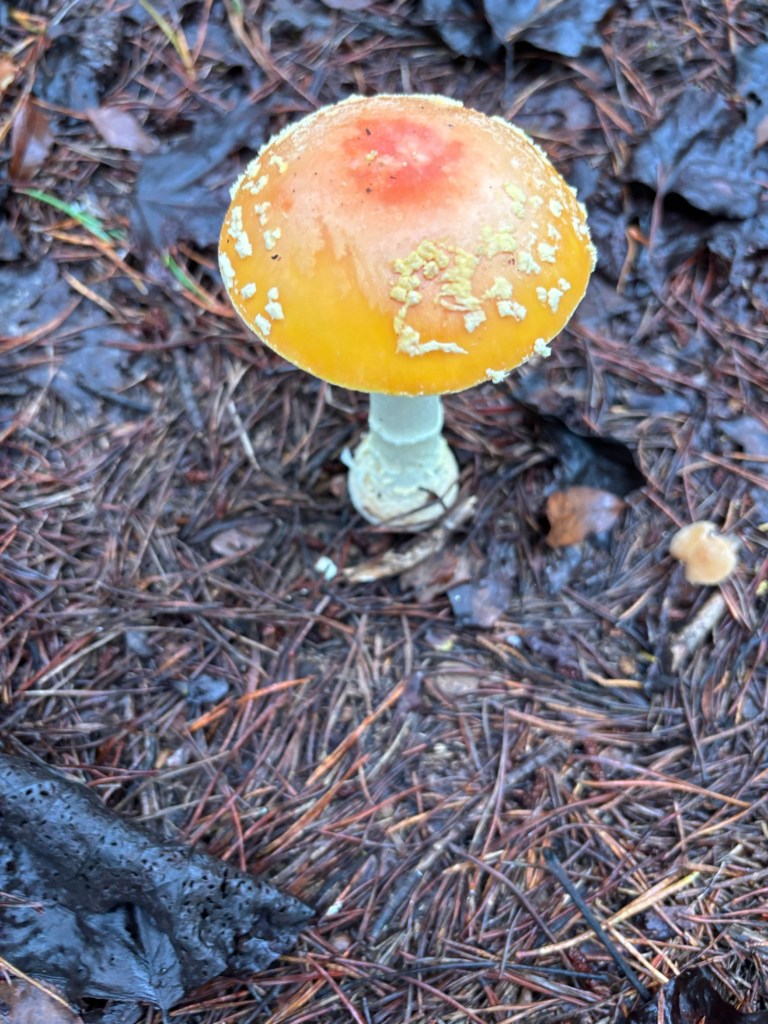
Amanita persicina found in groups throughout the farm near pines and oaks.
We went over to put up boundary markers and no hunting or trespassing signs as well as forage for mushrooms. Hunting season begins Saturday October 5th (early archery season starts). We took down trees growing too closely together and used the trunks as a natural fencing inside the tree line along the road frontage to discourage hunters from chasing deer onto our property. We’ve also been told hunters run dogs through properties to scare up deer. We are trying to create a hunt free zone, except for mushrooms, and to keep anyone chasing animals off our land. We also will put up several more cameras later this weekend. We had technical issues yesterday but worked it out this morning.
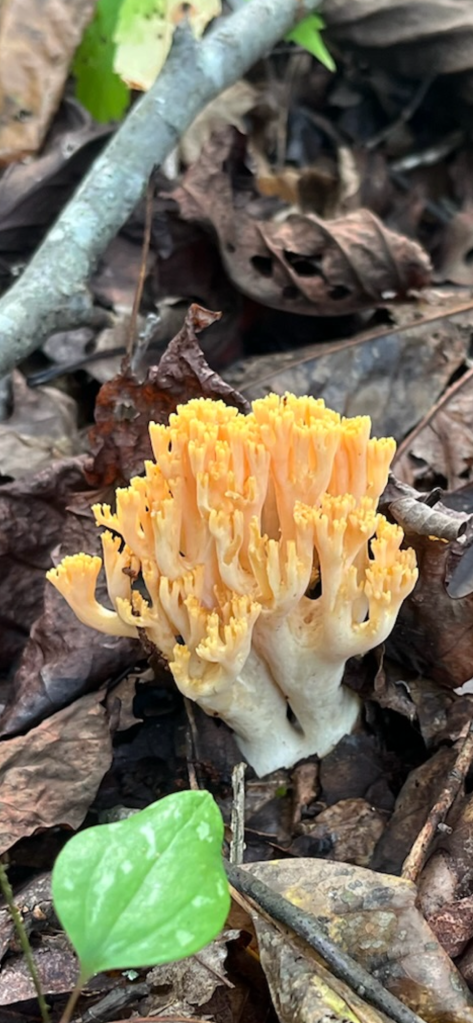
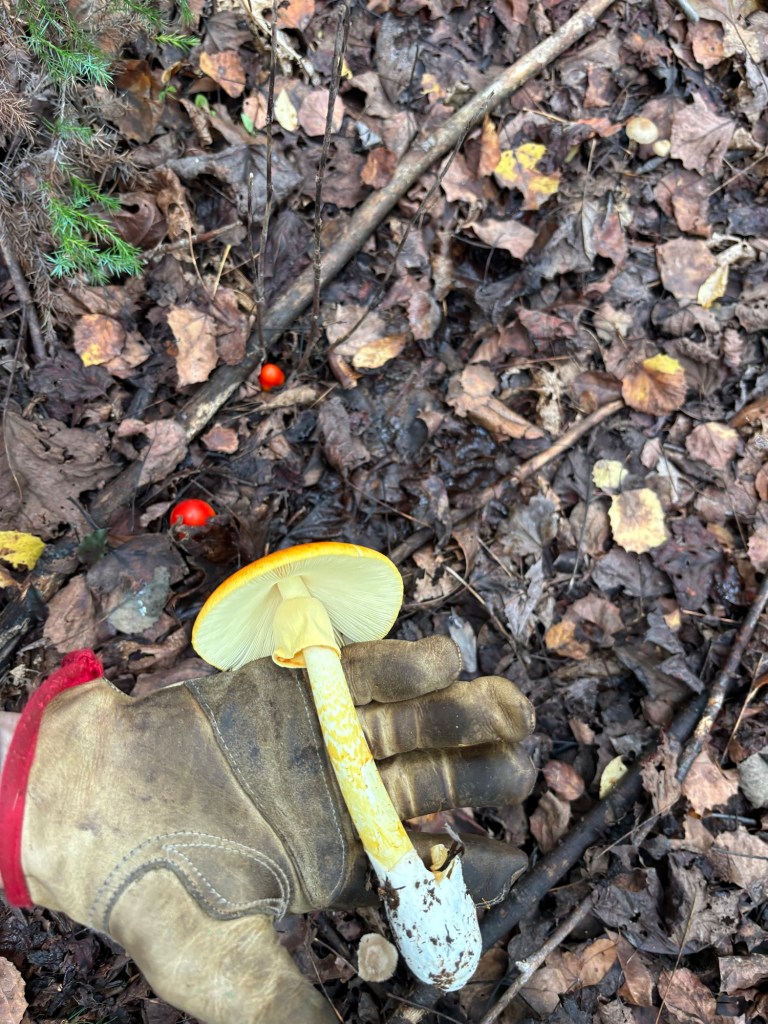
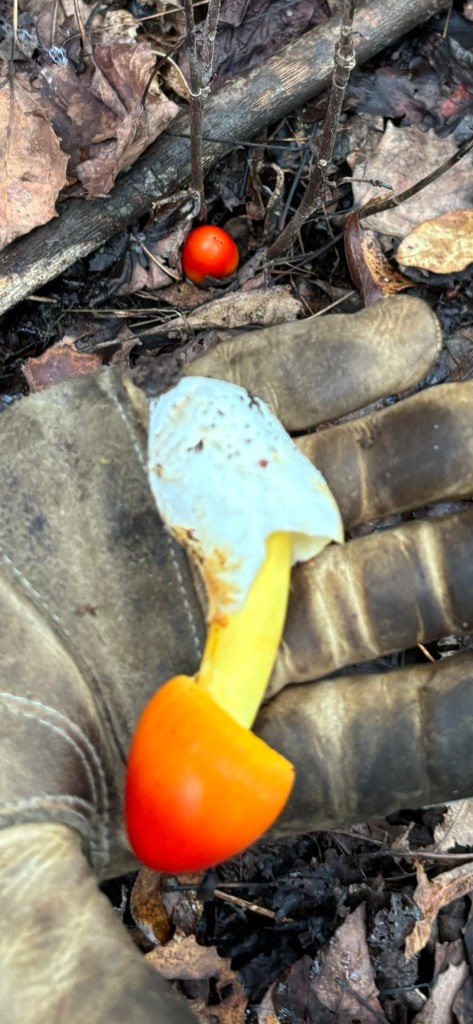
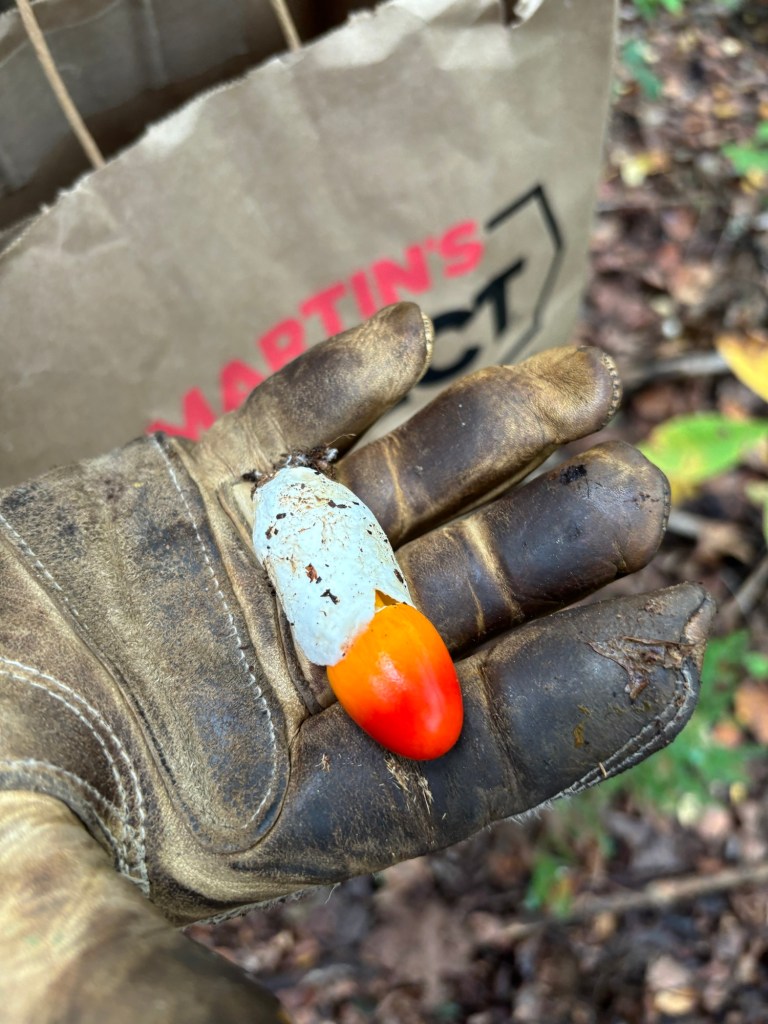
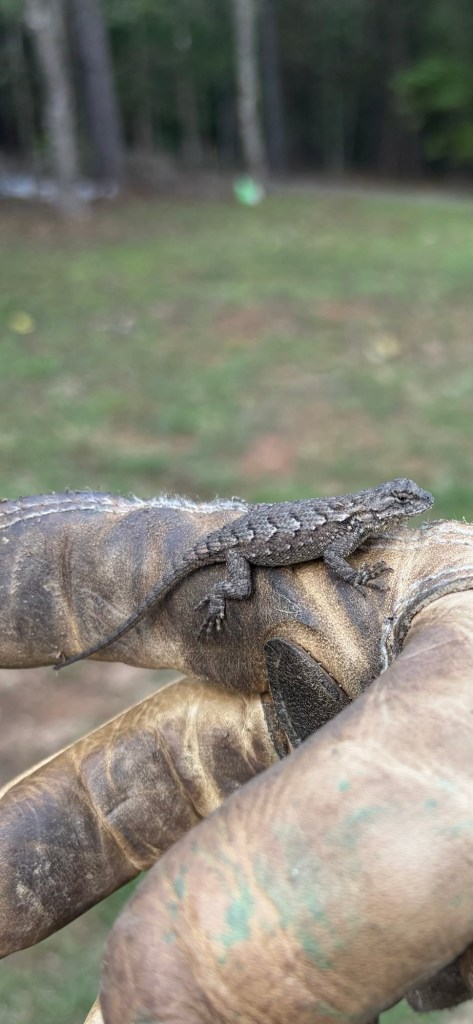
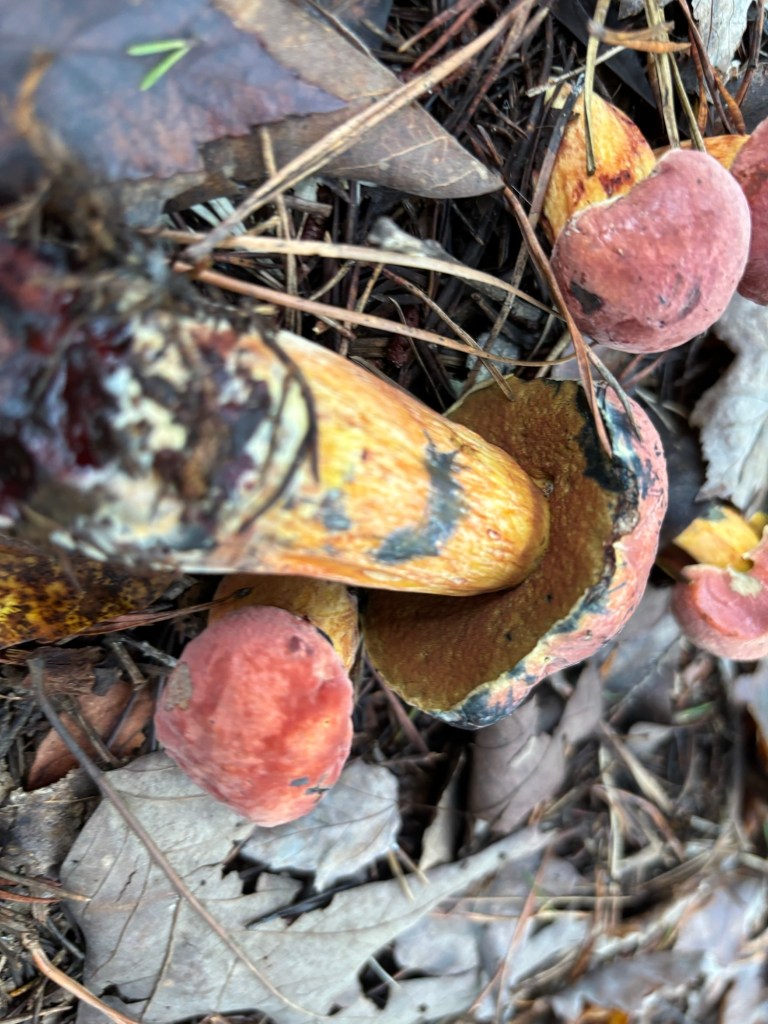
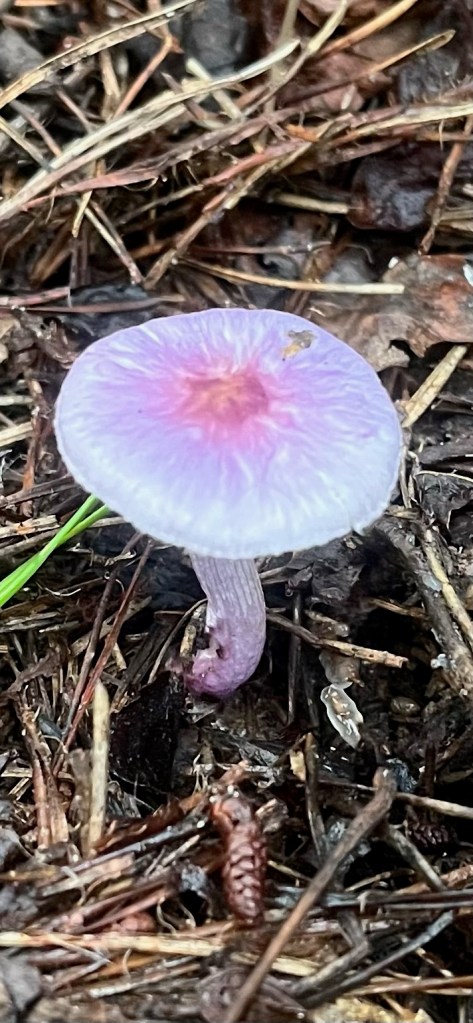
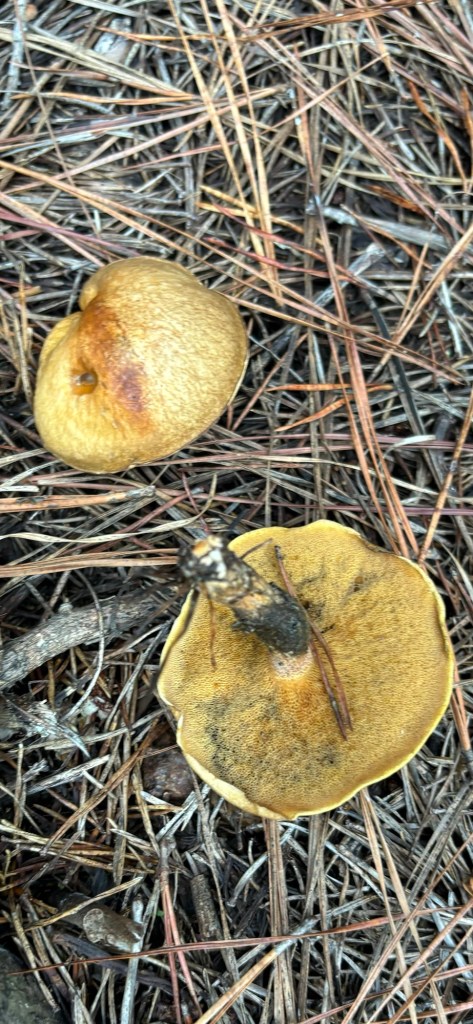
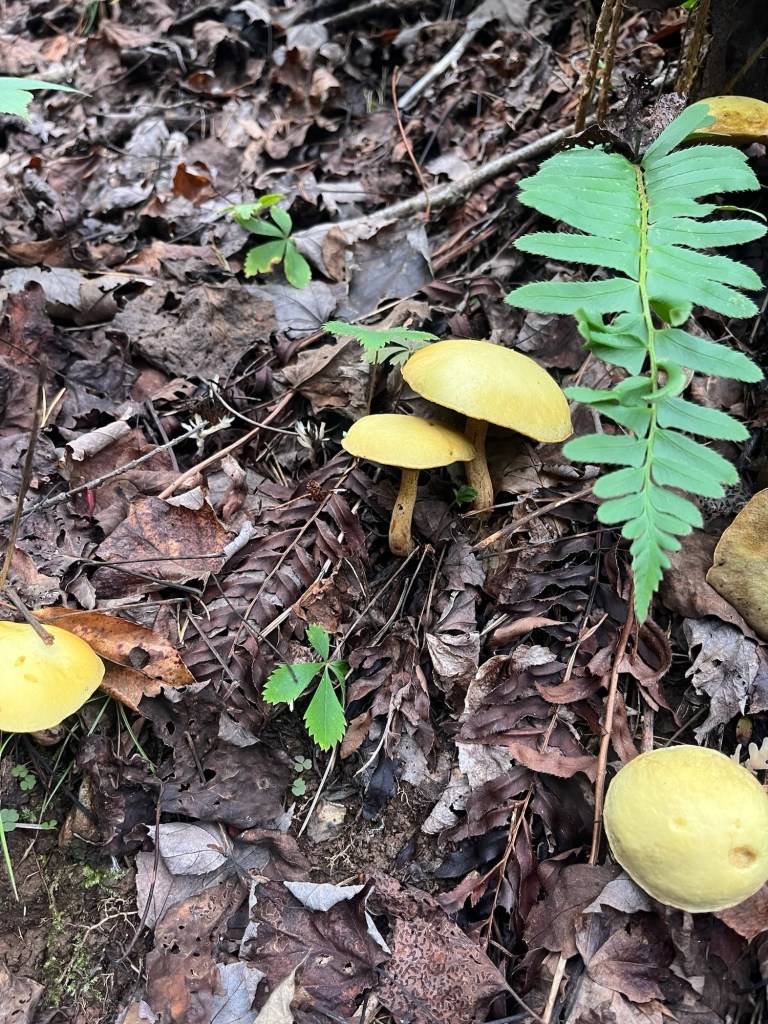
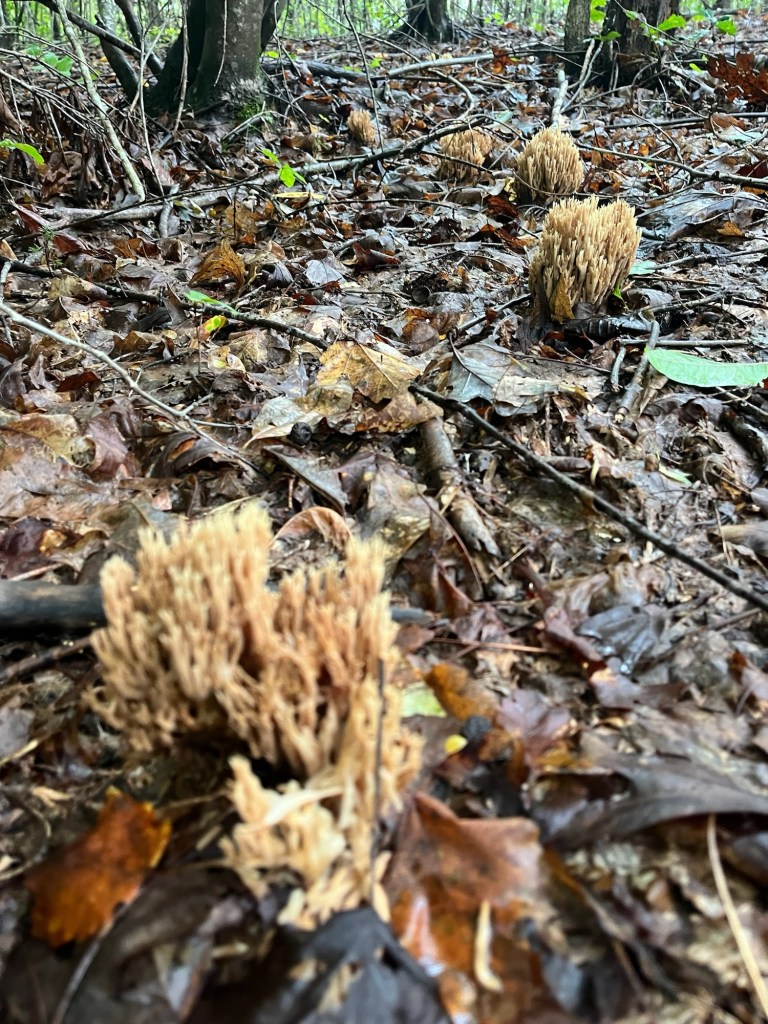
Coral fungusA family of Amanita jacksonii, American slender Caesar, we brought home and processed for eating. Top of A jacksonii Younger A jacksonii An A. jacksonii just emerging from its volva. These are the most delicious. Eastern fence lizard, Sceloporous undulatus, we found hanging out on a black cherry stump up top in the clearing. Amanita spreta, commonly called the Hated Caesar, is an inedible variety. They were large and showy found in the north side near pines. We continue to find these blue staining boletes and have narrowed down their identification to four different species. For now, they remain unknown. Unknown blue staining bolete. Inocybe lilacina, Lilac fibercap, is a poisonous mushroom found on the north side of SAFF. Suillus salmonicolor, Slippery Jill, found everywhere on SAFF near pine.Suillus, slippery jacks, associated with pines.
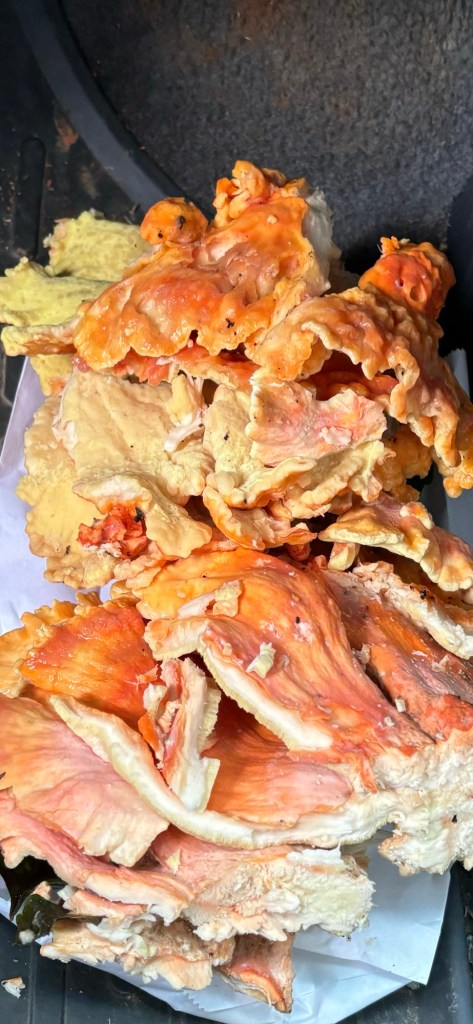
Chicken of the woods, Laetiporus sulphuric, found on the way to the farm. We took this older specimen over and left it to spore on some of our dead and dying hardwoods: Mostly black cherry trees and tulip poplar.
Today was a mushroom hunter’s dream. It’s an understatement to say they were everywhere. We’ve had an enormous amount of rain in Central Virginia and the Shenandoah Valley. We’ve had flooding at the house but finally, after all of this rain, the water table is restored at SAFF from our prolonged summer drought. All of the springs are flowing and the waterways are moving. We saw water flowing in the wet weather gullies in the north and south. It’s a beautiful sight.
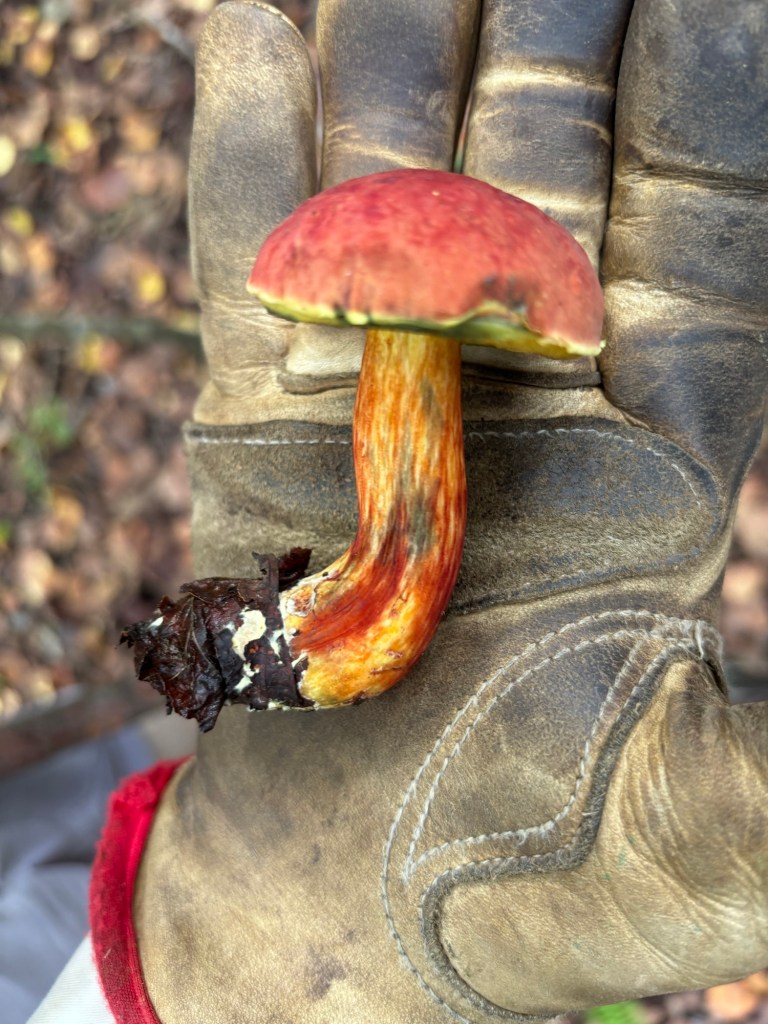
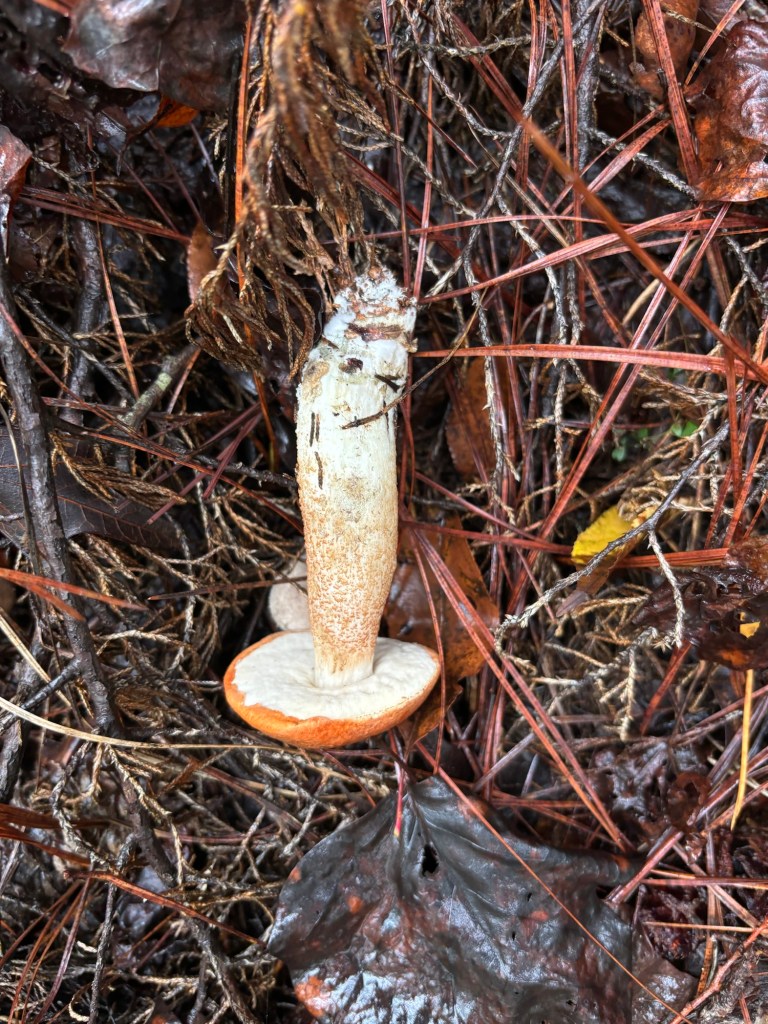
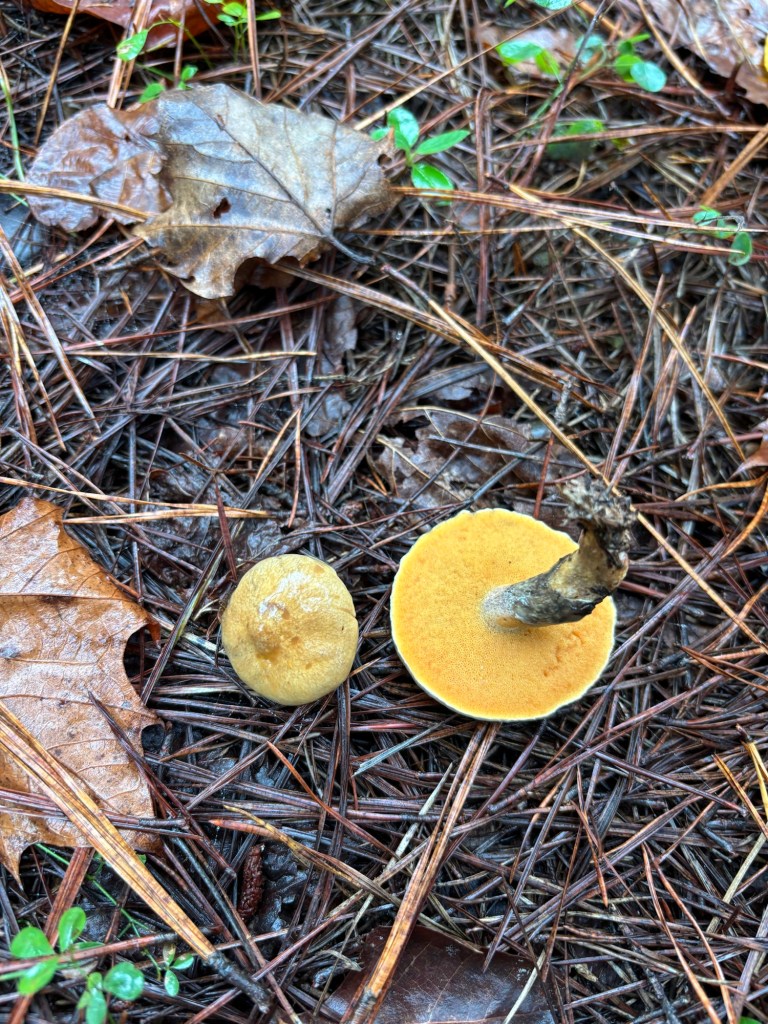
Amanita persicina, Peach colored fly agaric, were found all around the farm where pines are growing. These were large and brilliantly decorated with vibrant orange. The larger of the specimen were 8 inches in height and 4 inches across. They are showstoppers. More A. persicina along south trail. We found them mostly in big groupings up top and along the trails. These are my new favorites. Leccinum longicurvipes found on the north side in the pine forest. The scabers (rigid projections) along the stalk identify them as Leccinum within the genus Boletus. Genus suillus, slippery jacks or sticky bun, found anywhere we saw pines. They were all over the farm today. We hadn’t seen them before so it’s a wonderful surprise. It forms symbiotic ectomycorrhizal associations with pine trees by enveloping the underground roots of the tree with sheaths of fungal tissue. Rather than gills, it has tubes extending downward from the underside of the cap. Ramaria stricta, Upright Coral fungus, found near southern waterway along Ridge Trail.
Saint Andrews Forest Farm Blog
Is this your new site? Log in to activate admin features and dismiss this message
 St Andrews Forest Farm