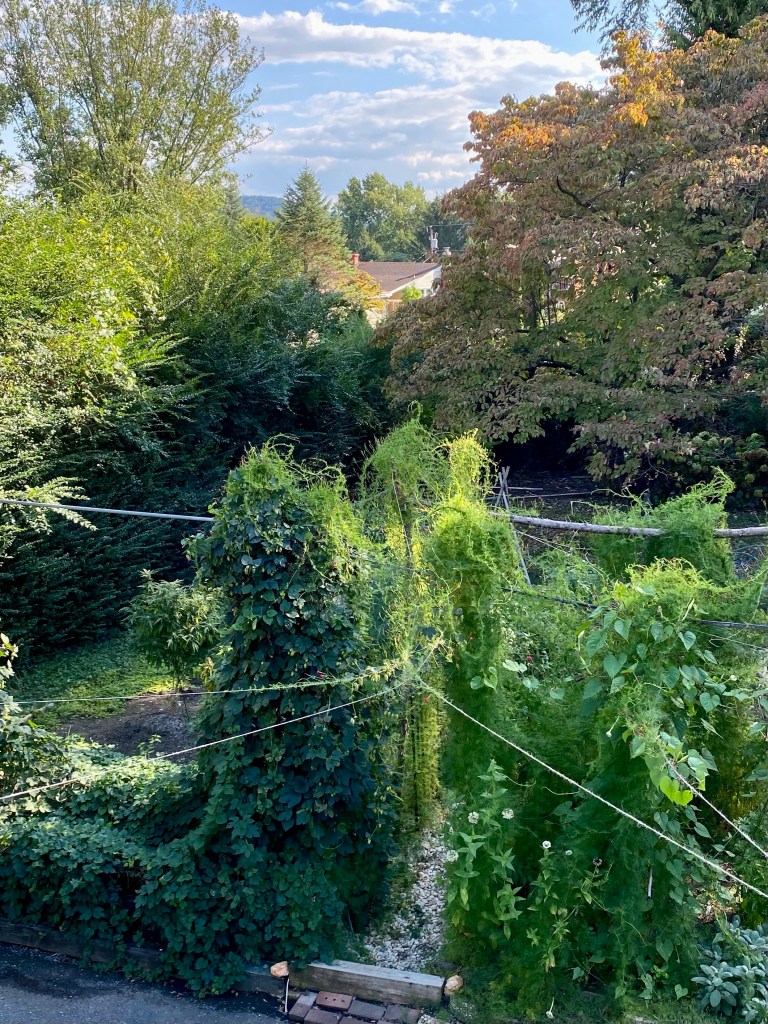
It’s gotten much cooler, even into the mid 30’s at night in Staunton. High 30’s in Buckingham. Brisk! So we’ve had potted up tropical plants to move indoors and onto the front porch in which to enclose them. We’ve frozen plenty of our cherry tomatoes this year and a good bit of our peppers. The garden was very productive as we’d added extra compost before we planted. We also had some rain early on and that helped get us through. At Saint Andrew’s Forest Farm, we are planning what we’ll plant and where. We are observing the wetter areas and watching. Finding sustainable solutions to grow more food and nurture the forest and its inhabitants. We haven’t seen our young bear for weeks, but thought we smelled him by the waterway at the bottom of the slope. We have heard the woodpecker calling and laughing as we get our tasks done.
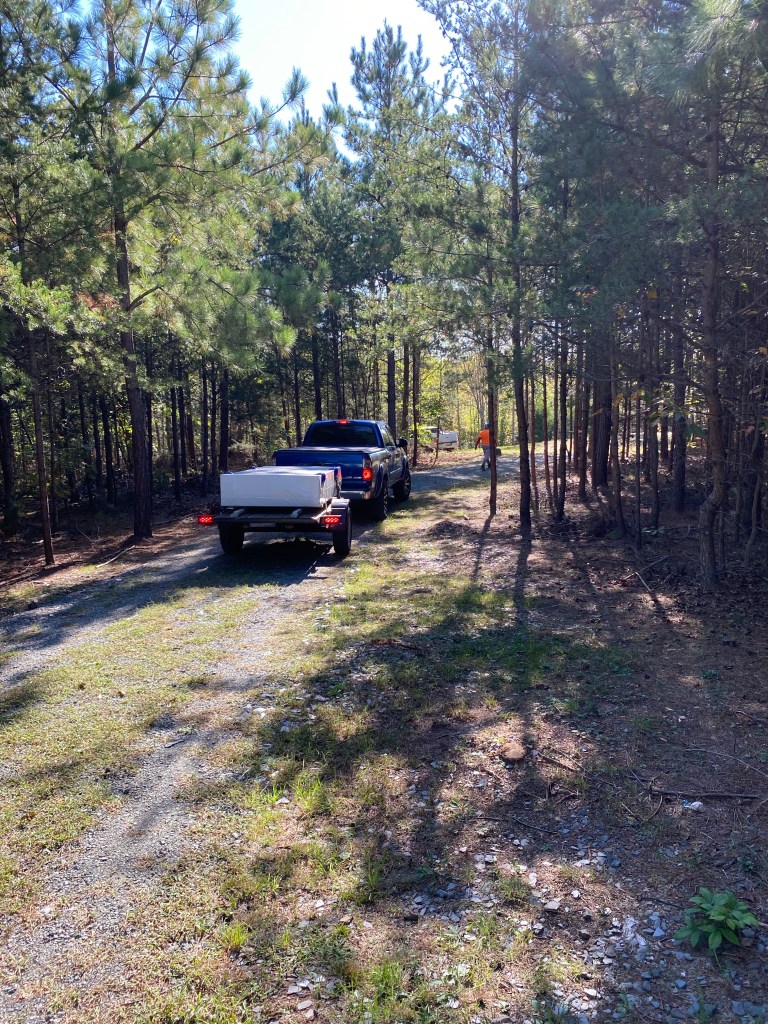
The last few days of September were spent scouting out our boundaries, meeting our neighbors, hanging ‘no hunting’ signs and continuing to blaze trails, clear out dead, dying and undeveloped trees and branches and digging our footers for the compost toilet. It rained a lot so we had many mushrooms to admire and identify.
We were excited to explore and make trails along our north boundary and we found a spot with tree of Heaven, ailanthus, which we were able to pull out with the roots since the ground was wet. It was such a relief for us to see how easily they came out. 🎊🎉
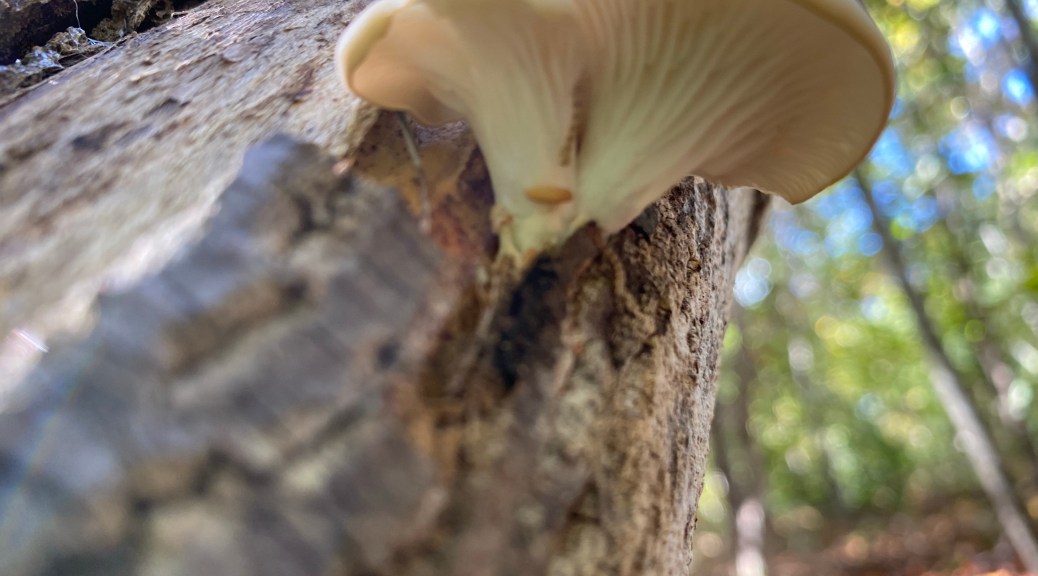
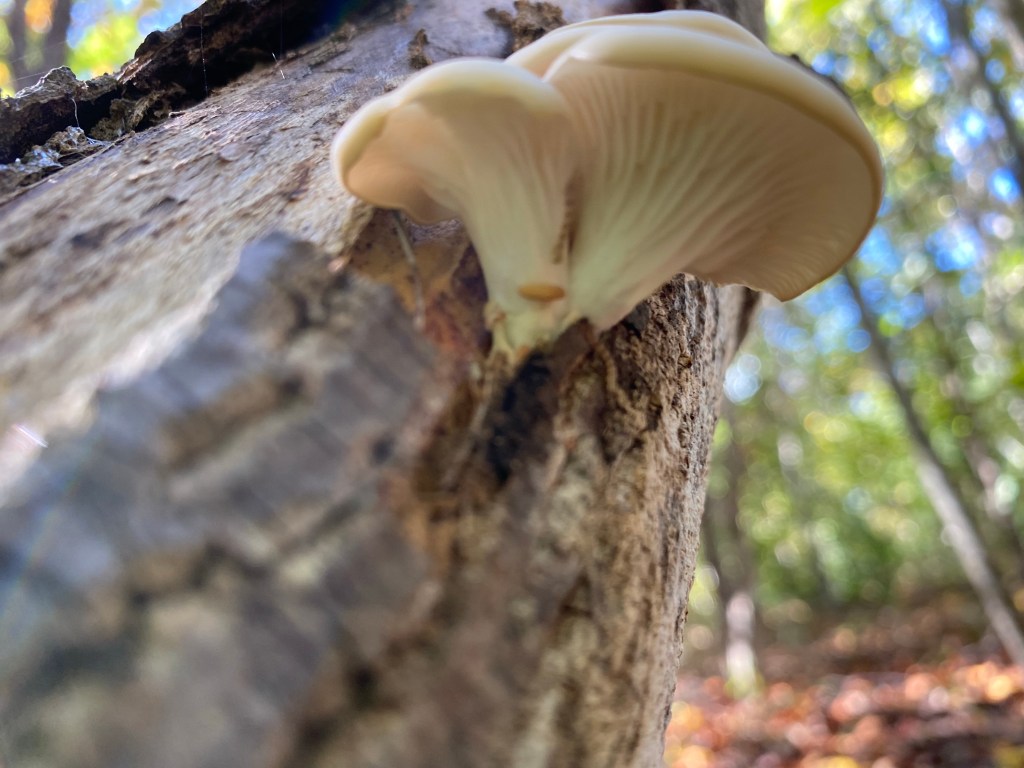
We will need to watch this spot for regrowth as tree of Heaven roots are similar to bamboo. It’s the most invasive, destructive tree we’ve encountered. It had not gotten more than a toe- hold in this section with 2 medium-sized trees in the understory of larger pines and oaks and about 30 smaller ones sprouting out in circles from the others before we pulled what we could see out. Happily, we also found oyster mushrooms growing in that same area. A dead tree had oysters throughout, top to bottom. We could see the white network of mycelium. They are decomposers and eat dead hardwood. We were happy to use this wood to inoculate other dead trees.
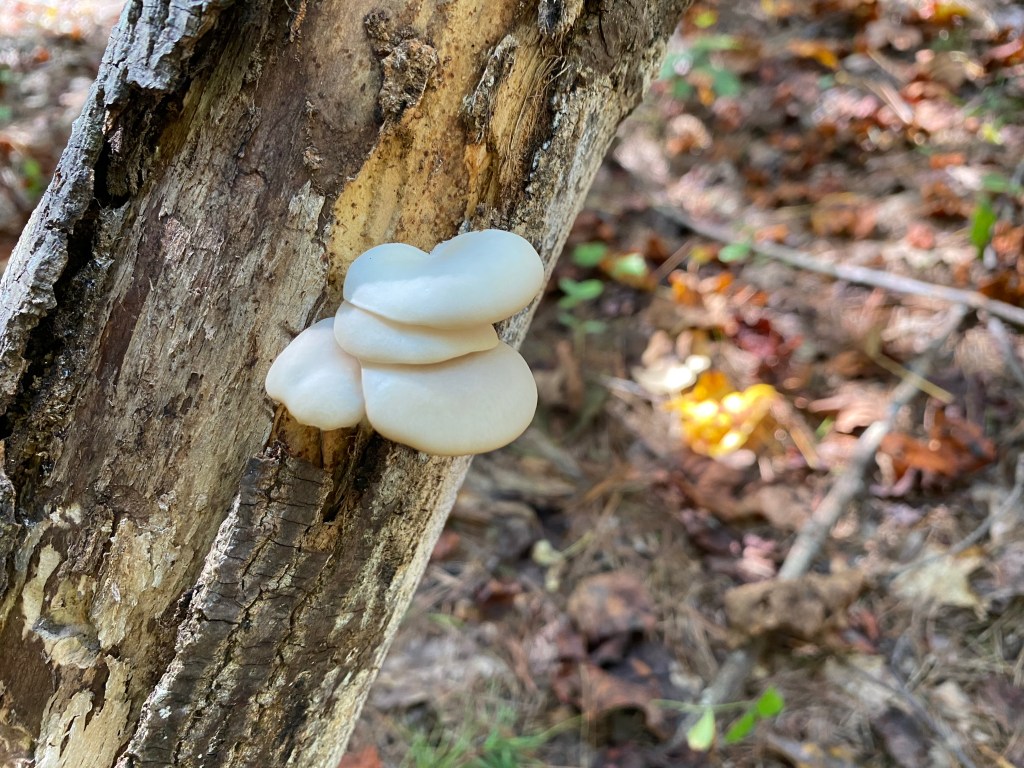
Along the south end, by St Andrew’s Road, we cut in alongside of the power lines and then dropped in to follow the waterway heading down to the creek. We found large fairy rings and clusters of white mushrooms called Entoloma sinuatum.
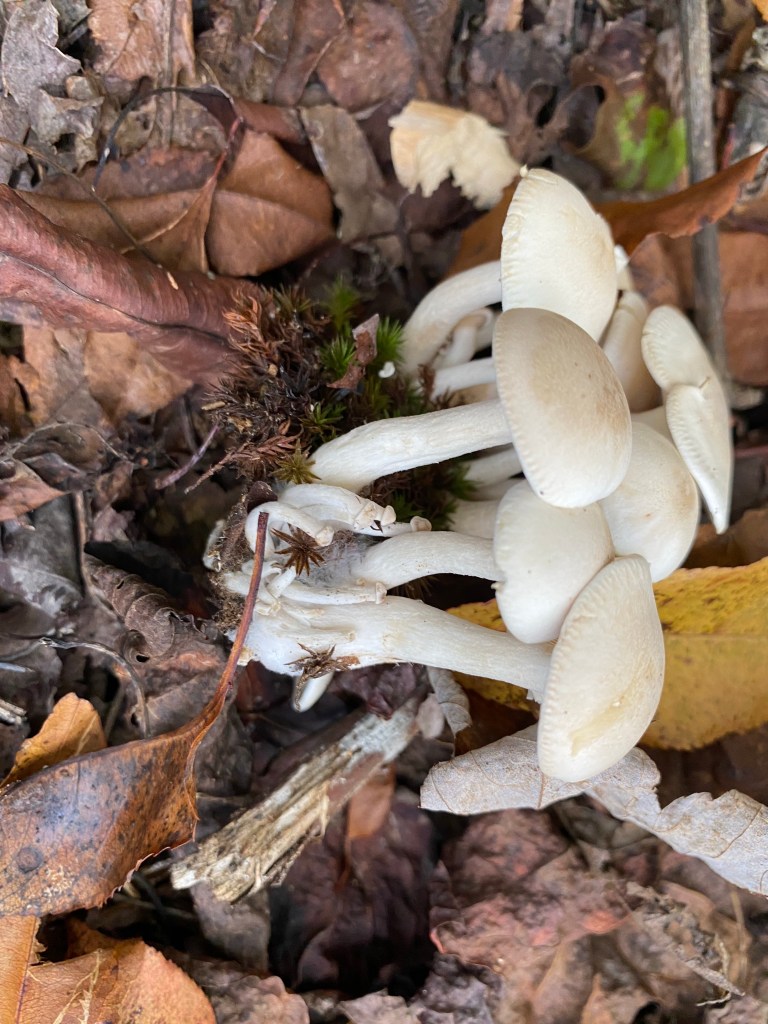
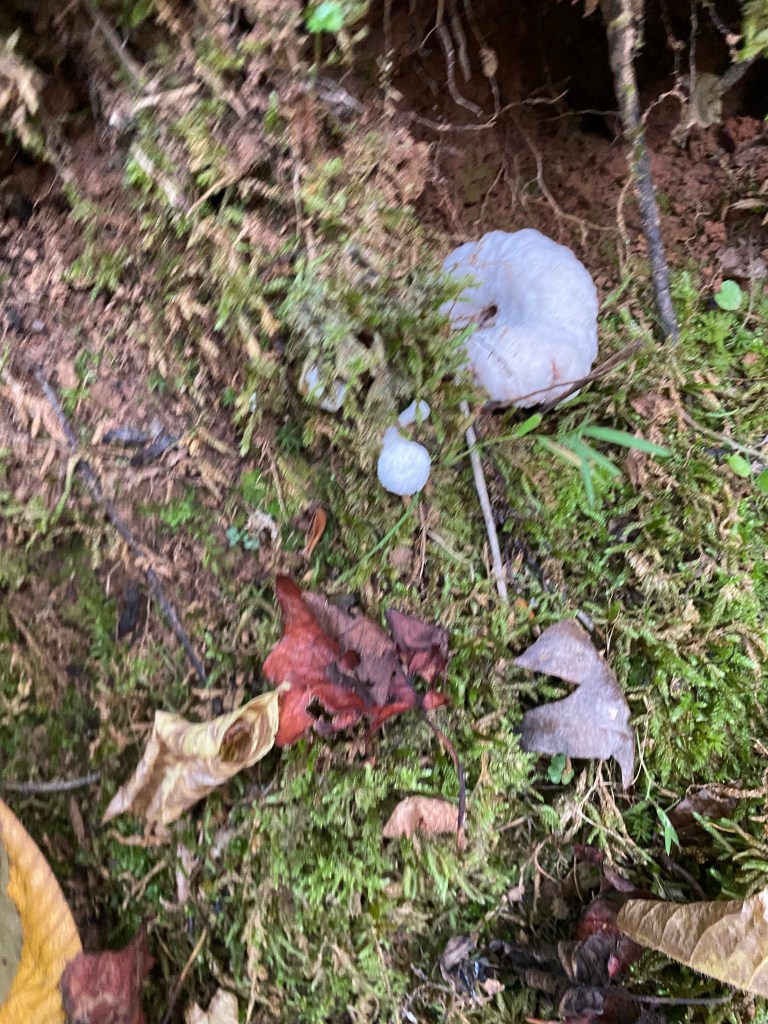
As we went further down along the main creek bed at bottom, we found a bunch of clusters of shrimp of the woods. We were excited to find this delicious treat.
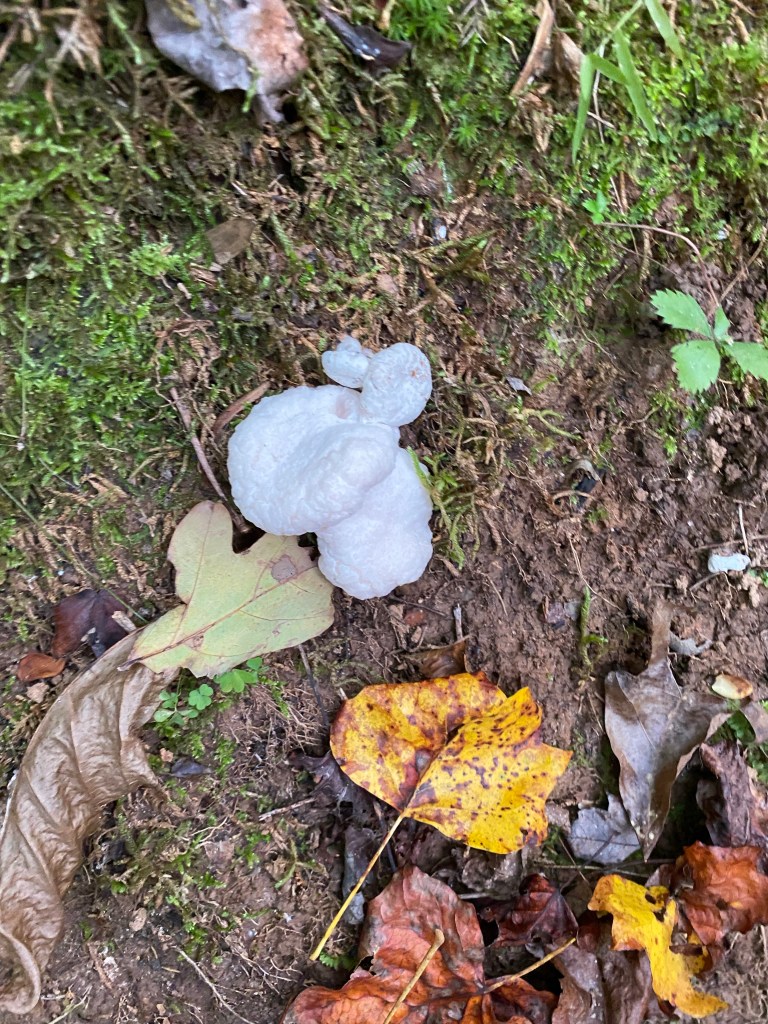
We have found many Amanita species. We identified the American Fly Agaric and also found Amanita crenulata and Amanita polypyramus just yesterday. They were beautiful. A. polypyramus was the largest mushroom we’ve found. Striking. They are mycorrhizal with pines helping the trees to get more nutrients in a symbiotic relationship.
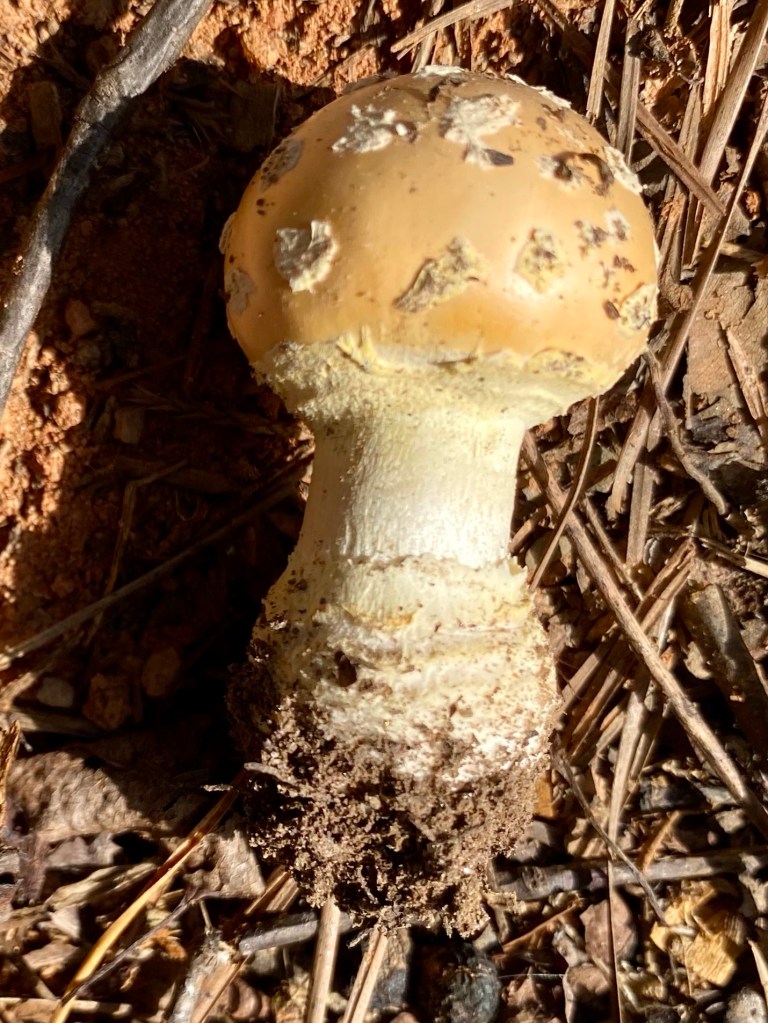
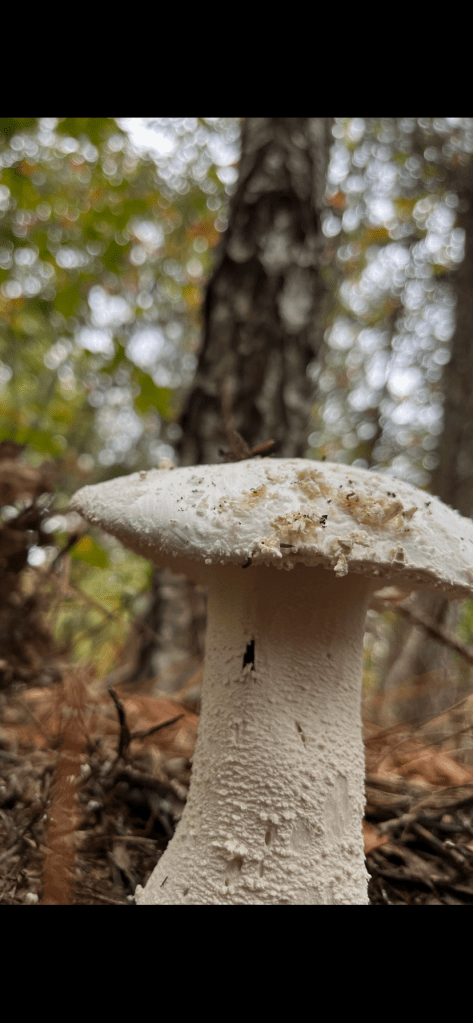
Leaves are falling all over the forest floor. Sometimes hiding mushrooms. The colors of the leaves are now shifting from green and yellow to yellow, orange and red.
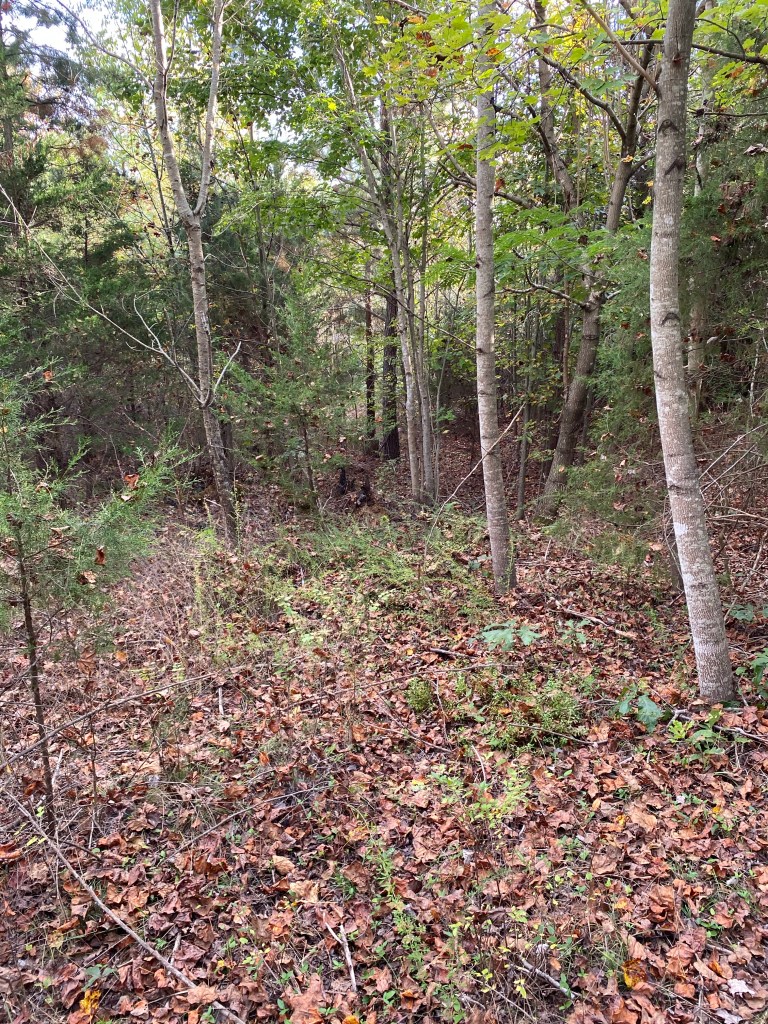
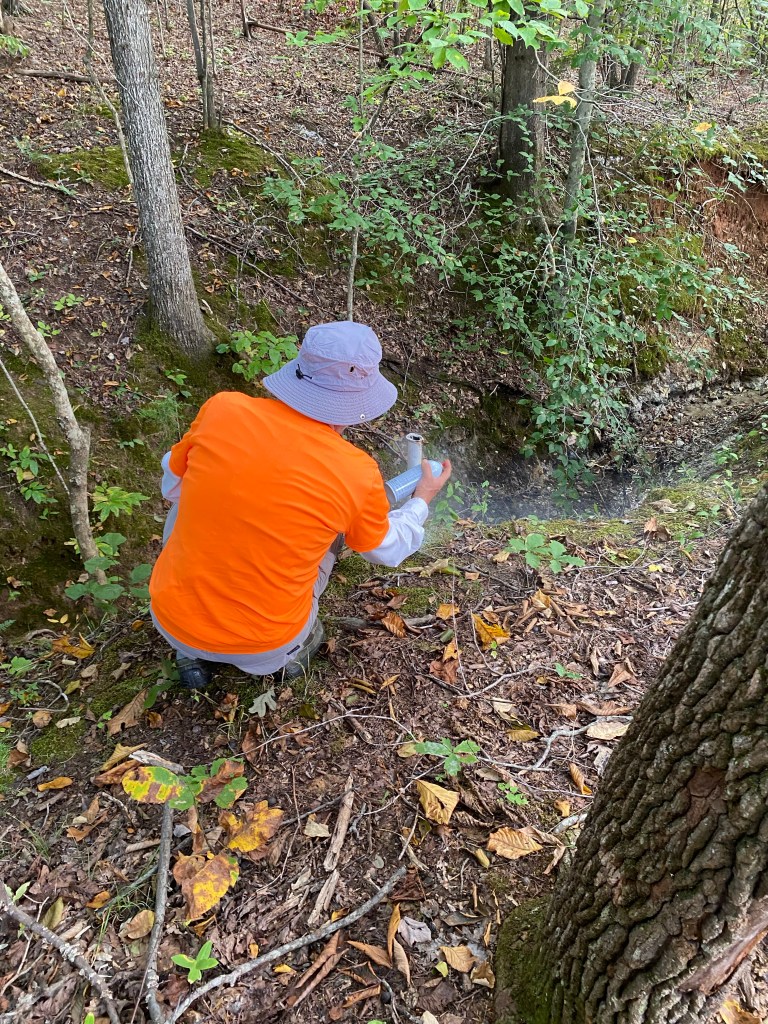
 Saint Andrews Forest Farm
Autumn is the most interesting season! Nice!
Thank you!
Very cool! The colors are changing fast in the Northwestern woods, too. And a variety of mushrooms are appearing with the wetter weather.
That’s exciting! Can’t wait to see your beautiful pictures. 💚