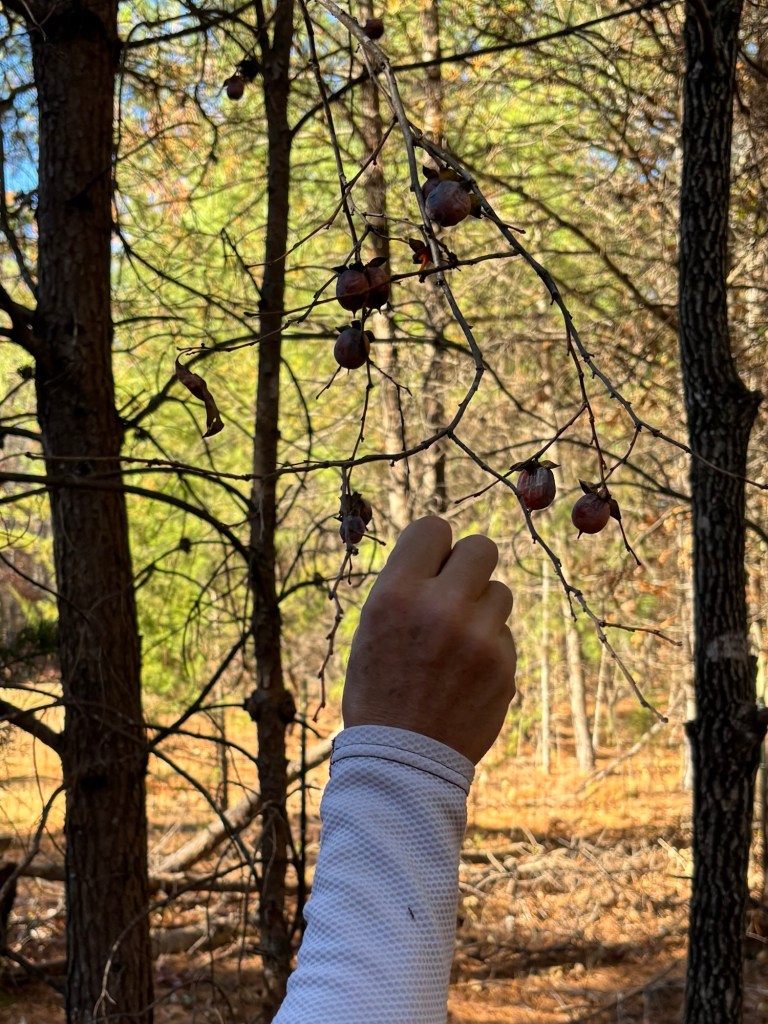
The last fruit of the year for SAFF native American persimmons, Diospyros virginiana, are still hanging on waiting until the first frost to fully ripen and lose their astringency.
We went over to SAFF on Saturday to take a walk and get some work done. We checked on the persimmons up top and found one ready to eat. Most are still hanging on until after the first frost —which is more than likely tonight as temperatures are supposed to drop to 25F overnight, and flurries are expected. Brrrr!
We spent the weekend winterizing the farm and the house. We brought some small black cherry twigs and sticks for getting fires started in the home fireplace. They are nice to burn.
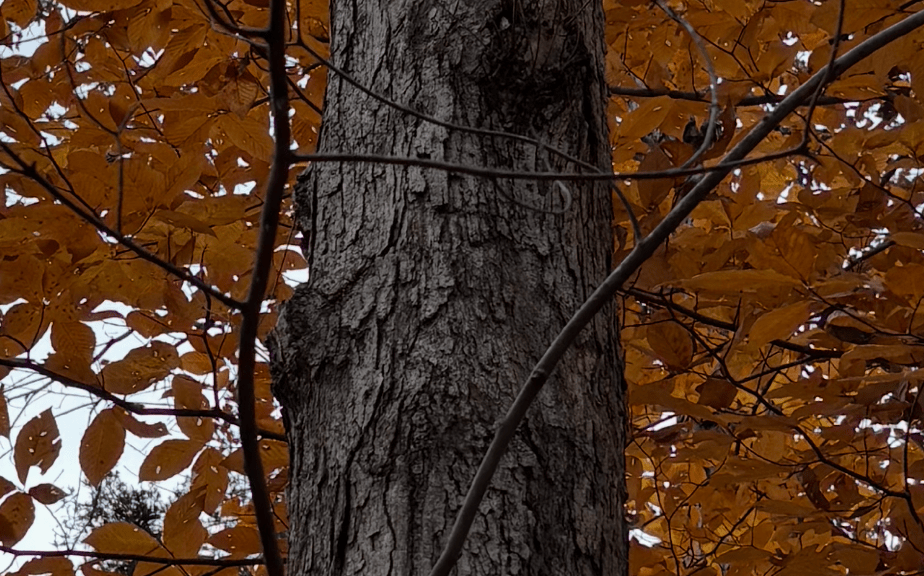
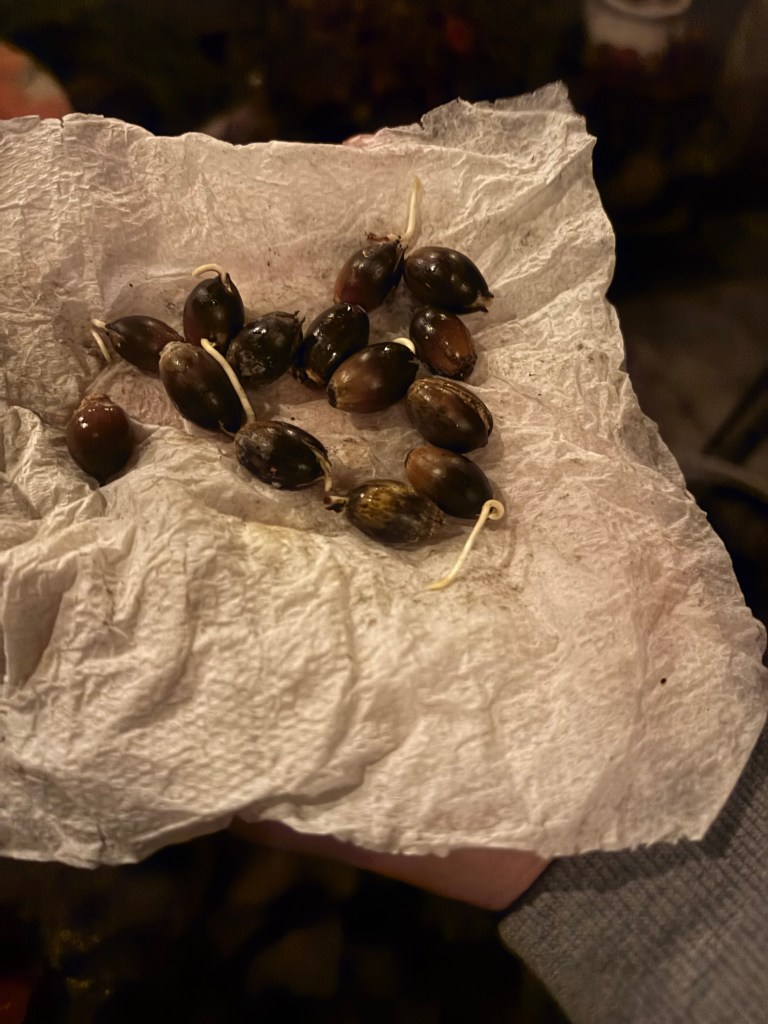
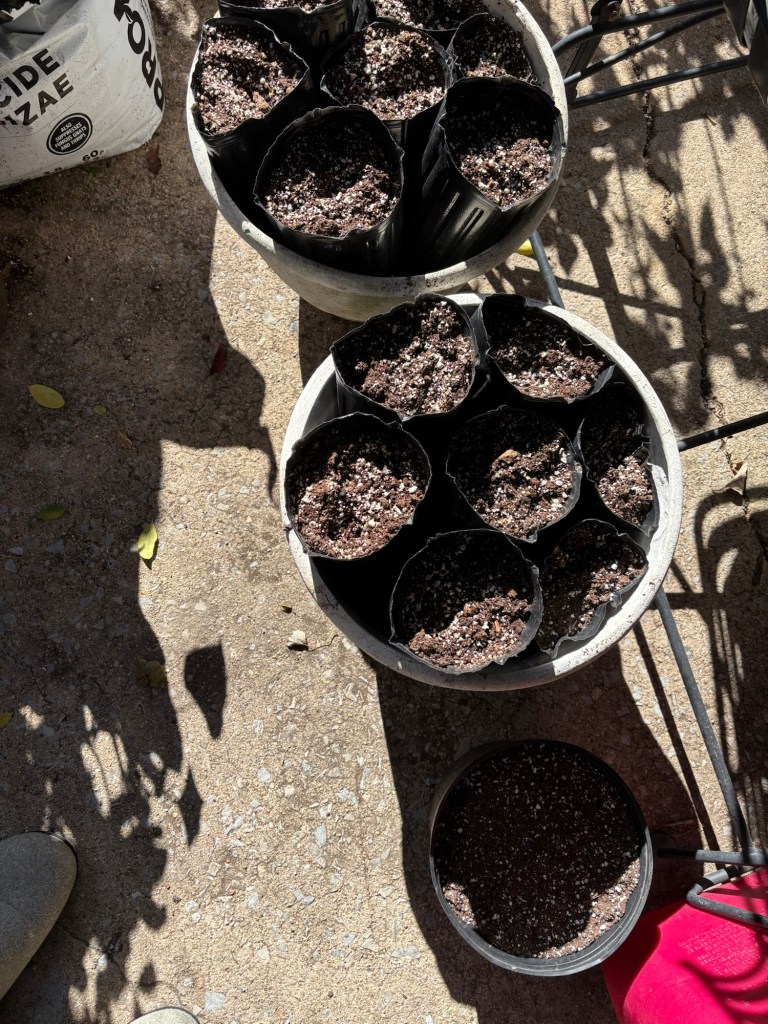
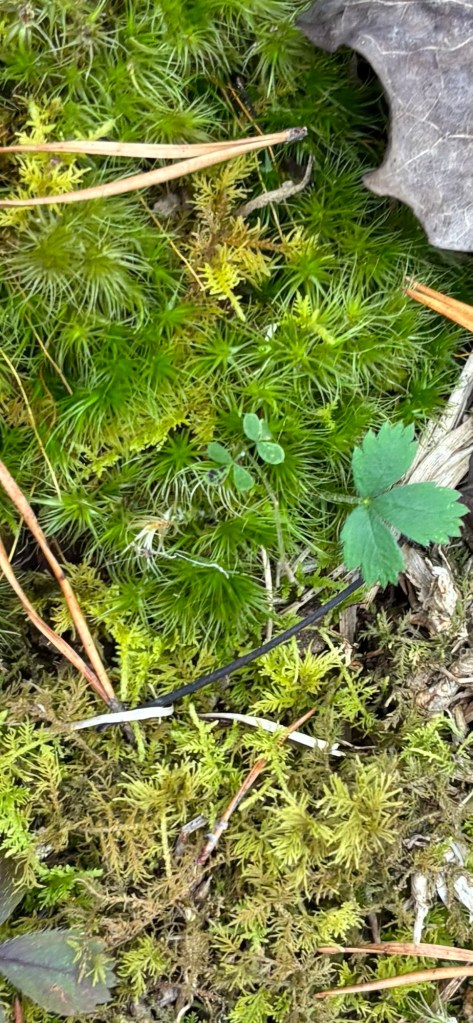
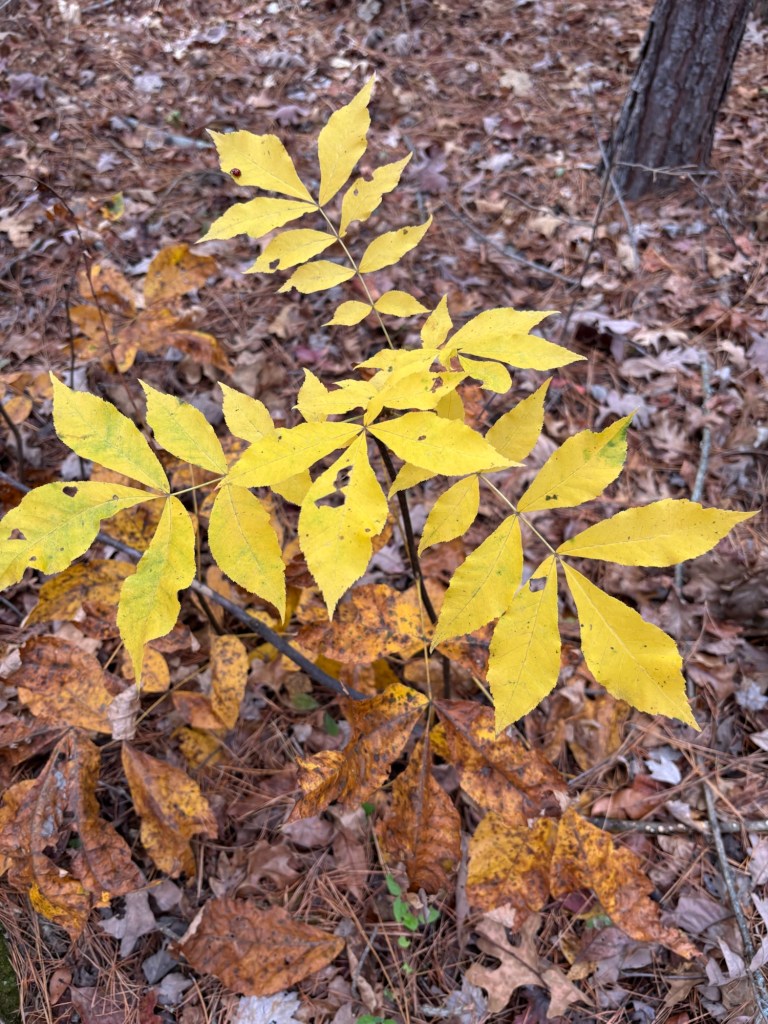
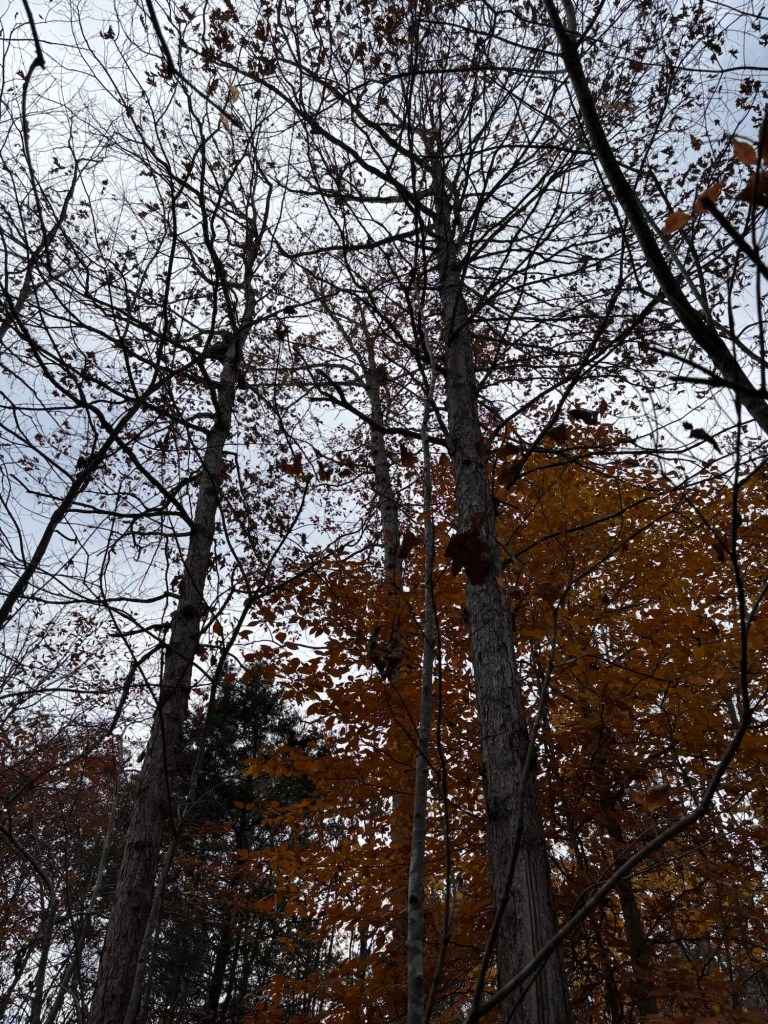
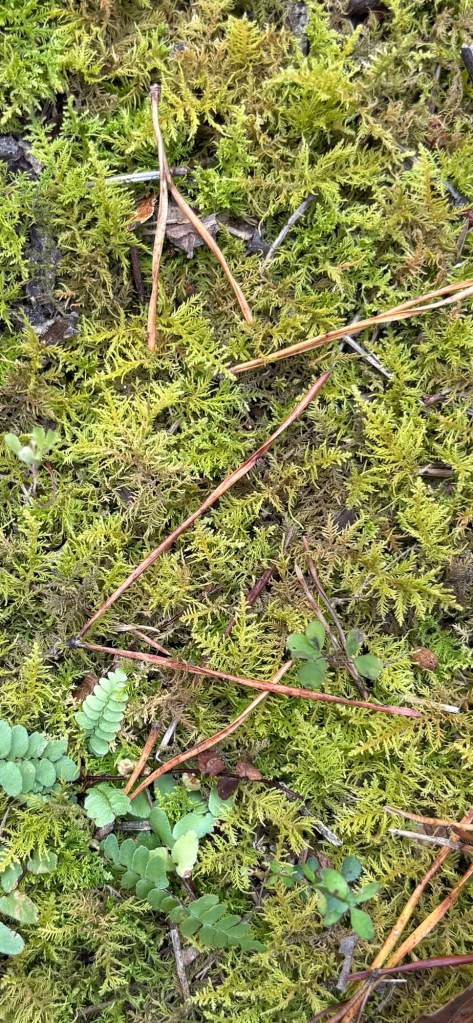
Chris’ mother, Judy, gifted us these southern live oak seeds she foraged in South Carolina this past year. Quercus virginiana. We planted 14 of them in deep tree pots with hopes of getting them planted in the ground at SAFF after a year or two. Since they are in tree pots, and the weather tonight will be very cold, we’ll need to fit them into a warm, snug spot and get them mulched in with protection or bring them inside until the weather isn’t quite so cold.Quercus virginiana, southern live oak, just planted this weekend for SAFF. We use mycorrhizal soil for planting our seedlings to enhance nutrient uptake, improve soil structure, increase drought and disease resistance as well as boost carbon content. The fungi secrete a substance called glomalin which increases organic carbon content in the soil. The fungi also extend the root system of the plant with fine filaments called hyphae. These access water and nutrients like phosphorus, zinc and nitrogen from areas the roots normally can’t reach.The fluffy deeper green moss at the top of photo is Broom Forkmoss, Dicranum scoparium. The leaf there on the right is Tribe Potentilleae of the rose family, strawberries, cinquefoils and allies. We cannot narrow it further until we see a bloom or fruit. The bottom moss that’s lighter green is Thuidium recognitum, Hook-leaved fern moss. The purple leaf at the bottom left is as yet unidentified. Carya cordiformis, bitternut hickory, is our most recent type of hickory observed. Most have to reach the age of 40 years to begin producing nuts. We may have an older one nearby we’ve yet to locate. We have deep gratitude for the older trees already producing nuts and are delighted to encourage these small hickories growth in the forest. These are the shortest lived of the hickories, living about 200 years. Mushrooms commonly associated with hickories are various Russula species, Cantharellus (chanterelles) and Grifola frondosa (Hen of the Woods ).The Three sisters are at the bottom of Ridge Trail near the main waterway. They are large white oaks, Quercus alba, reaching up like nature’s skyscrapers. There’s an American beech, Fragus grandifolia in the understory with leaves —yellow now, but soon they will be coppery brown and hang on through winter. The Three sisters are some of the oldest trees at SAFF. Every time we look at them and the other larger trees down by the waterway that weren’t culled with the rest of the older forest because of their proximity to the creek, we are reminded of exciting research showing that trees are interconnected through underground networks of roots and mycelium with mother trees ( like these) acting as hubs supporting younger trees with water and nutrients and more. We’ve noticed oaks at SAFF growing with chanterelles, as well as various amanitas and boletes.Ebony spleenwort, Asplenium platyneuro, growing with the hook-leaved fern moss.
I love the photo of you reaching up, to pick the last of the persimmons and I don’t think I will forget the one of the “Three Sisters”. They seem to carry so much wisdom, those trees.
 St Andrews Forest Farm
I love the photo of you reaching up, to pick the last of the persimmons and I don’t think I will forget the one of the “Three Sisters”. They seem to carry so much wisdom, those trees.
Thank you Julie! 🤗
That’s the beauty of nature, the interconnection. The support. That’s how we are supposed to be. Thanks for pointing it out💕