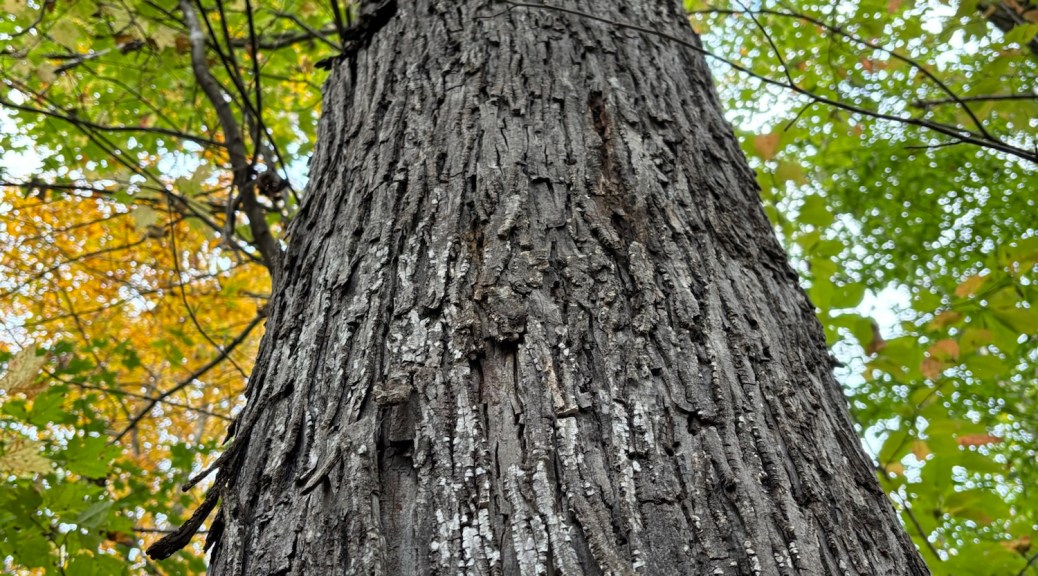
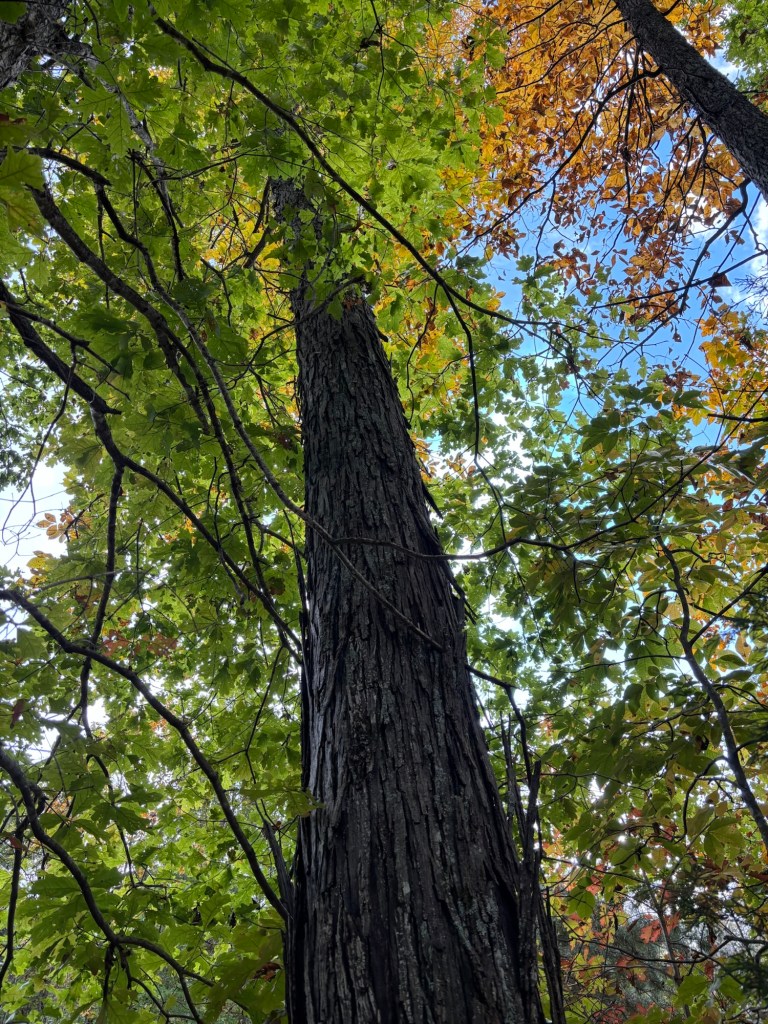
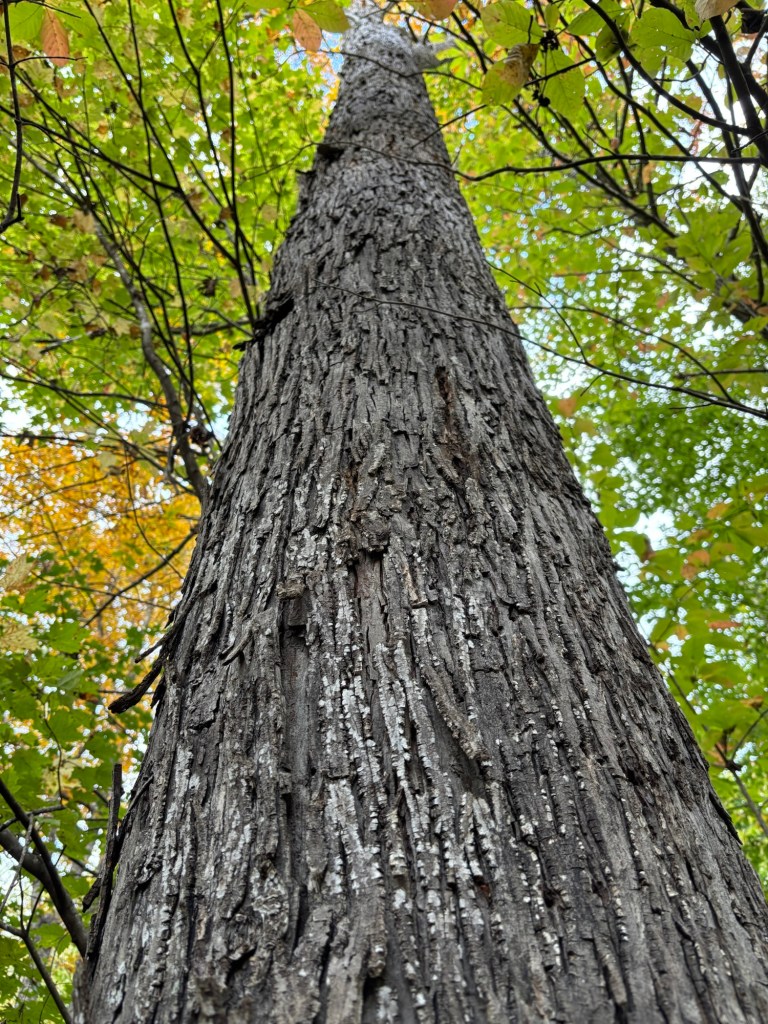
Shagbark hickory, Carya ovata, found along the south setback line.
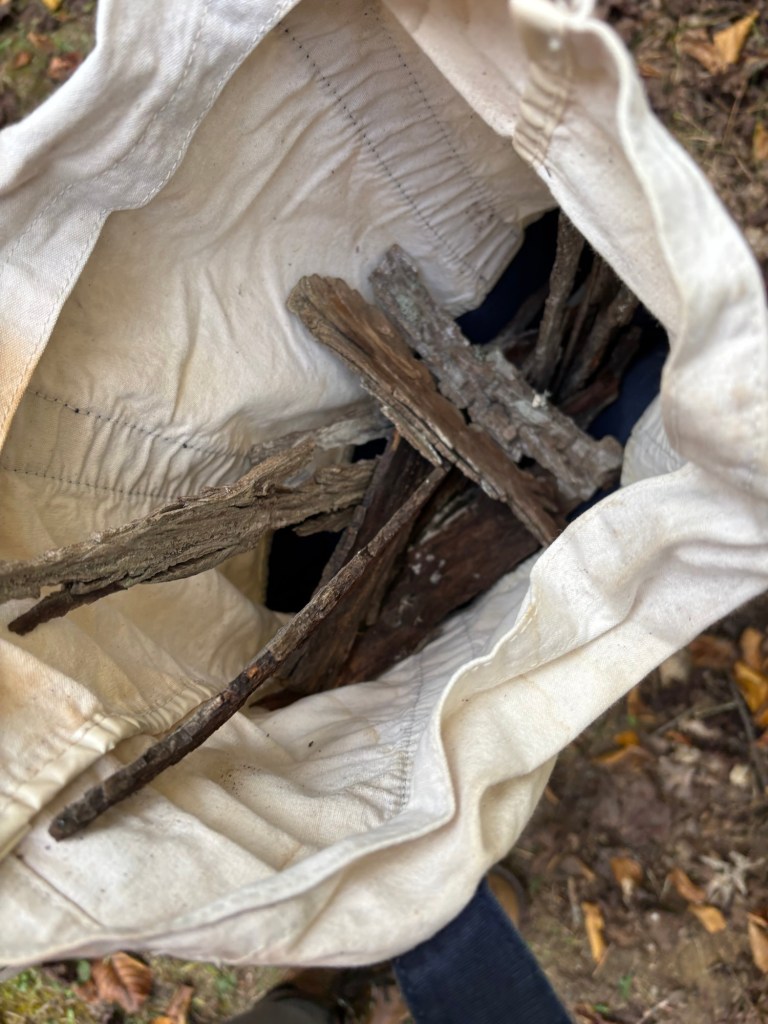
We looked for shagbark hickories to harvest some bark to make shagbark hickory syrup.
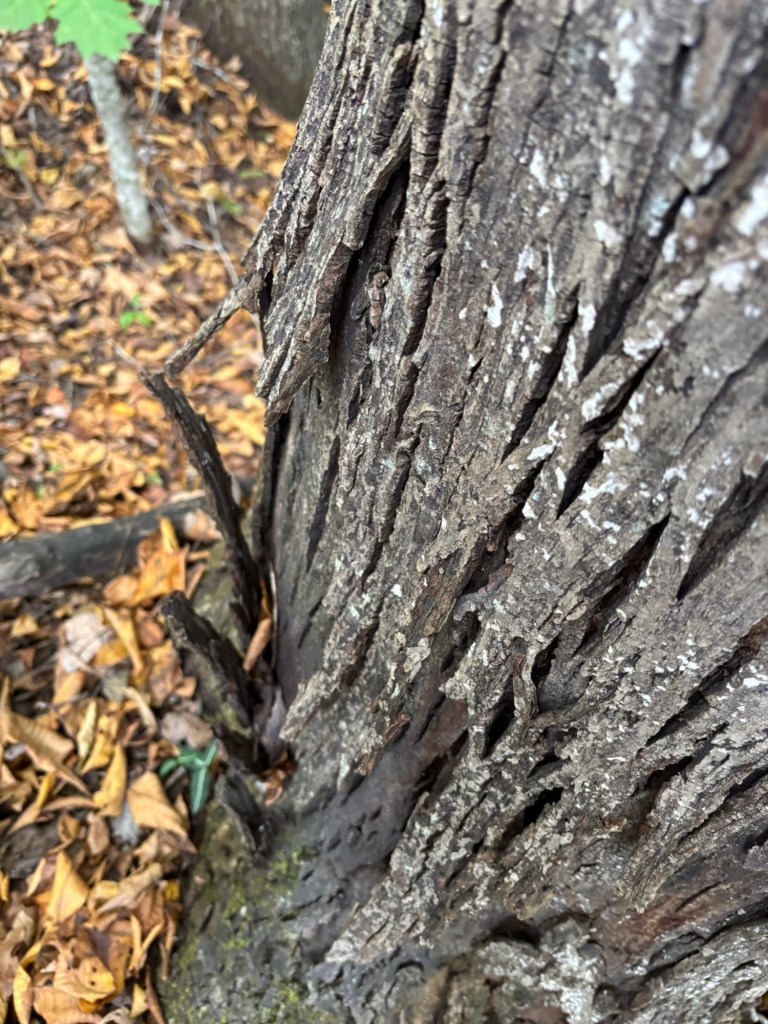
Shaggy bark pealing off the tree in the older specimen. Carya ovata found along the southern set back line.
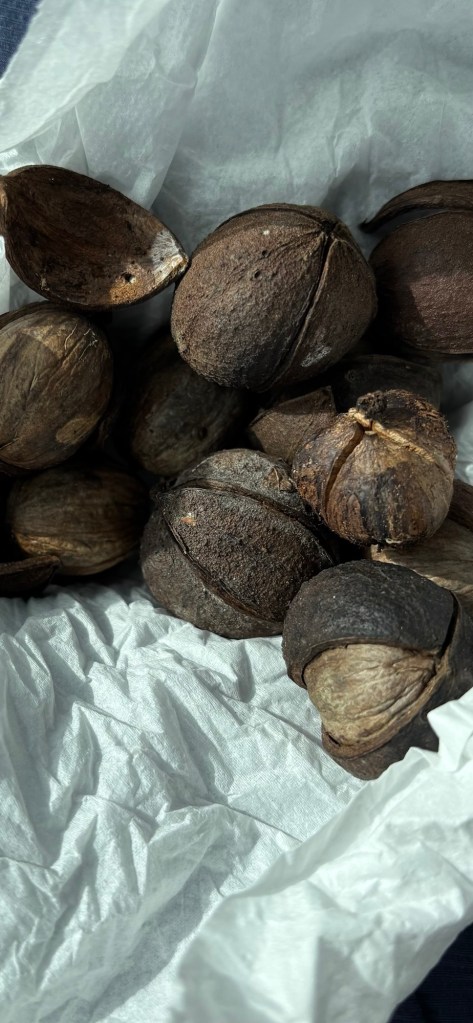
The bark, with exceptionally strong, hard and shock resistant wood can be used for furniture, handles and sporting goods as well as smoking meats. The nuts can be eaten raw or cooked. We watched members of the Cherokee tribe make a traditional kenuchi with Shagbark hickory nuts. The nuts can also be used as a replacement for pecans in recipes as well as made into a milk or syrup. They are nutrient dense with protein, healthy fats (omega 3’s) and carbohydrates.
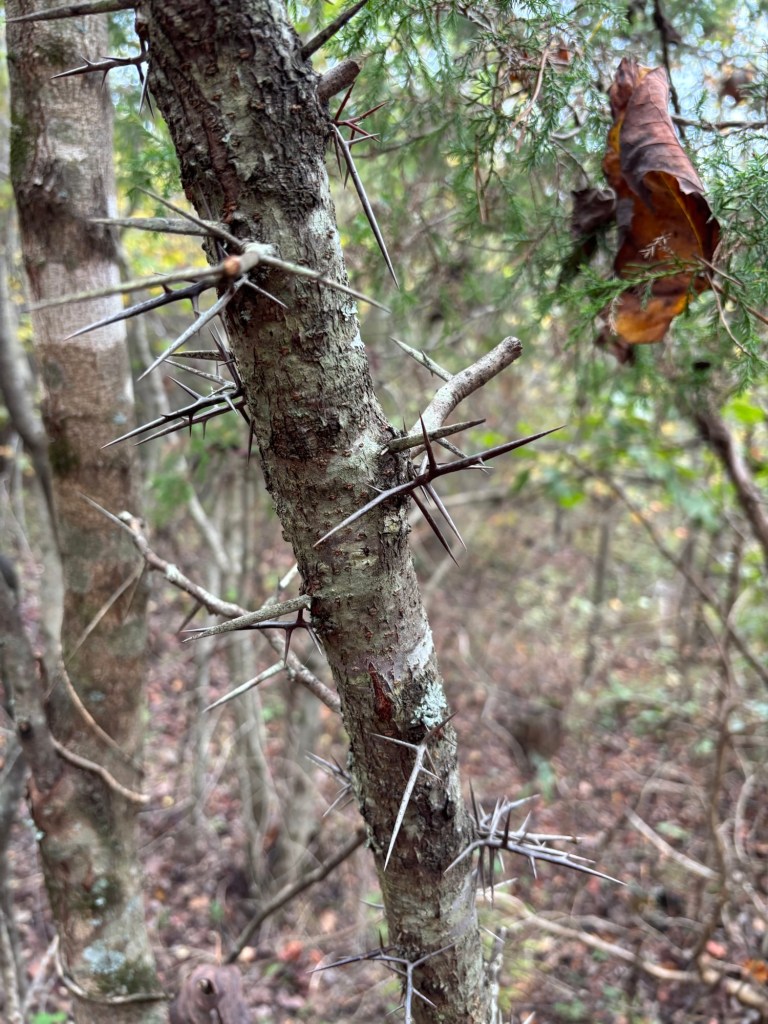
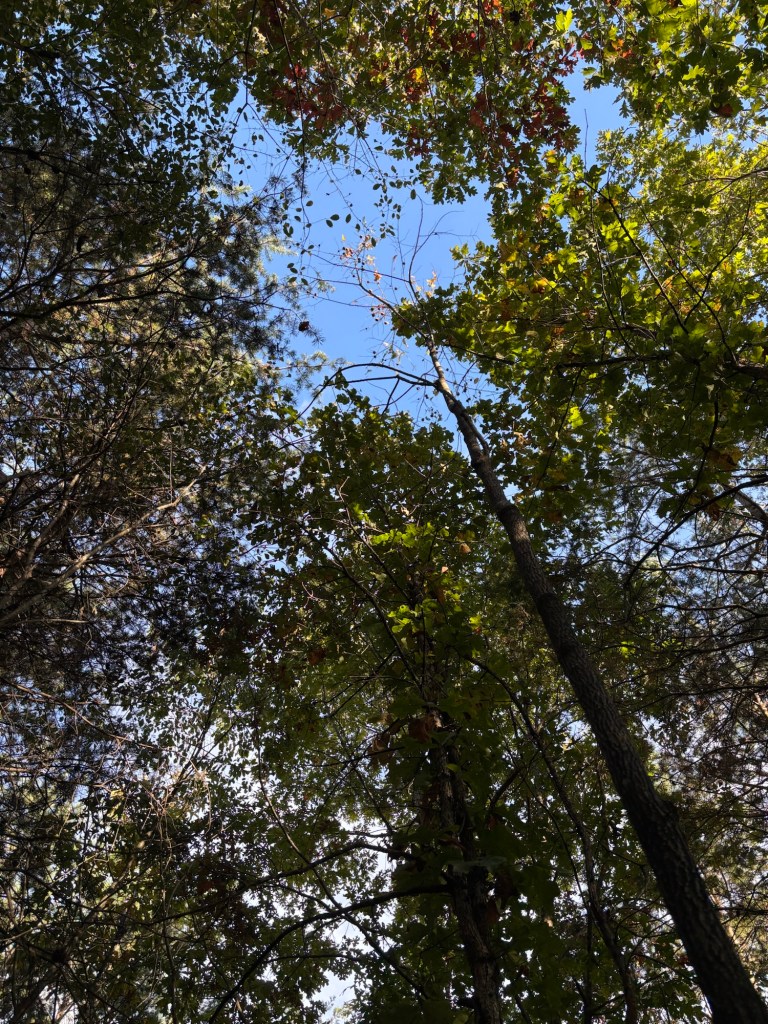
Shagbark hickory bark we collected.Shagbark hickory nutsHoney locust, Gleditsia triacanthos, found at the culvert on the old farm road. Historically, those large thorns have been used as nails in construction. These trees are nitrogen fixers that help to replenish soil making them beneficial for agroforestry and land reclamation. The sweet fleshy pulp from the pods can be eaten by people and animals. We were delighted to find this tree and hope to find more. American persimmon, Diospyros virginiana, with fruit hanging on up high in the canopy.
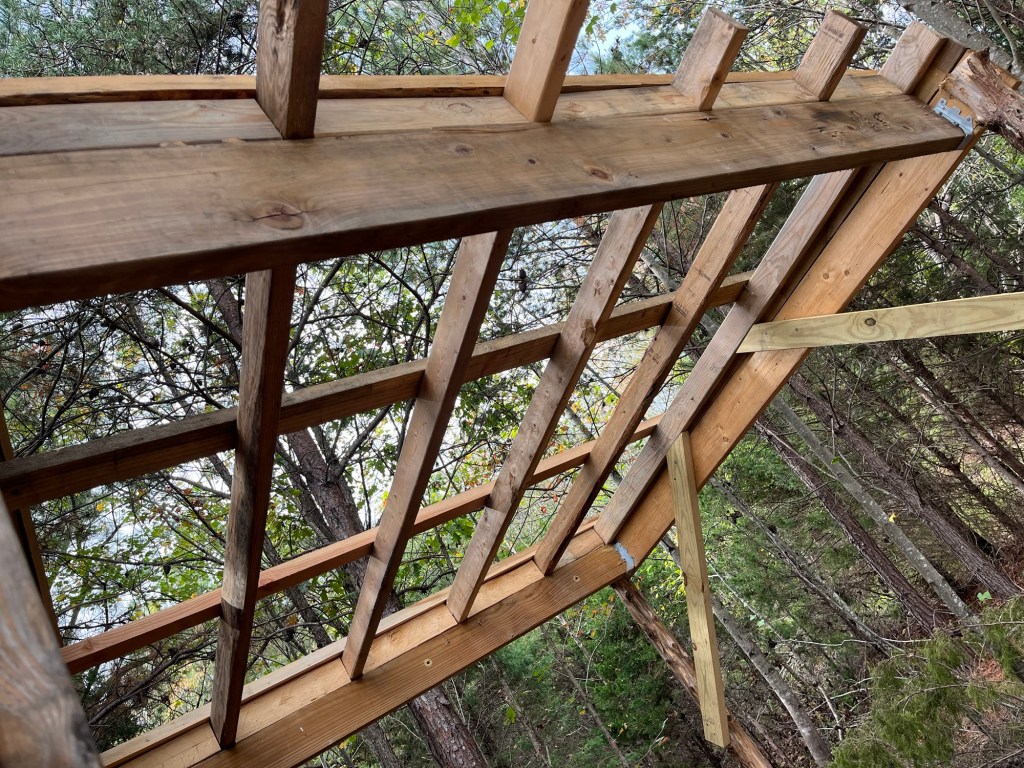
We’ve gone out to water the newly planted pawpaws, Asimina triloba. They continue to do well. Chris has worked on the lean to and it’s just about ready for the roof.
The lean-to connected to the shed will ultimately protect our tractor from the rain and snow.
I’m learning so much from your posts. What indigenous people have known for centuries, about nature could serve all of us if we pay attention, I think.
Yes, I agree! My grandmother was Cherokee and she was embarrassed by her traditions and didn’t teach us about these foods and uses for plants. I’m eager to learn more! 😊
 St Andrews Forest Farm
I’m learning so much from your posts. What indigenous people have known for centuries, about nature could serve all of us if we pay attention, I think.
Yes, I agree! My grandmother was Cherokee and she was embarrassed by her traditions and didn’t teach us about these foods and uses for plants. I’m eager to learn more! 😊
I look forward to hearing more!💛
It was very kind of you to like my post, ” Isaiah Chapter 42-48;” I am always appreciative of your posts and likes of mine.