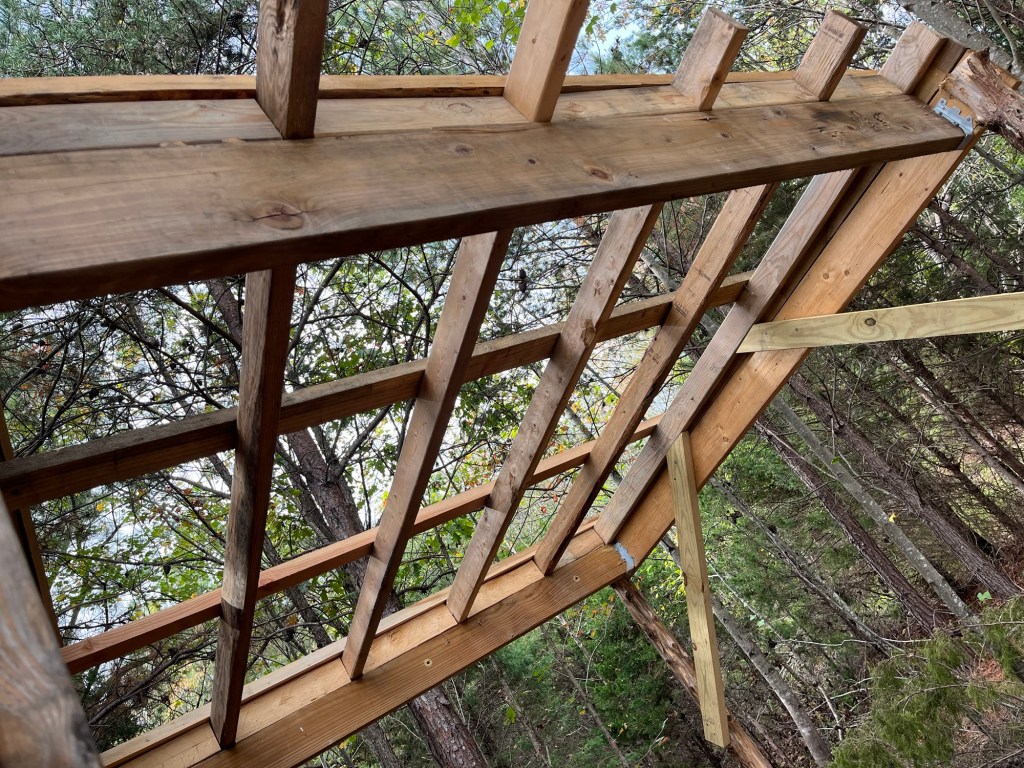
We will head out to the farm this afternoon and cannot wait to see if we finally had enough rain to encourage mushrooms to grow. It’s been so dry and crispy here throughout the summer and fall. We will check the rain gauge to see the level of precipitation but from Accuweather, it looks like it might be around an inch from the big storm that passed through Virginia this past week. We have been diligently carrying water to all of the recently planted pawpaws (Asimina triloba). We also got the roof on the lean-to finished before the weather arrived. It looks great and will protect the tractor this winter.
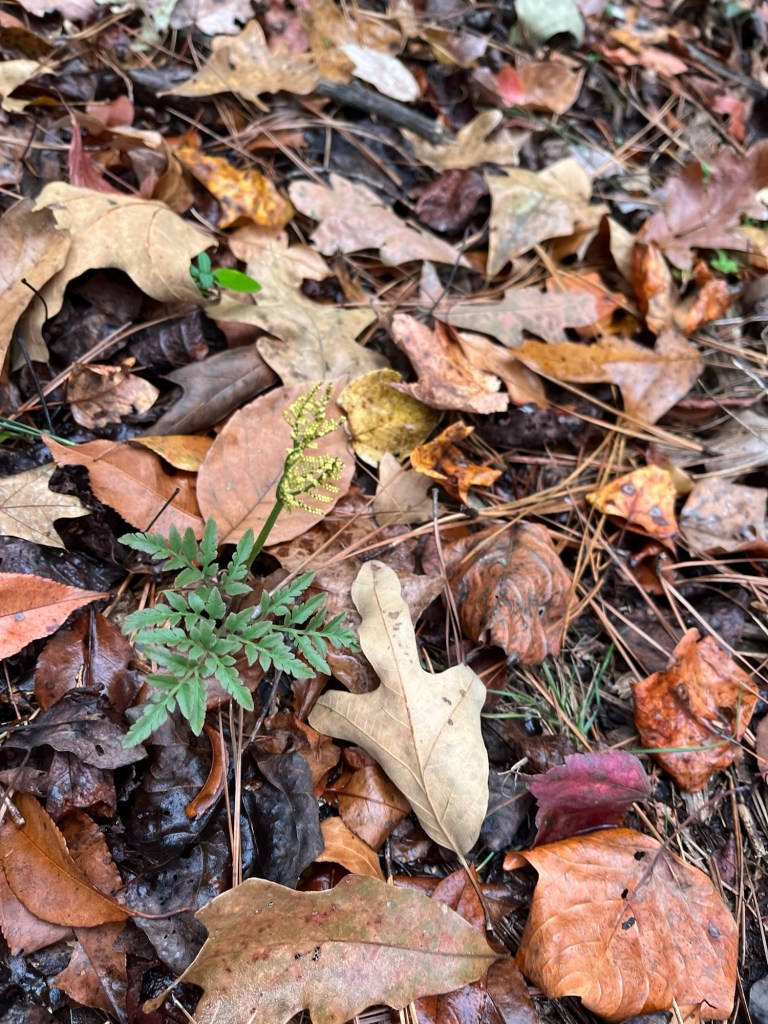
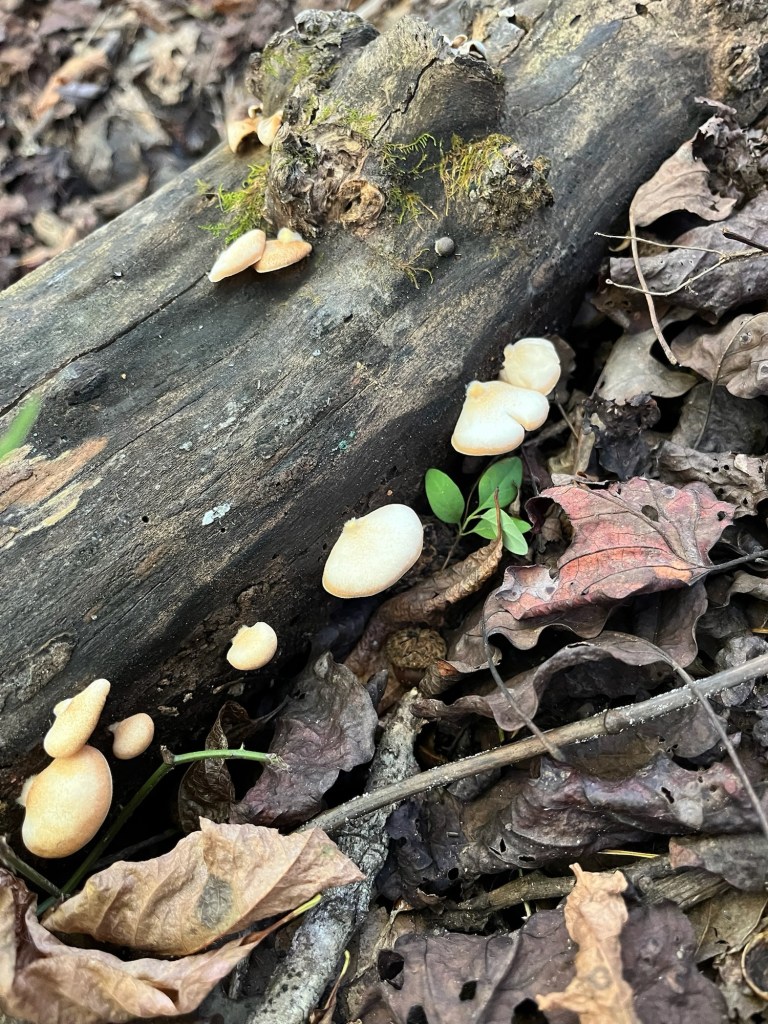
Sceptridium dissector, Cutleaf grape fern, found at SAFF. Hydnoporia olivacea, brown-toothed crust fungus, feeding on a dead tree at SAFF.
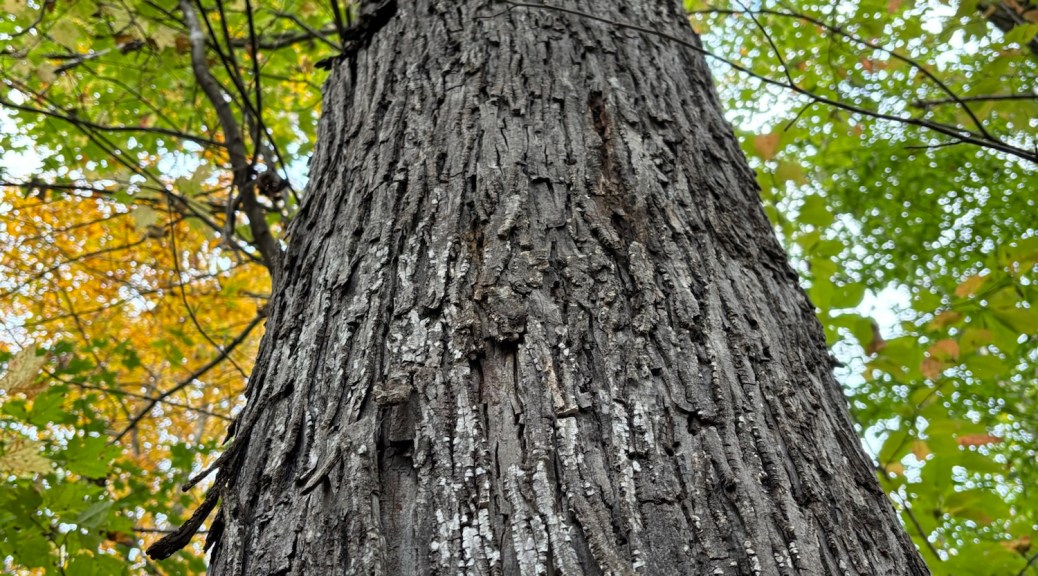
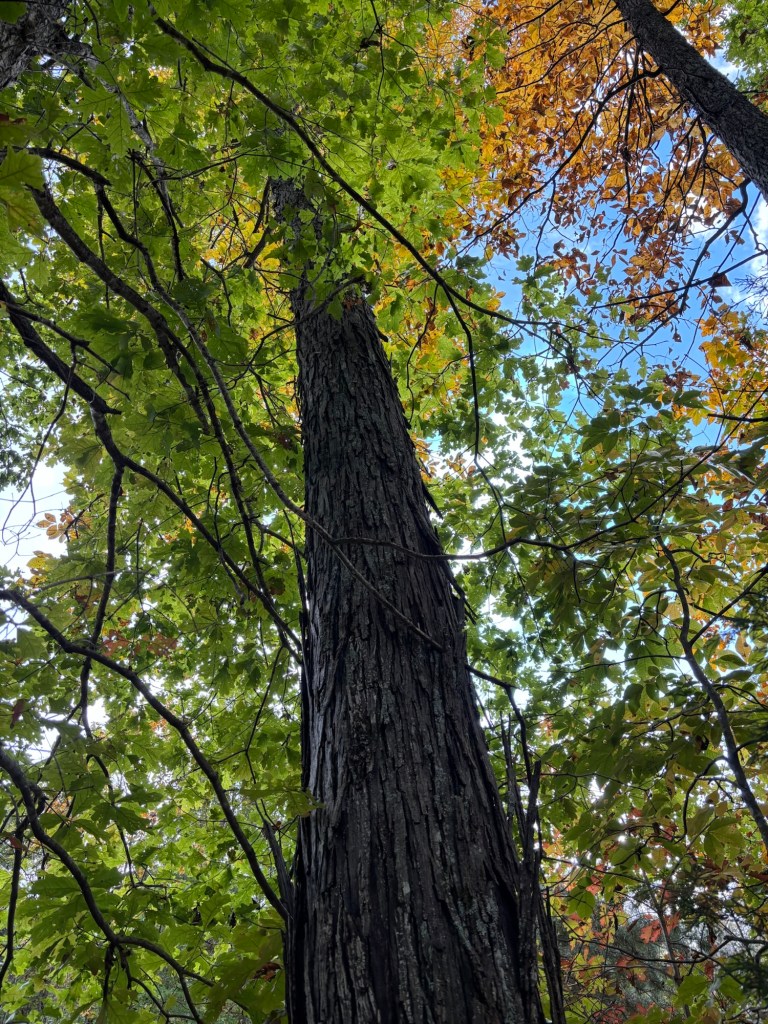
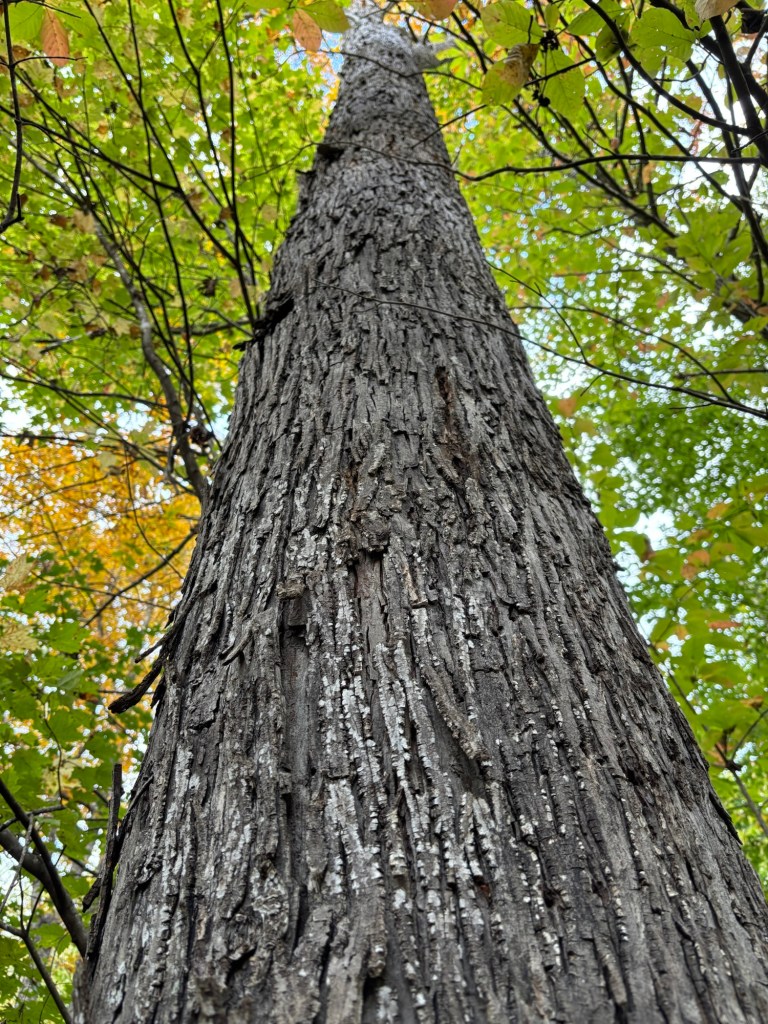
Shagbark hickory, Carya ovata, found along the south setback line.
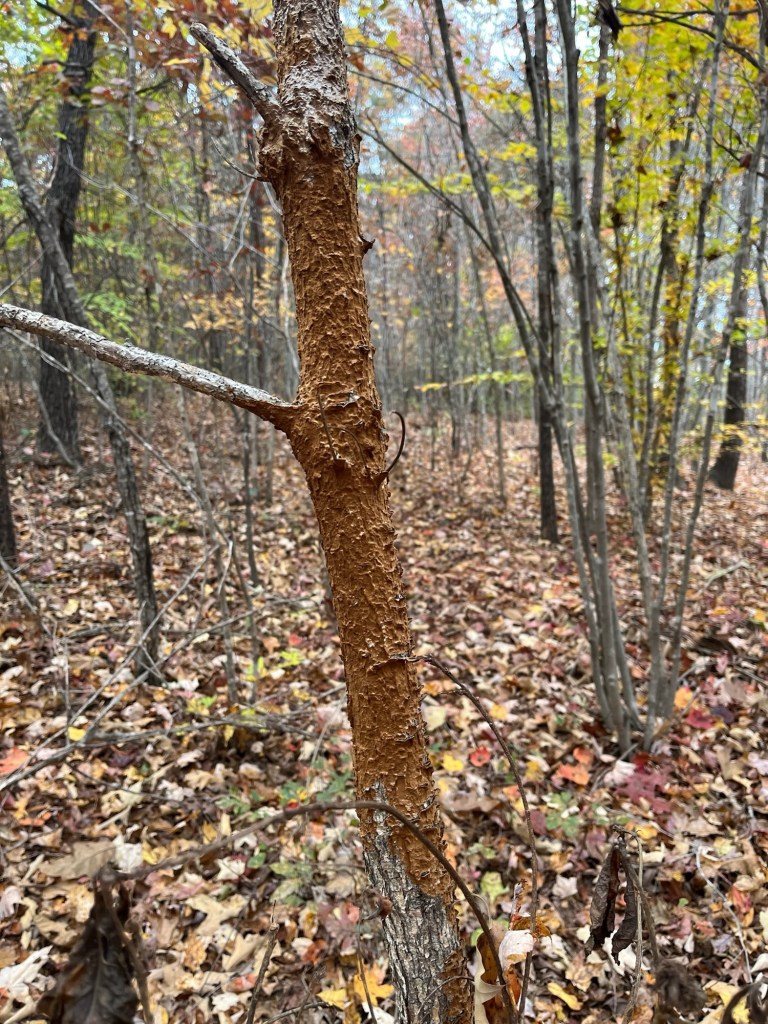
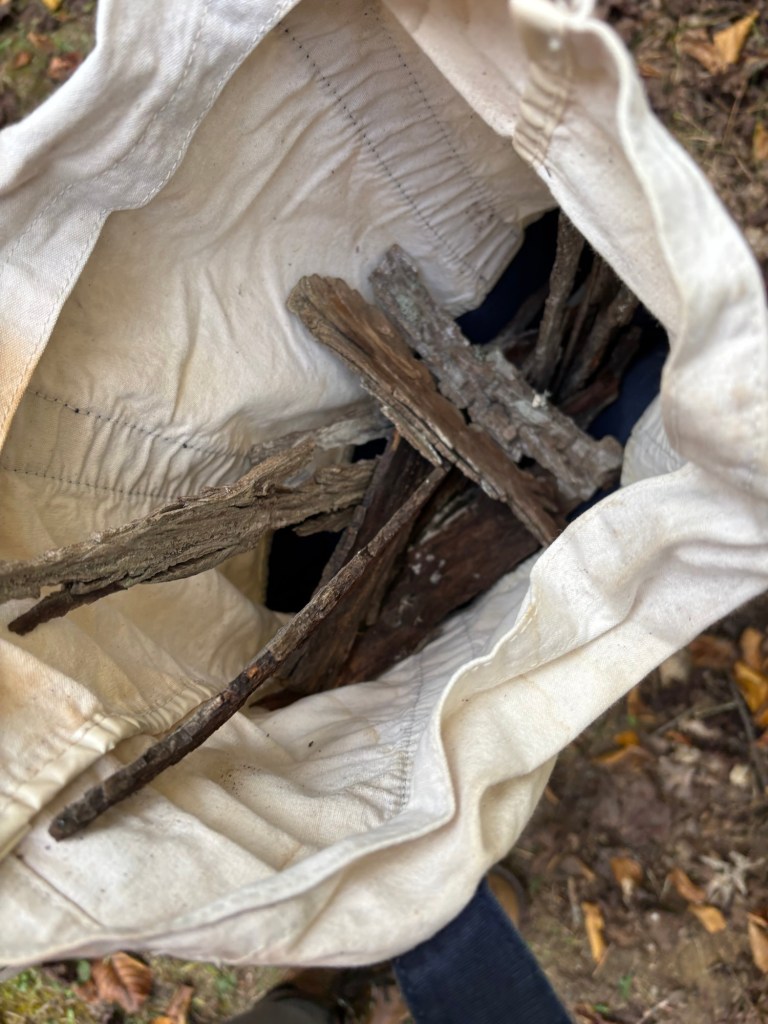
We looked for shagbark hickories to harvest some bark to make shagbark hickory syrup.
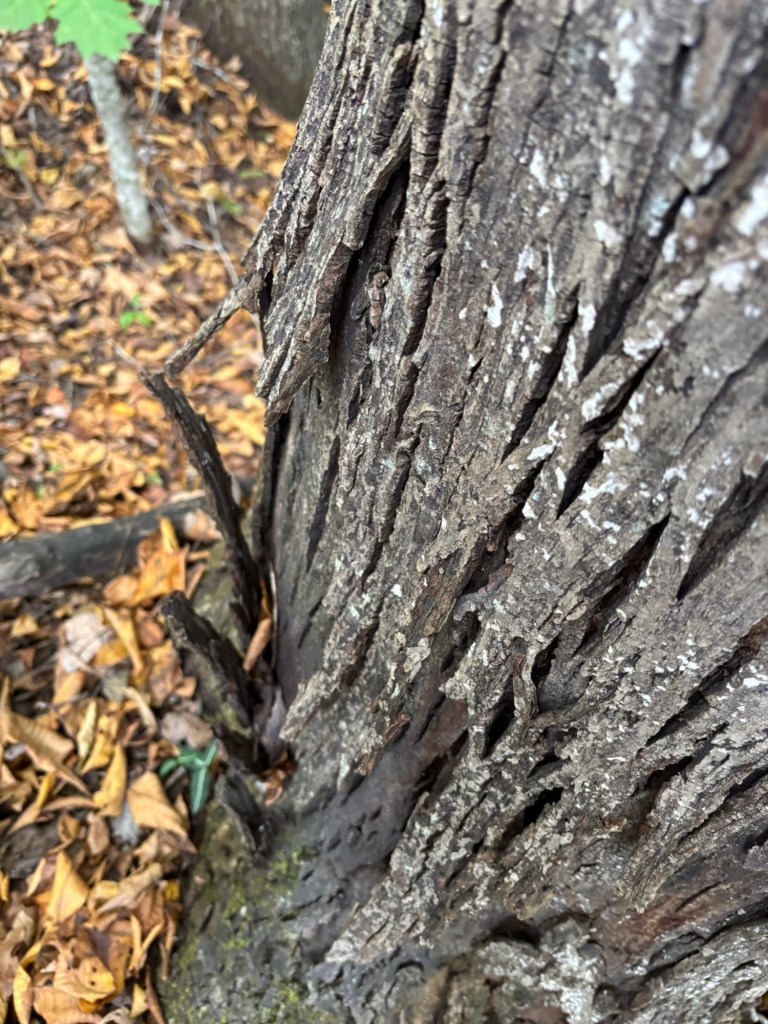
Shaggy bark pealing off the tree in the older specimen. Carya ovata found along the southern set back line.
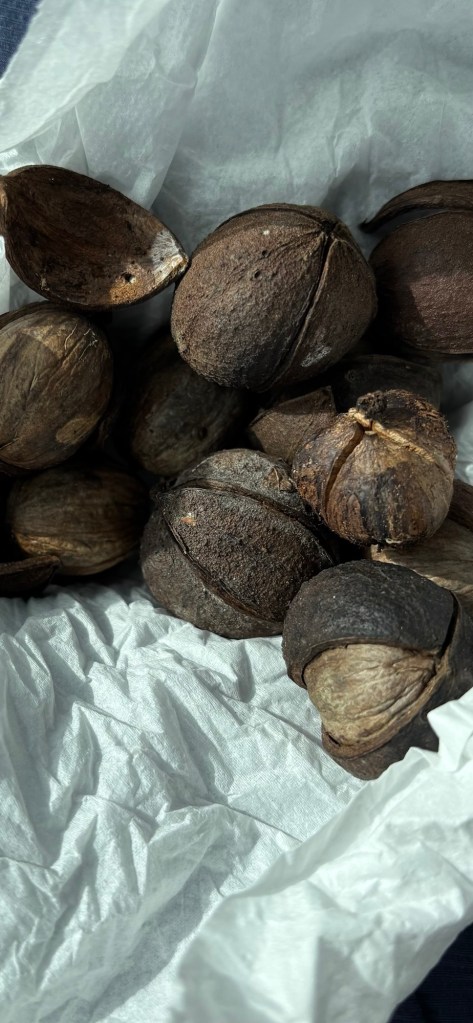
The bark, with exceptionally strong, hard and shock resistant wood can be used for furniture, handles and sporting goods as well as smoking meats. The nuts can be eaten raw or cooked. We watched members of the Cherokee tribe make a traditional kenuchi with Shagbark hickory nuts. The nuts can also be used as a replacement for pecans in recipes as well as made into a milk or syrup. They are nutrient dense with protein, healthy fats (omega 3’s) and carbohydrates.
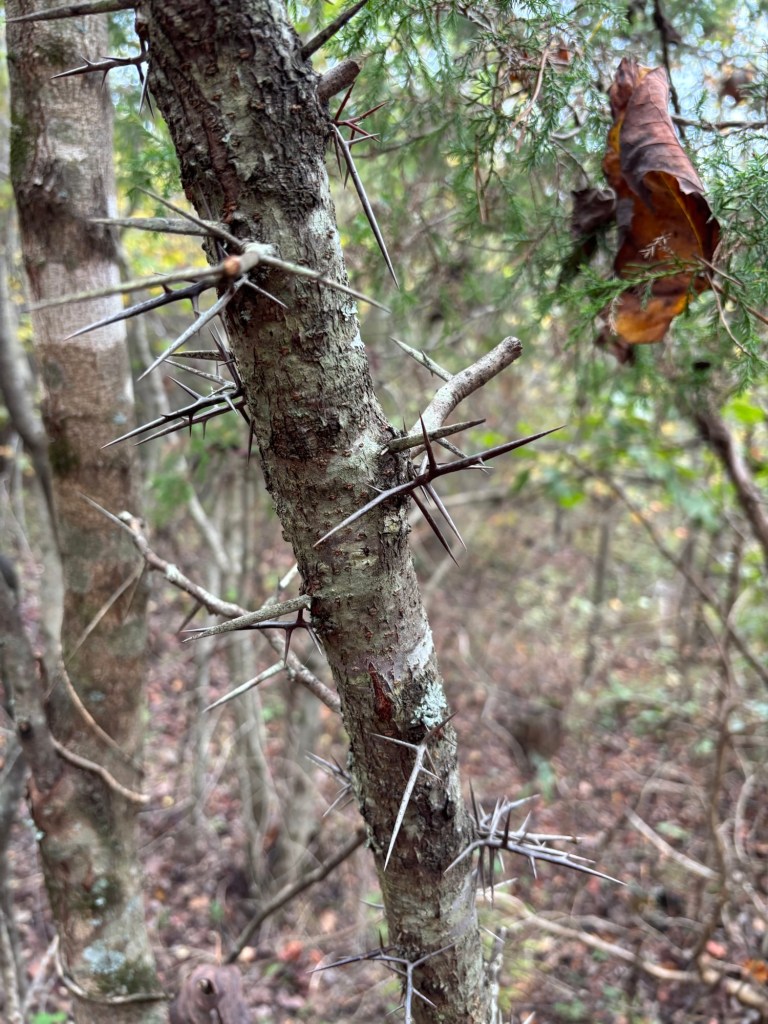
Shagbark hickory bark we collected.Shagbark hickory nutsHoney locust, Gleditsia triacanthos, found at the culvert on the old farm road. Historically, those large thorns have been used as nails in construction. These trees are nitrogen fixers that help to replenish soil making them beneficial for agroforestry and land reclamation. The sweet fleshy pulp from the pods can be eaten by people and animals. We were delighted to find this tree and hope to find more. American persimmon, Diospyros virginiana, with fruit hanging on up high in the canopy.
We’ve gone out to water the newly planted pawpaws, Asimina triloba. They continue to do well. Chris has worked on the lean to and it’s just about ready for the roof.
The lean-to connected to the shed will ultimately protect our tractor from the rain and snow.
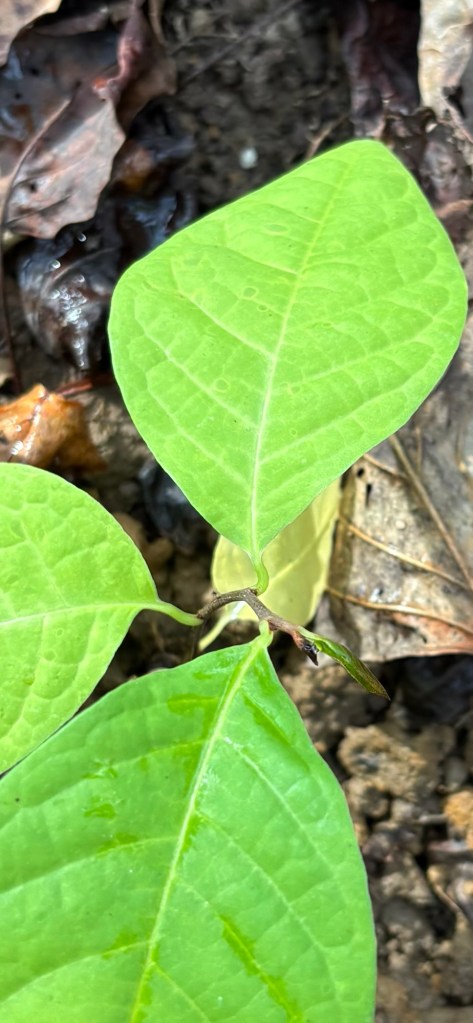
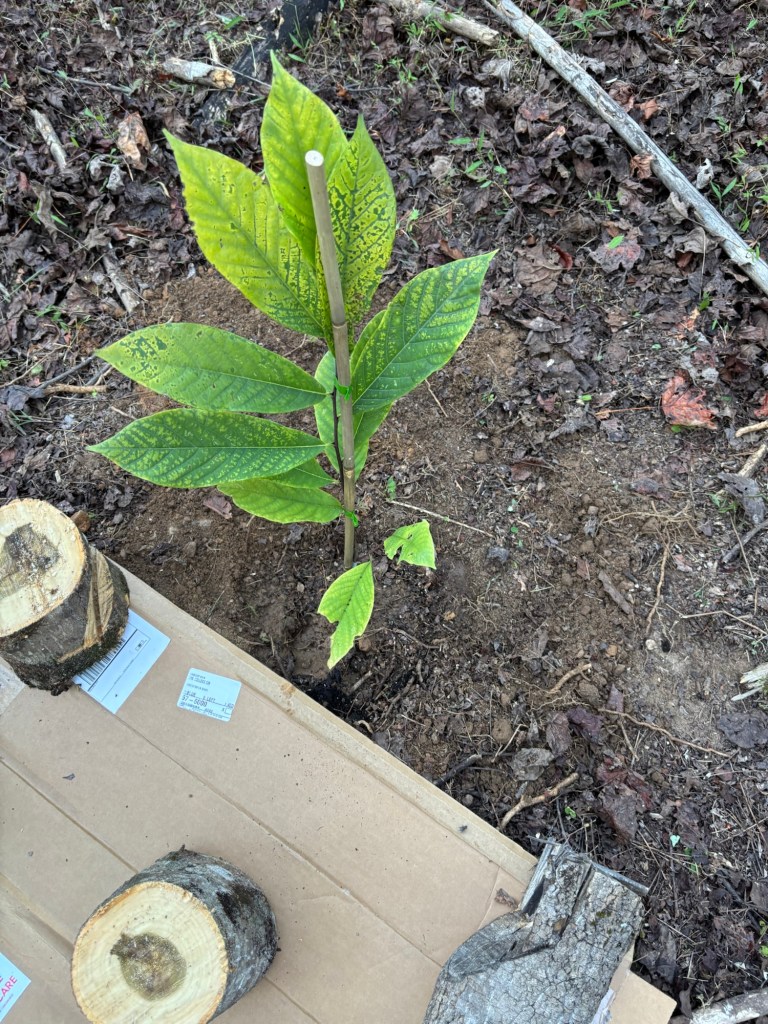
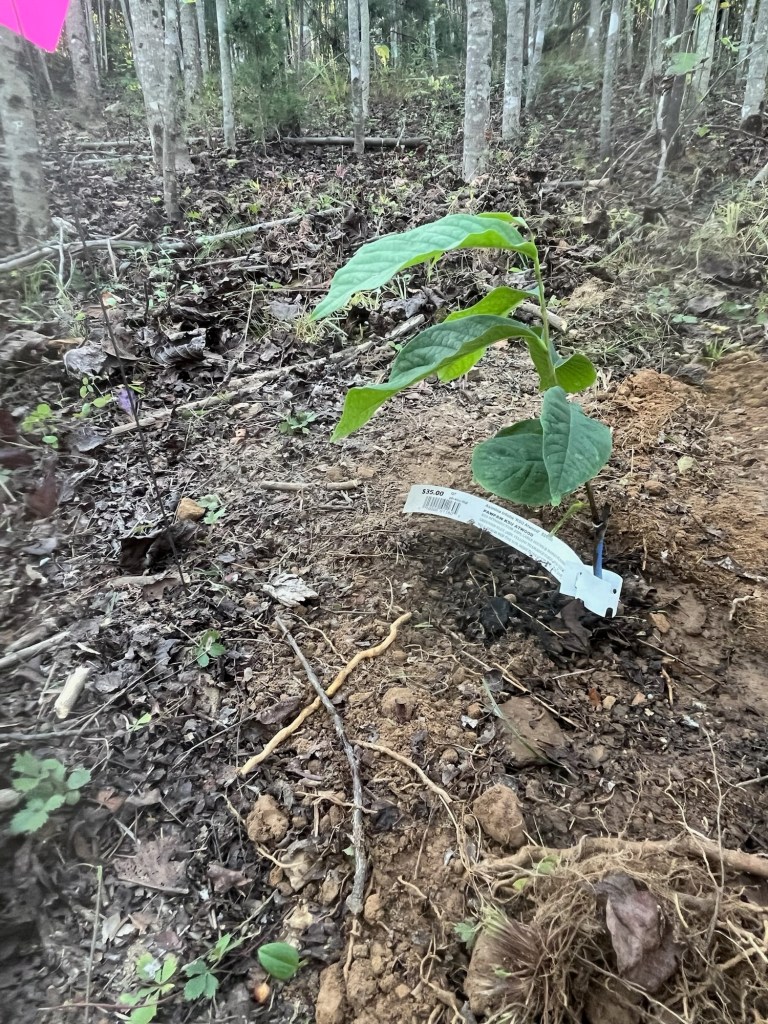
Asimina triloba: New leaf growth observed on a recently planted Rockfish River native pawpaw in the orchard at bottom of North Trail. This was beautiful to see. Hopefully it will be able to harden off before the first frost which typically occurs between October 21st to 31st in Buckingham.
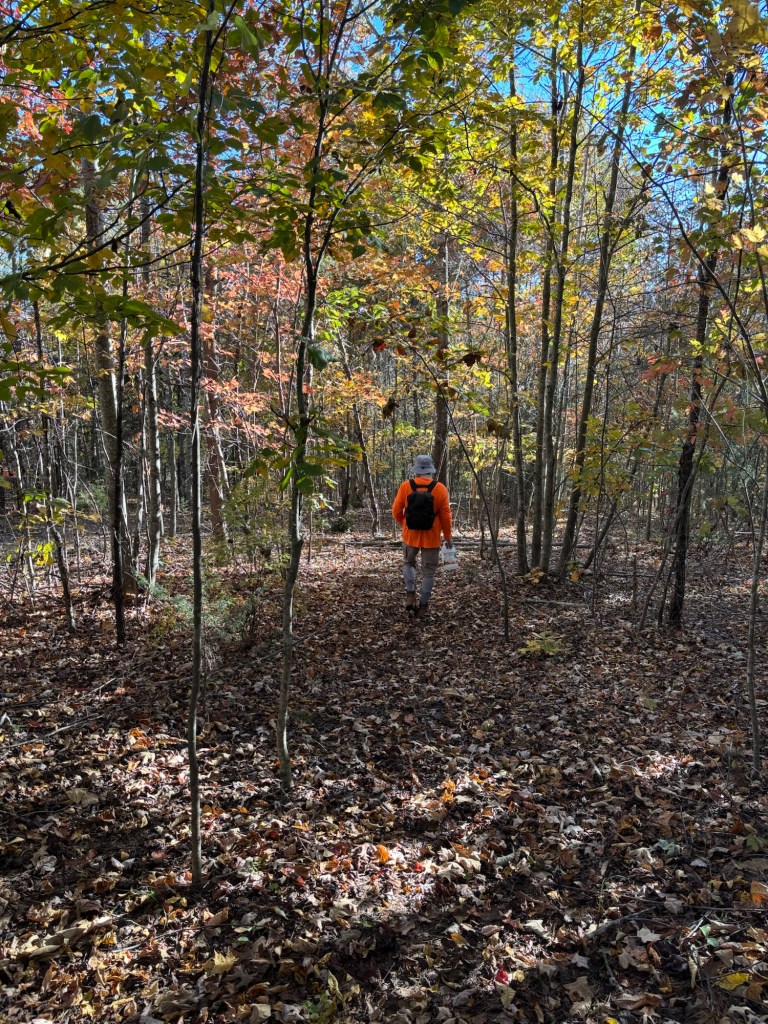
We went over to St Andrews Forest Farm to water the pawpaws and take a walk.
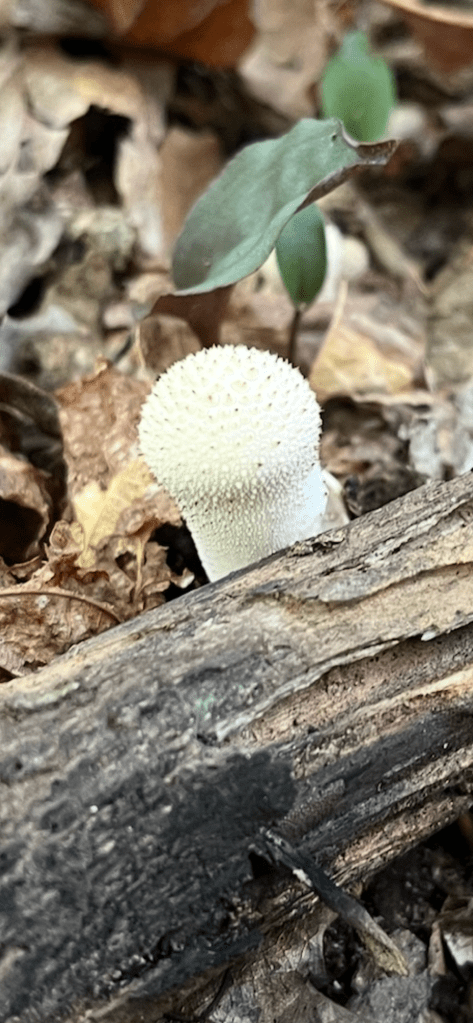
Common puffball. Lycoperdon perlatum.
We watered each recently planted pawpaw and made sure they were looking good. We came around the waterway and approached the orchard from south.
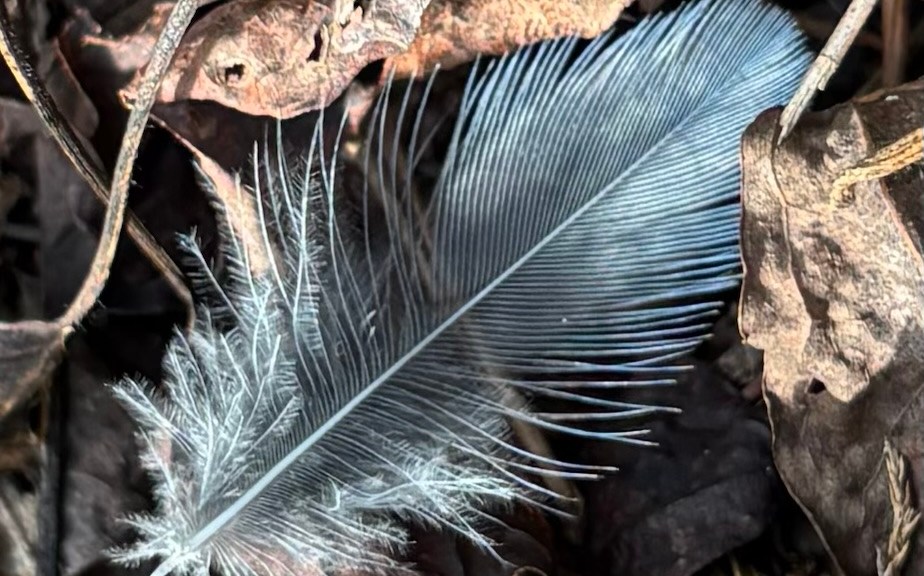
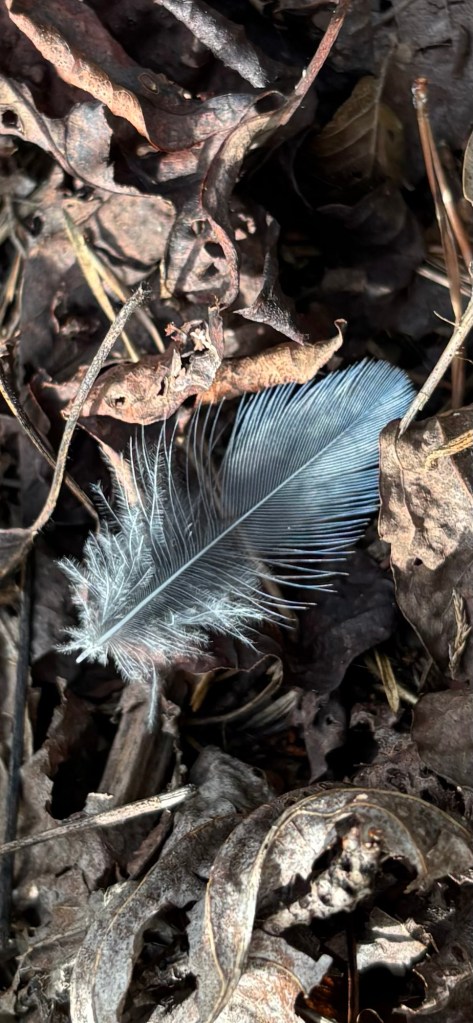
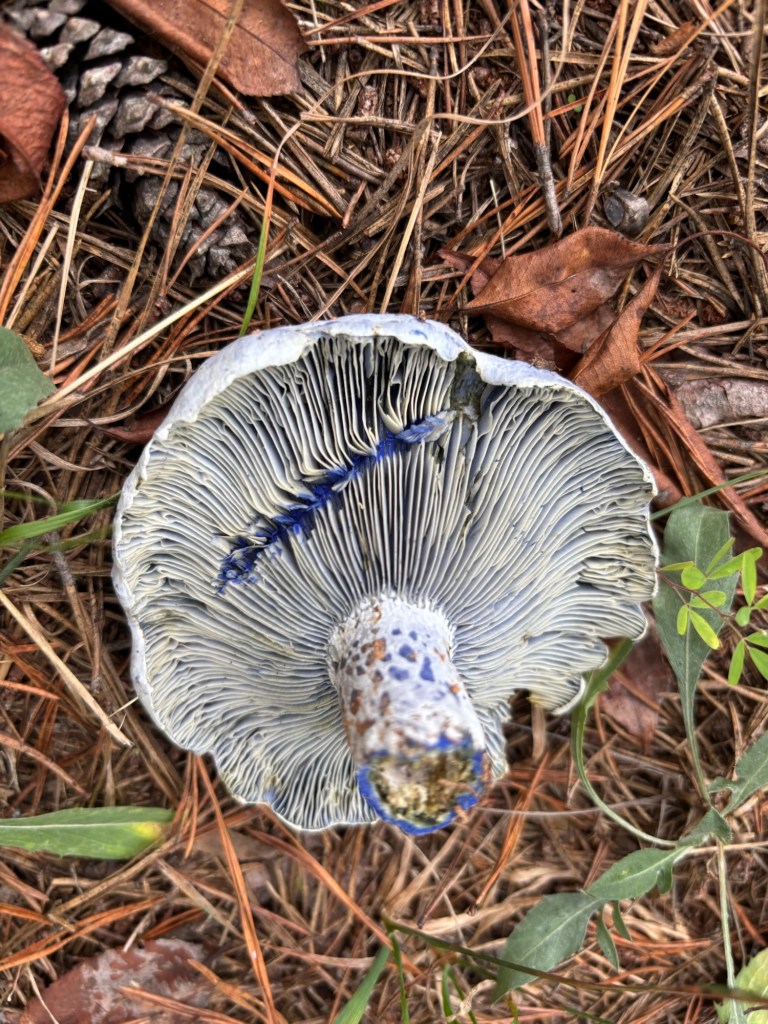
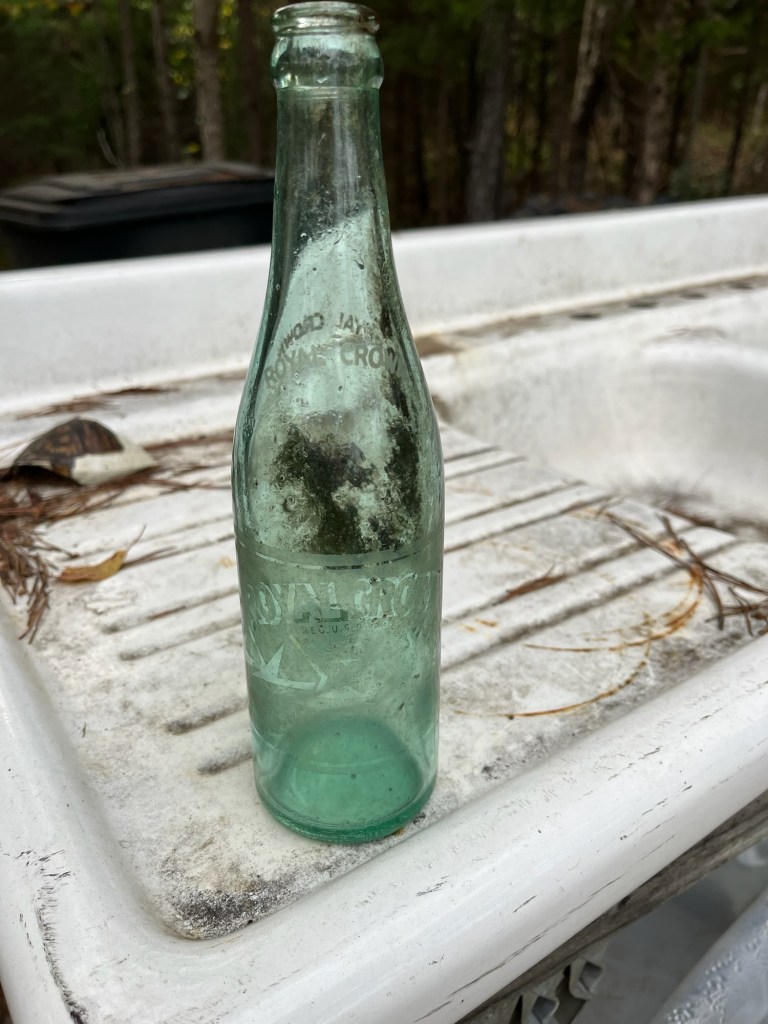
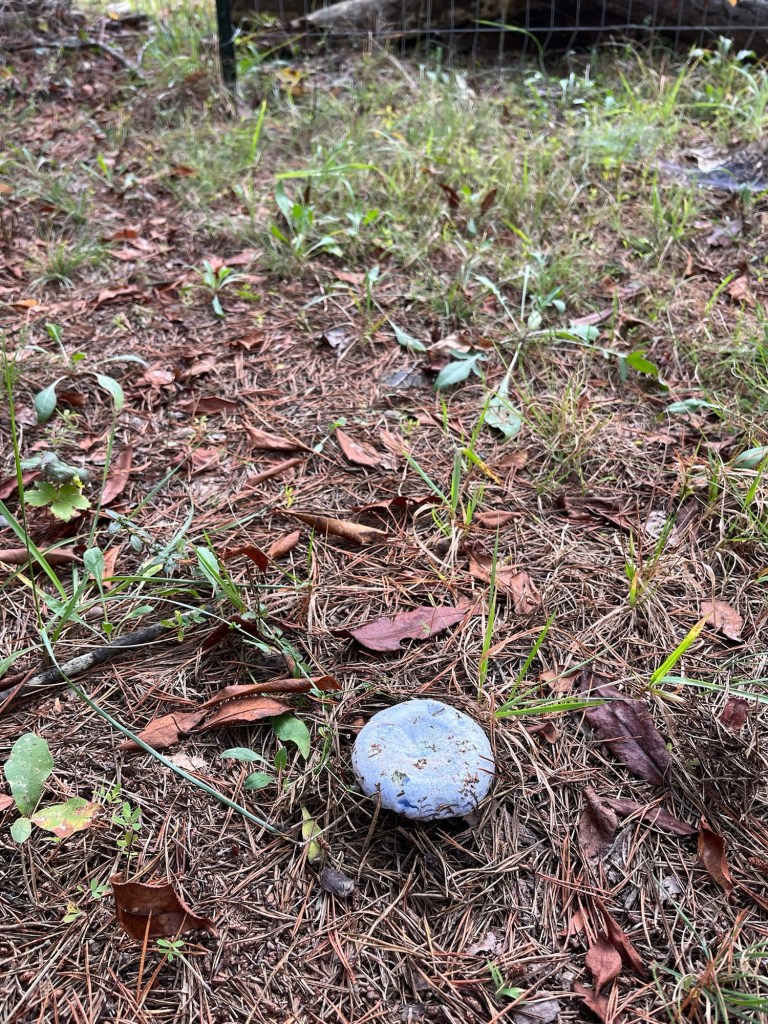
We heard a blue jay calling and following us around the forest. We found this feather. We thought it looked more like an Eastern Blue bird feather than a Blue Jay. Lactarius indigo is a milk cap with blue milky latex that oozes from the tissue when it is cut or broken. It’s edible and tasty. We find it near pines usually. This one is old and bug eaten. Royal Crown bottle found along Three Pine Gully on the north side. Looks to be from the 1930s.
We got out to the farm Friday, Saturday and Sunday. We received the Al Horn White pawpaw cultivar from Perry Pawpaws in Michigan on Friday afternoon and took it out to plant that evening in the orchard at the bottom of North Trail.
Asimina triloba: Al Horn cultivar with white fleshed fruit described as having coconut/ pineapple notes.
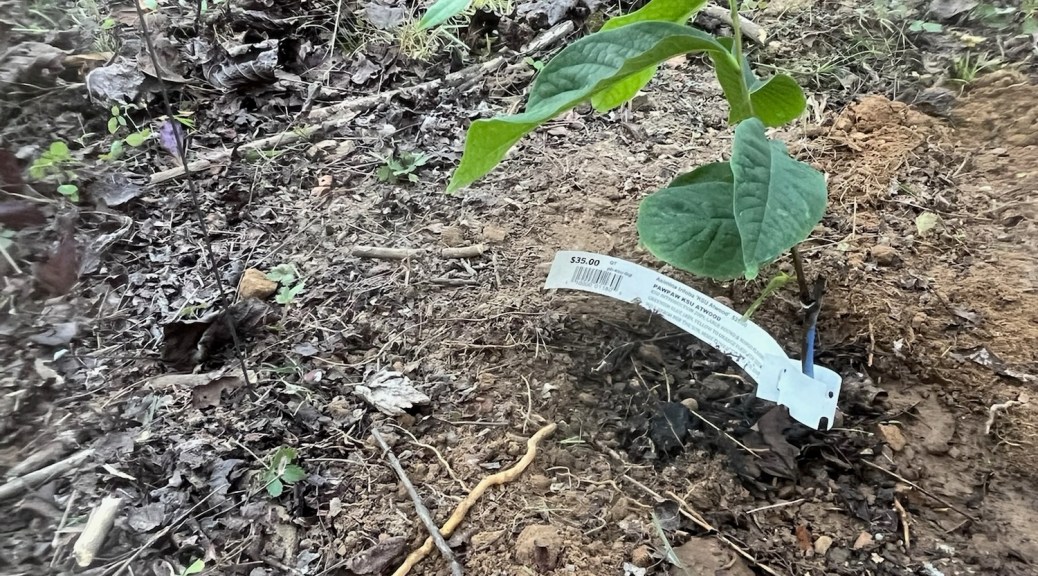
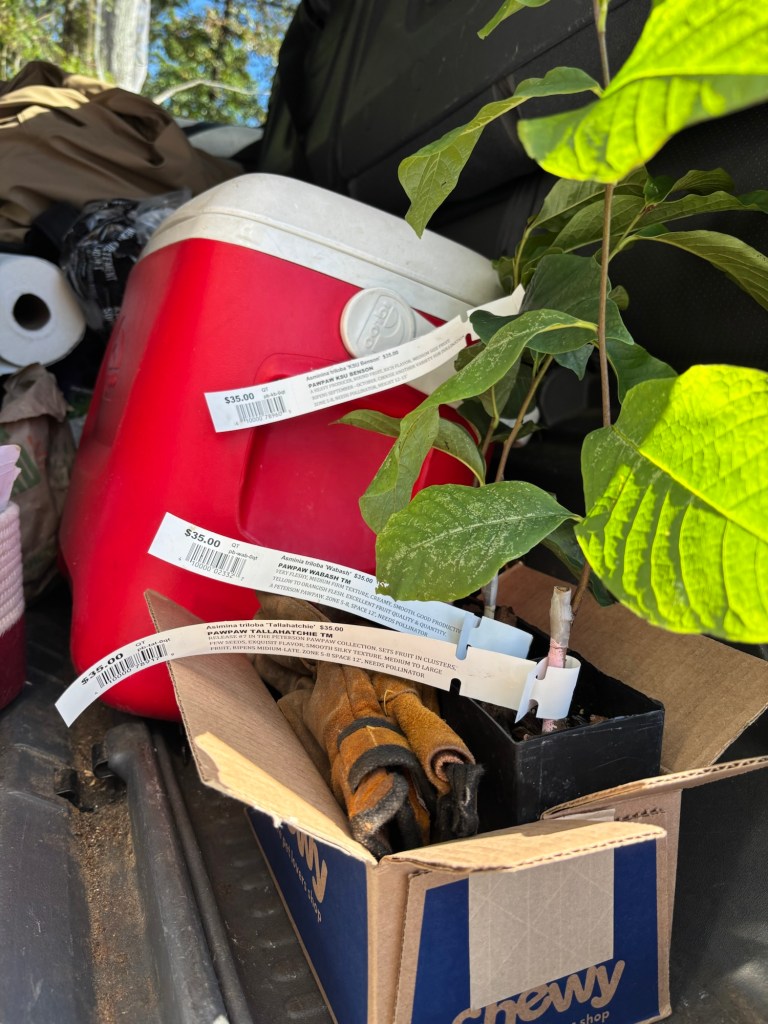
Then, we stopped by Edible Landscaping in Nelson County on the way to the farm Saturday and saw they had $35 cultivars in stock finally. They are small two year grafted trees. We were able to add Kentucky State University (KSU) Benson as well as KSU Atwood to our existing KSU Chappell. They are planted in a triangle and we hope they make beautiful fruit together. KSU has the only full time pawpaw research program in the world. They have done much to better understand pawpaw growth, genetics and orchard management practices. Each of these cultivars are known for resistance to disease, delicious tastes of creamy mango banana flavor as well as being fast growing with high yields. They are each welcome additions to the orchard.
We also added the Potomac, Tallahatchie and Wabash to our Neal Peterson Pawpaw collection. The only one we still need to find is Susquehanna. He has released seven superior cultivars well known and valued for taste and growth. He is known as Mahatma Pawpaw and is worth looking into if you’re interested.
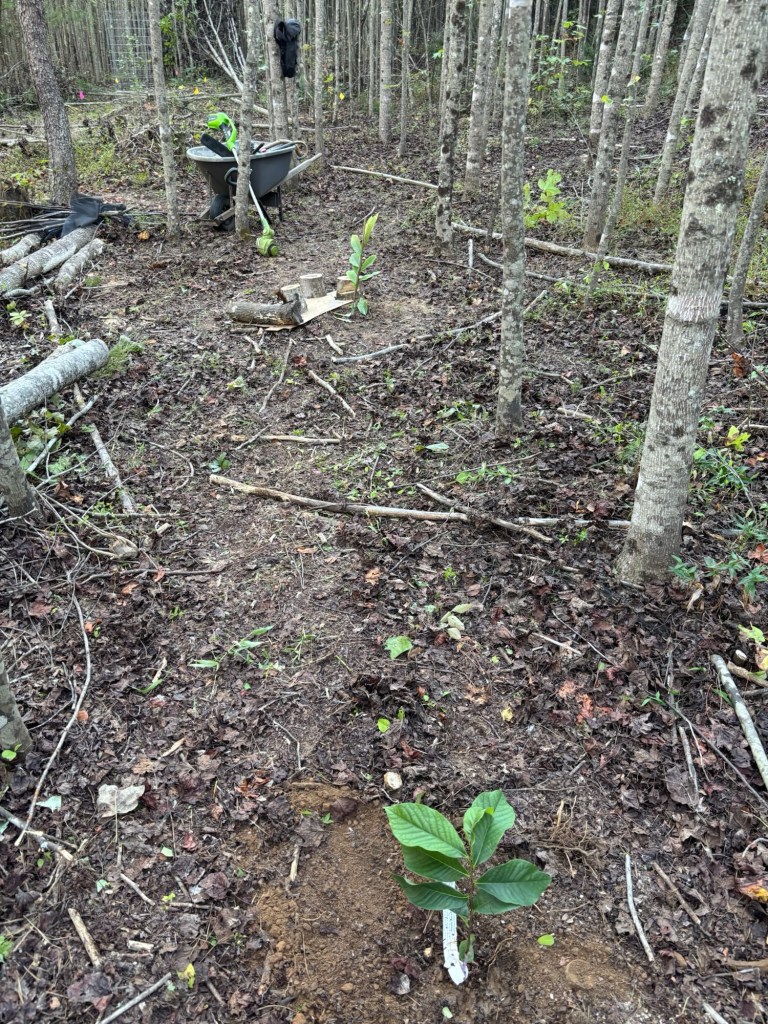
Wabash cultivar just planted in the orchard. Dr Pomper at KSU urged Neal Peterson to release this as Wabash since the shape is similar to a cannonball.
We also added NC 1 and Sunflower to our orchard this weekend. We are delighted. So far this year we planted 100 Asimina triloba trees at the farm and 8 at the house. We also ordered 50 more bare root seedlings from the Virginia Department of Forestry which we will get in February. We will place them in deep 12 inch tree pots to grow until spring when we will plant them at SAFF in the orchard. We are on our way to a Pawpaw paradise for sure.
One Indigo Milkcap (Lactarius indigo) up top along the driveway yesterday.
Fields of giant cosmos witnessed along Plank Rd at Pippin Hill Farm and Vineyard at sunset last night as we drove home from SAFF.
Saint Andrews Forest Farm Blog
Is this your new site? Log in to activate admin features and dismiss this message
 St Andrews Forest Farm