Pawpaws Planted at SAFF

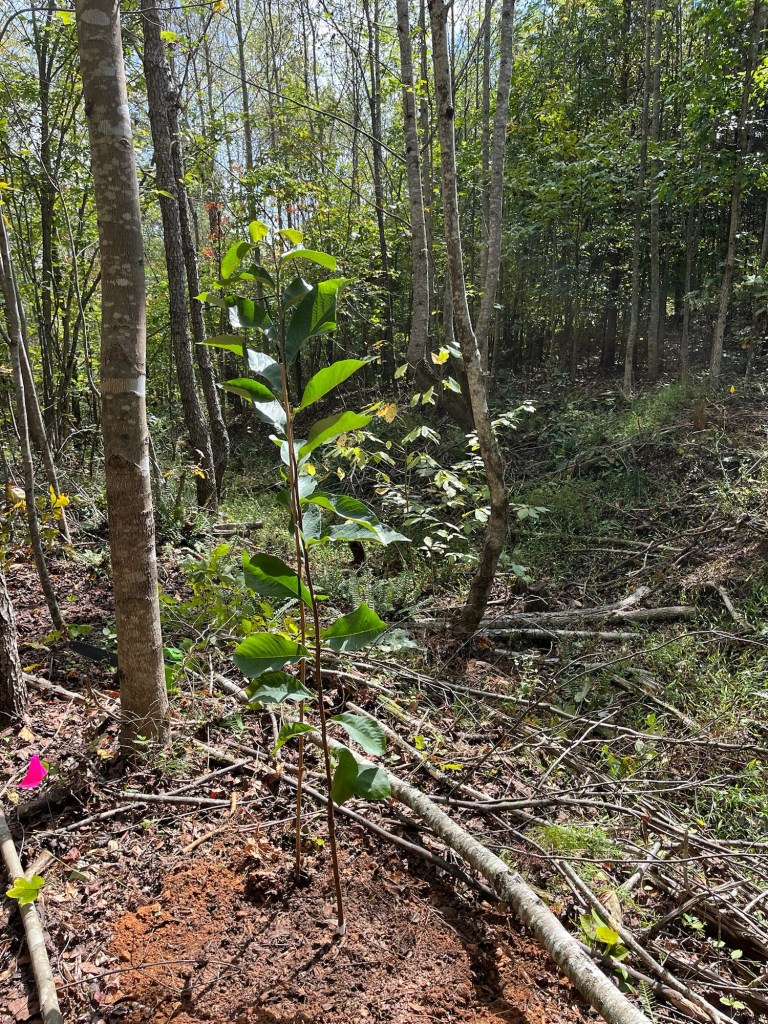
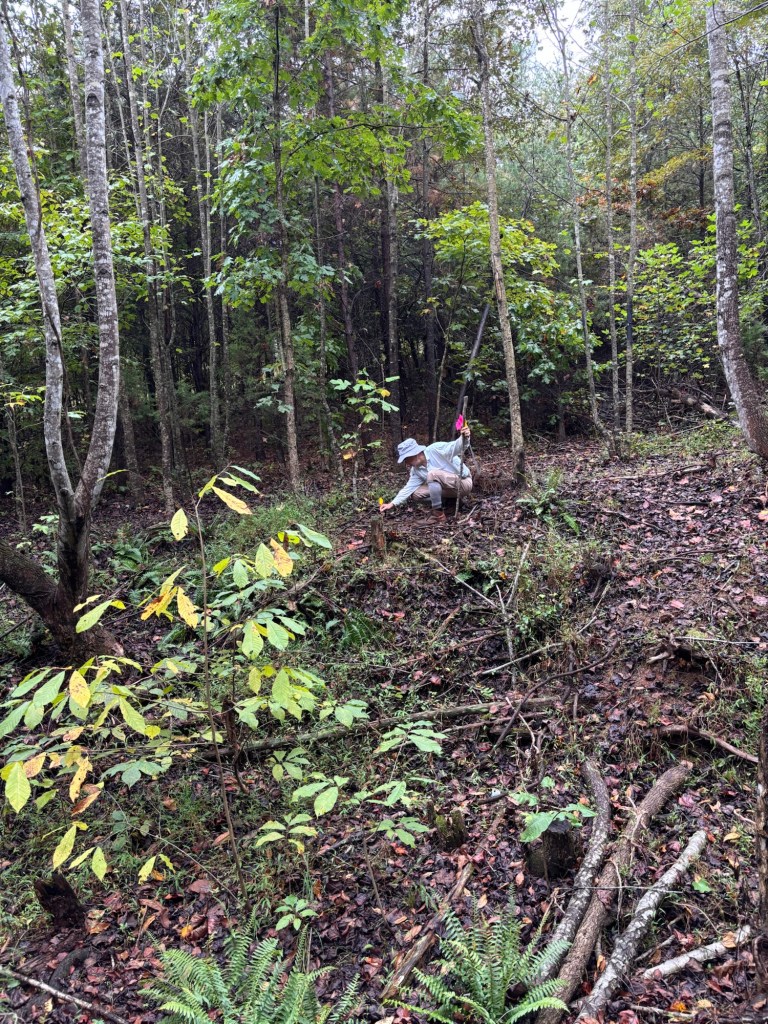
Asimina triloba: Chris placing a yellow flag on our native Rockfish River pawpaw seedling just planted on the south gully in Dan’s Folly alongside one small patch of St Andrews Forest Farm pawpaw natives which are below Chris in the gully with the yellowing leaves. They are some of the first trees to go dormant for winter. We think these may be clones. It’s a group of 6 with some good sun but no flowers or fruiting yet. We hope the new dna within these just planted seedlings will help wake them up.

We finished planting the seedling pawpaws with a full 100 in the ground so far this year! It was a big project. Besides our seedlings that we harvested from both our foraged fruit along our drive to the farm at Rockfish River and from Edible Landscaping’s cultivated pawpaws, we also planted a few of our own cultivars. We added Allegheny, Kentucky State University Chappell, Rappahanock and Mango to our existing Shenandoah that we planted last fall. We are waiting for our first white fleshed pawpaw seedling to arrive from Perry Pawpaws in Michigan. They said they’ll ship in October. It’s an Al Horn cultivar (taste has notes of pineapple and coconut) and we will place it in the Pawpaw Orchard at the bottom of North Trail. They also said it should be about 2 feet tall which is pretty big for pawpaws to not be in the ground yet. The tap root on the pawpaws like to go deep quickly. I can’t wait to save it from its pot and get it planted.
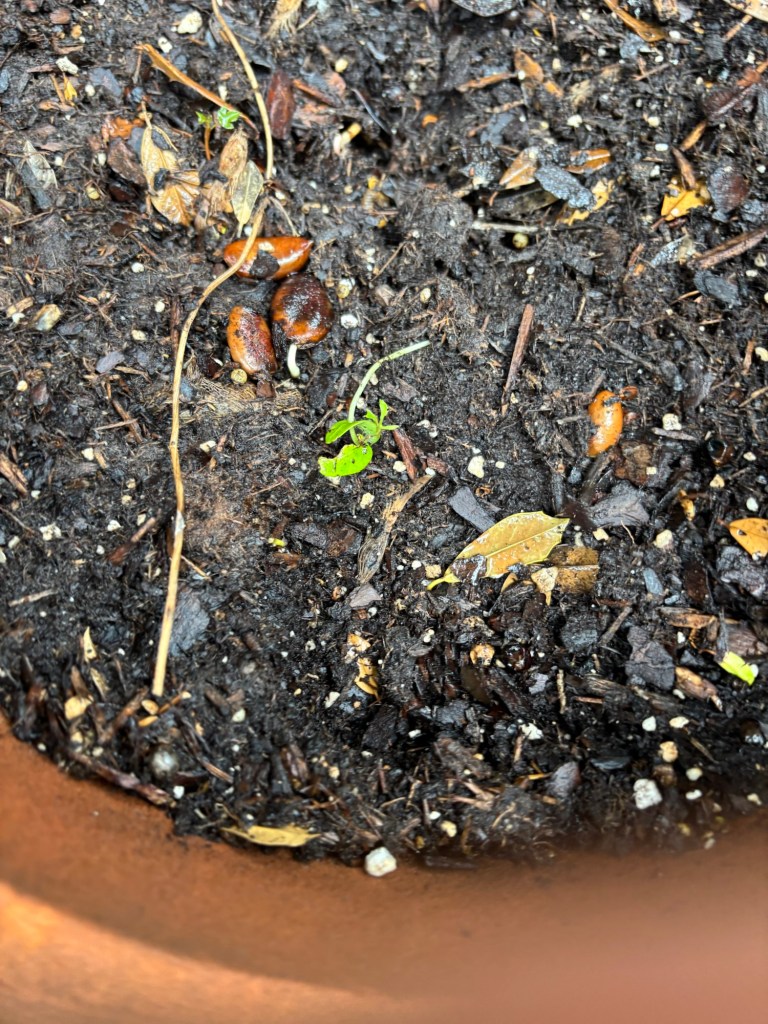
These brown seeds are the pawpaw seeds that you see sprouting the tiny green leaves. The white you see is the root. By the time you see anything on top, that root has shot 8 or so inches down. They like a lot of room.
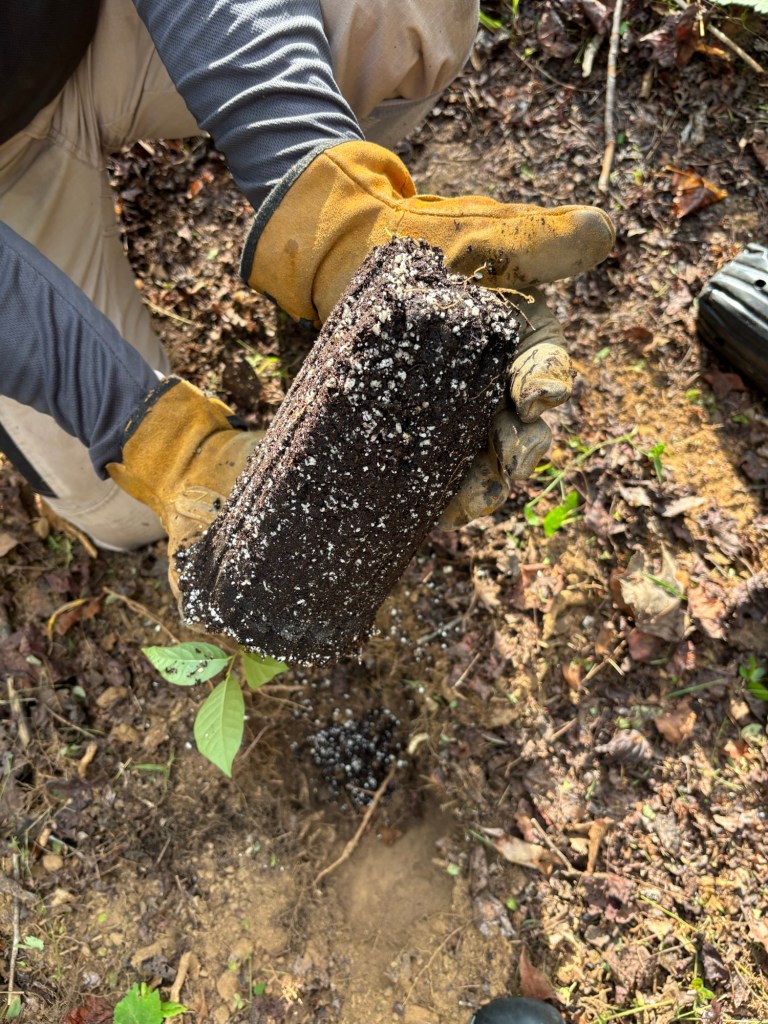
We put our seedlings in 12 inch deep tree pots to accommodate this long taproot. Some of our seedlings had roots growing from the bottom of the pot when we planted them at St Andrews Forest Farm after just a few months since the seed sprouted in June and planted in September—so just 3 months!
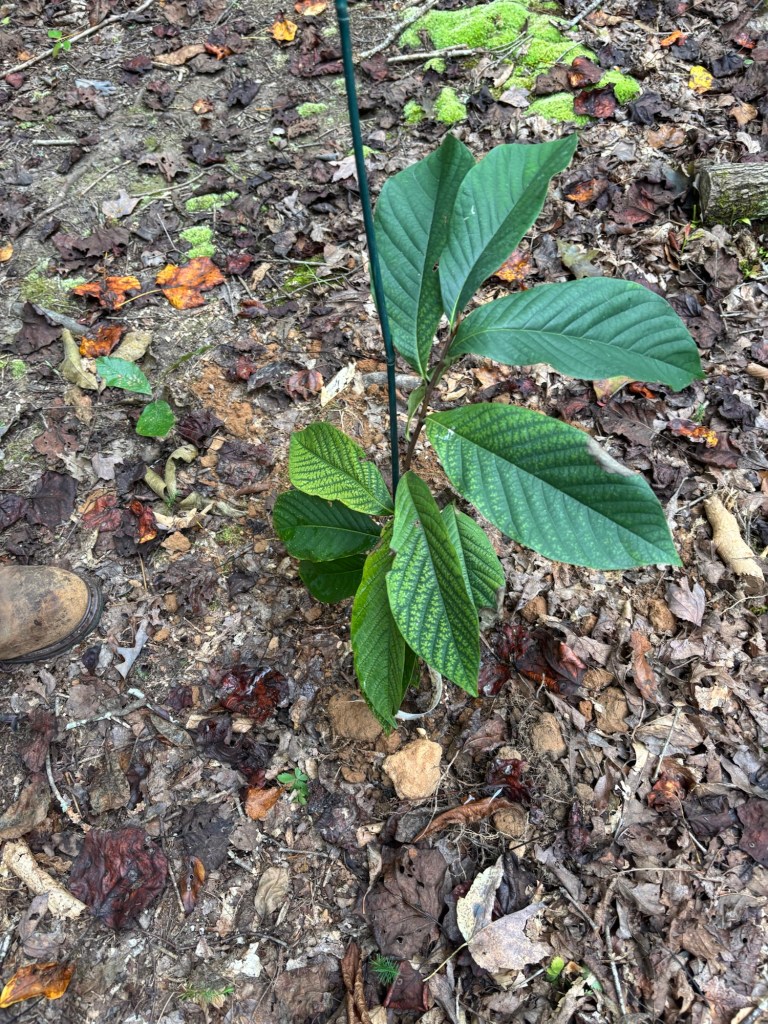
Asimina triloba: Rappahanock pawpaw cultivar planted yesterday at Fern Trail near the south gully. We have been on the lookout for more of Neal Peterson’s pawpaw cultivars named after Native American Rivers. This Rappahanock is described as sweet, refreshing with a clear simple flavor and creamy banana custard consistency with notes of mango or melon. It joins the Shenandoah and Allegheny in the SAFF pawpaw orchard. We hope to add Tallahatchie and Susquehanna to them within the next few years. As well as Potomac and Wabash cultivars when we find them. Besides adding new dna, these cultivars will be useful once we have the seedlings producing pawpaws and see which ones aren’t delicious. We will make cuttings from the cultivars and graft them to the native seedlings and have productive harvests with a proven known variety. We will wait 7 years for the seedlings to produce. The cultivars usually produce within 4 years.
Asimina triloba: Allegheny cultivar happily planted on the Pawpaw Peninsula just across from the large St Andrews Forest Farm native wild patch with hundreds of pawpaws. It could be as many as 400 small trees down there and they may all be clones. We’ve been giving them light and feeding them with minimal flowering and zero fruit.
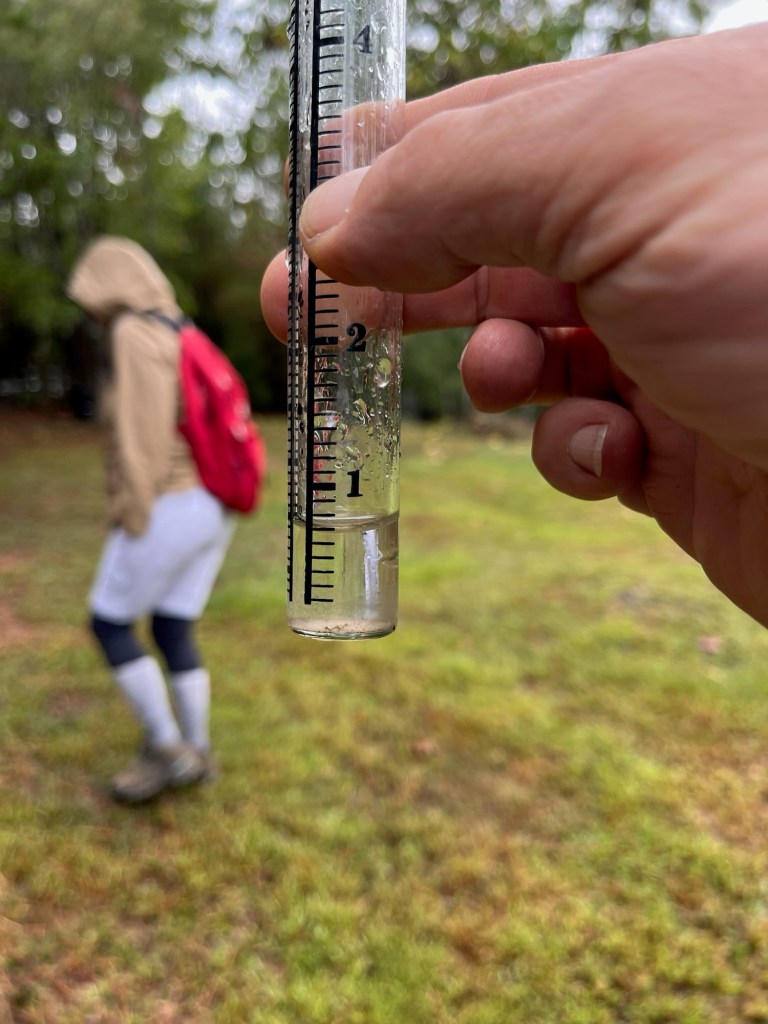
We got some more rain last week which was much needed and appreciated! The pawpaws are thirsty trees, albeit usually drought resistant with their long taproot. We hope the increased rain will bring on the mushrooms.
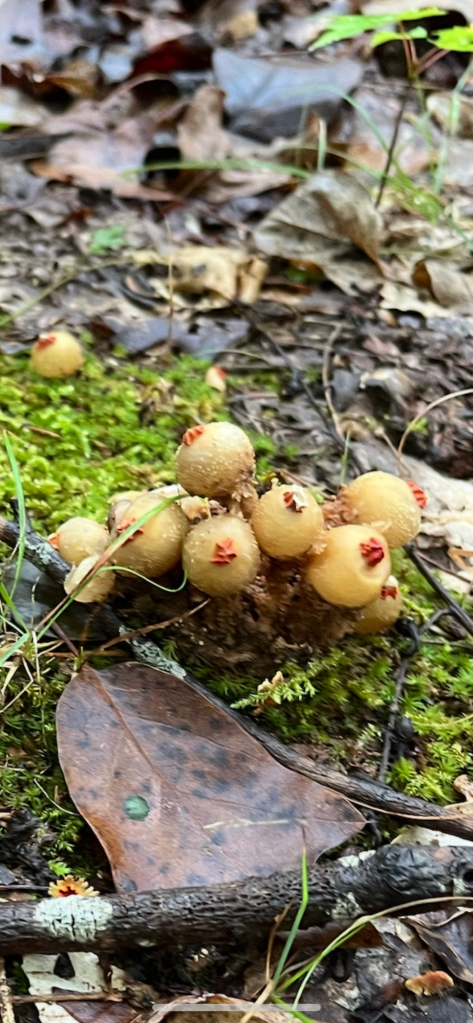
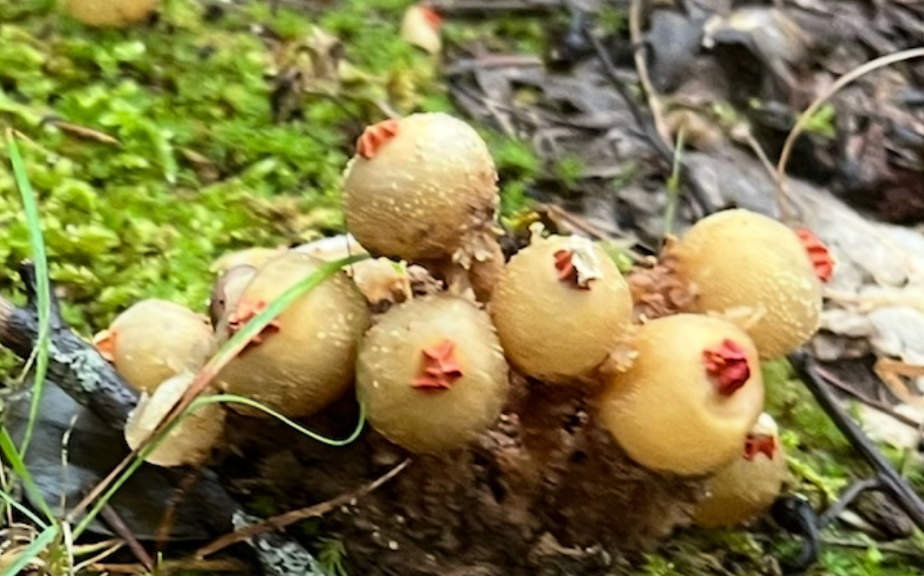
Calestoma ravenelii, stalked puffballs, found all over SAFF. We observed it growing out of moss yesterday. It has a mycorrhizal relationship with oaks and other hardwood trees. It grows in rich moist but well drained deciduous forests. It can grow alone but we see it mainly in groups.

3 thoughts on “Pawpaws Planted at SAFF”

  1. Good luck! I hope you reap the ripened benefits! Very different forest from where I’m at. It looks a bit more deciduous.

Leave a comment